
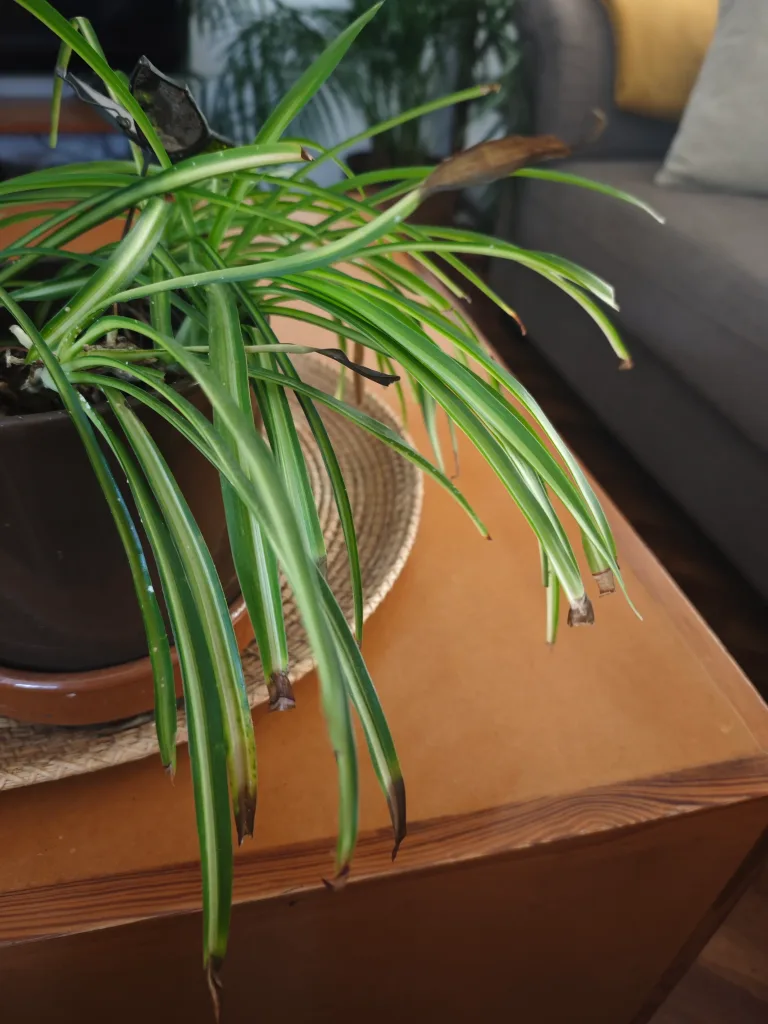
The Spider Plant, also popularly known as "mala madre" (bad mother) because it ejects its "babies" on long stolons, is one of the most popular and resilient houseplants. It is characterized by its long, pendulous, and strap-like leaves, which in cultivated varieties often have a central white or cream stripe surrounded by green. It is highly valued for its ability to purify the air, removing common household toxins like carbon monoxide and xylene.
Botanically, it belongs to the Asparagaceae family and originates from the tropical and southern regions of Africa. It possesses a fascinating root system composed of fleshy, tuberous roots that act as water reservoirs, allowing it to survive short periods of drought. Its trailing habit makes it ideal for hanging baskets or shelves where its young shoots, called plantlets, can hang freely, creating a very attractive decorative effect.
In terms of cultivation, it is the ideal plant for beginners due to its great adaptability. Although it prefers indirect light, it survives in less illuminated corners. It is a safe plant for homes with dogs and cats, as it is non-toxic. A relevant curiosity is that it was one of the plants highlighted in NASA's famous study on indoor air cleaning, demonstrating its effectiveness as an ally for indoor environmental health.
Did you know?Its tuberous roots grow rapidly and may indicate the plant needs repotting.
Care
- Watering
- Moderate, 1-2 times/week. Let surface dry.
- Light
- Bright indirect light; tolerates partial shade. Avoid strong direct sun.
- Temperature
- Ideal 18-24°C. Avoid drafts.
- Soil
- All-purpose with good drainage (perlite/coco coir).
- Fertilizer
- Liquid fertilizer for green plants every 15 days in spring/summer.
- Pruning
- Trim off yellowing or dried leaves at the base using sanitized shears to keep the clump neat. You can also snip off excess runners if you want the plant to focus its energy on foliage.
- Propagation
- Snip off mature spiderettes that have developed small root nubs at their base. Root them in water for a couple of weeks or pot them straight into moist soil.
Is Spider Plant toxic to cats and dogs?
No. According to the ASPCA, it is not toxic to cats or dogs.
- Cats
- Non-toxic
- Dogs
- Non-toxic
Source: ASPCA Animal Poison Control
Common problems
- Root rot
- Sunburn
- Overwatering
- Dry air
- Salt or fertiliser build-up
Common diseases
Frequently asked questions
Why are the tips of the leaves turning brown?
Brown tips are commonly caused by fluoride, chlorine, or mineral salts in tap water, as well as dry indoor air. Using filtered water and avoiding over-fertilization usually stops new tips from browning.
Why is my spider plant losing its variegation?
When the plant does not receive enough indirect light, it produces extra chlorophyll to survive, turning entirely green. Relocating it to a brighter spot will encourage new variegated leaves.
How often should I repot a spider plant?
Repot in spring every one to two years when the vigorous tuberous roots start cracking plastic pots or emerging from the bottom. Choose a pot only slightly larger, as spider plants bloom better when slightly root-bound.
What causes pale, limp, and drooping leaves?
Limp leaves can indicate either underwatering or root rot caused by chronic overwatering. Check the soil: if it is bone dry, give it a deep drink; if it is soggy, inspect the roots for decay and let it dry out.
From the same family
Growing Spider Plant at home?
Take a photo and we'll tell you how it's doing and what it needs.