
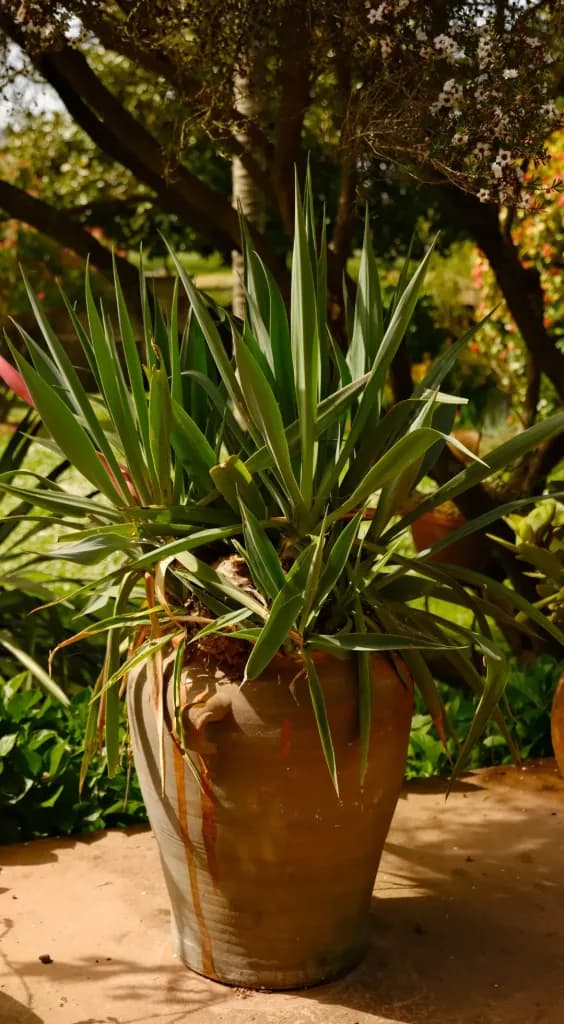
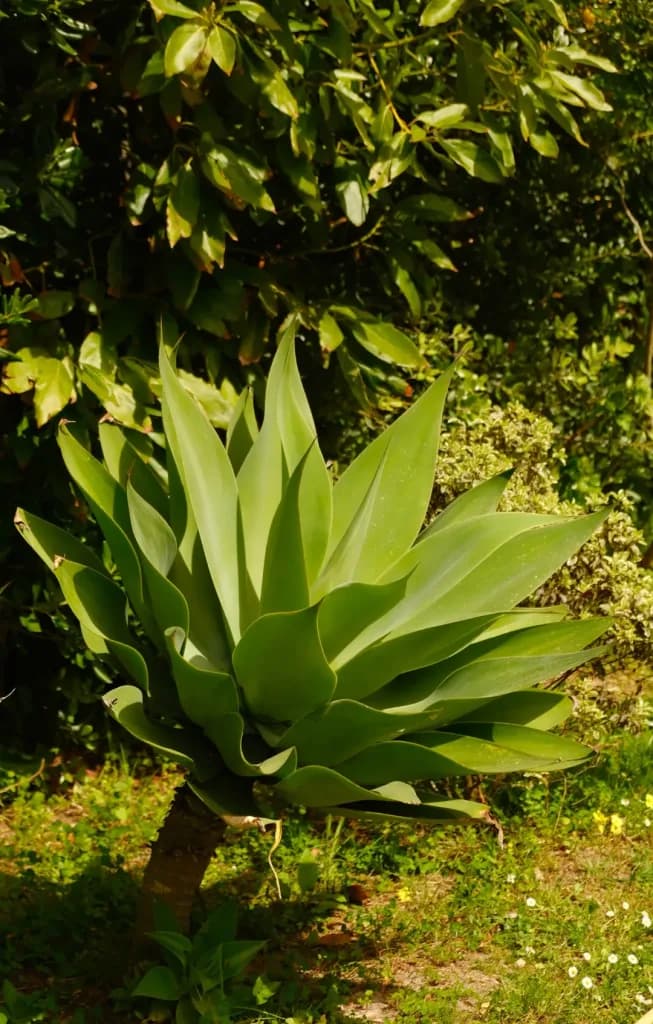
The Yucca, specifically the species Yucca guatemalensis, is an extremely popular ornamental plant due to its architectural form and great resilience. It is characterized by its elongated, rigid, and intense green leaves that grow in dense rosettes. In mature specimens, these rosettes crown woody trunks reminiscent of an elephant's foot, giving it one of its best-known common names. It is highly valued in interior design for its ability to add a tropical and modern touch with minimal care.
It belongs to the Asparagaceae family and originates from arid and semi-arid regions of Mexico and Central America. In its natural habitat, it can transform into a large tree, reaching up to 10 meters in height, although its growth is slow and controlled in pots. Unlike other yuccas, its leaves are usually less spiky, making it easier to handle in domestic environments. It is adapted to survive in conditions of high luminosity and prolonged drought periods.
Its cultivation is ideal for beginners, as it tolerates infrequent watering and indoor heated environments well. In addition to its aesthetic value, it is considered an air-purifying plant, capable of absorbing common toxins. In the traditional cuisine of some Central American regions, its flowers are edible and prepared in various dishes. It requires a substrate with excellent drainage to prevent root rot, which is its main vulnerability in domestic cultivation.
Did you know?Unlike wild desert yuccas, its leaf tips are pliable and lack sharp thorns, which inspired its common name, spineless yucca.
Care
- Watering
- Every 10-14 days in summer; let the substrate dry completely between waterings.
- Light
- Very bright location; tolerates direct sun and very bright partial shade.
- Temperature
- Ideal between 15°C and 25°C. Avoid frost and cold drafts.
- Soil
- Very well-draining mix, like universal substrate with 30% perlite or sand.
- Fertilizer
- Fertilizer for green plants once a month during spring and summer.
- Pruning
- Peel away brown, spent lower leaves along the trunk to keep the plant tidy. You can cut tall canes back in spring if they outgrow your ceiling, which will stimulate fresh side shoots.
- Propagation
- Propagate by taking cane cuttings or removing mature basal offshoots with a clean, sharp knife. Allow the cut ends to callus for a few days before potting them into lightly moist, gritty compost.
Is Indoor Yucca toxic to cats and dogs?
Yes. According to the ASPCA, it is toxic to cats and dogs.
- Cats
- Toxic
- Dogs
- Toxic
Usual signs: In dogs and cats, it can cause vomiting; in horses, liver disease and dermatitis.
If your pet has chewed it and shows symptoms, call your vet or the nearest emergency vet.
Source: ASPCA Animal Poison Control
Common problems
- Root rot
- Overwatering
- Too little light
- Mealybugs and scale
- Natural ageing
Common diseases
Frequently asked questions
Why are the lower leaves turning yellow?
The occasional loss of older lower leaves is part of the plant's natural shedding process as the cane extends. However, widespread yellowing accompanied by soft foliage is almost always a sign of overwatering.
What causes a soft or mushy cane trunk?
A soft cane is a classic symptom of root rot brought on by saturated potting mix and poor drainage. Stop watering immediately, inspect the root ball for black or mushy roots, and repot into fresh, dry soil.
Can it live outdoors year-round?
Spineless yucca can stay outdoors all year only in frost-free, temperate or Mediterranean climates. In cooler areas, move it outside to a sunny patio for the summer and bring it indoors before temperatures dip below 10 °C.
How often does it need repotting?
Because of its slow growth, repotting is generally needed only every two to three years in early spring. For very large specimen pots, simply refresh the top few inches of compost annually instead of full repotting.
From the same family
Growing Indoor Yucca at home?
Take a photo and we'll tell you how it's doing and what it needs.