
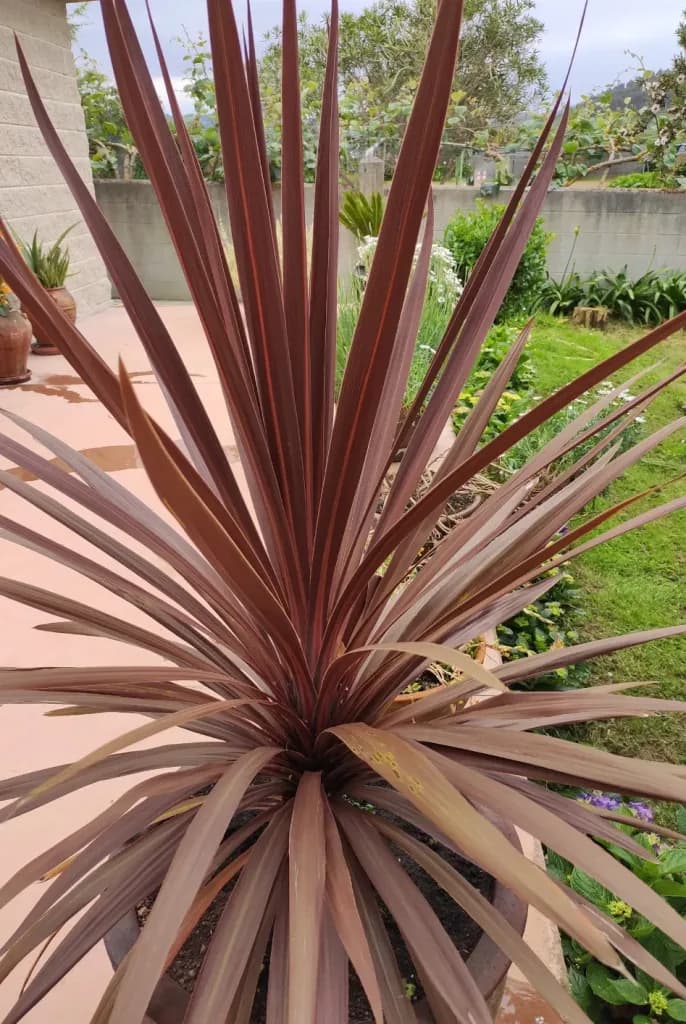
The red dracaena, also known as cordyline, is a highly valued ornamental plant for its spectacular perennial foliage in shades of red, purple, or bronze. Native to New Zealand, it stands out for its long, narrow, pointed leaves that grow in a fan or rosette shape, often emerging from a central trunk that becomes bare over time as the plant grows taller. Its architectural form and vibrant color make it a favorite choice for adding contrast and a tropical touch to gardens and terraces.
Botanically, it belongs to the Asparagaceae family and the Cordyline genus. In its natural habitat, it can reach the dimensions of a small tree up to 10 meters, but in domestic cultivation, it usually remains an elegant and compact shrub. It is an extremely hardy plant, adapted to a wide variety of soils, as long as they have excellent drainage, and is capable of tolerating strong winds and saline environments, making it ideal for coastal areas where other species struggle.
Its cultivation is relatively simple, making it suitable for gardening beginners. It requires bright exposure for its leaves to retain their purple intensity; in very hot climates, it appreciates partial shade during the hottest hours of the day. It is frequently used in large pots as a focal point or in garden borders to create visual levels. As a curious fact, in its homeland, the roots and young stems of some varieties were historically used as a food source after being cooked.
Did you know?In its native land, the roots and young stems of some varieties were historically used as a food source after cooking.
Care
- Watering
- Moderate, let the soil surface dry out between waterings (every 7-10 days).
- Light
- Full sun or very bright partial shade to maintain intense reddish color.
- Temperature
- Ideal between 15-25°C. Tolerates light frost down to -5°C.
- Soil
- All-purpose potting mix with good drainage, mixed with 20% perlite.
- Fertilizer
- Fertilizer for green plants every 20 days during spring and summer.
- Pruning
- Pruning is limited to removing older bottom leaves as they brown and wither over time. Simply snip off dead leaves close to the main stem using clean, sharp pruning shears.
- Propagation
- Propagate in spring by taking stem cuttings or detaching side shoots that emerge near the base. You can also grow new plants from fresh seed sown in warm, well-draining seed compost.
Is red dracaena toxic to cats and dogs?
Yes. According to the ASPCA, it is toxic to cats and dogs.
- Cats
- Toxic
- Dogs
- Toxic
Usual signs: Vomiting (occasionally with blood), depression, anorexia, hypersalivation, and dilated pupils in cats.
If your pet has chewed it and shows symptoms, call your vet or the nearest emergency vet.
Source: ASPCA Animal Poison Control
Common problems
- Root rot
- Fungal or bacterial leaf spots
- Mealybugs and scale
- Spider mites
- Cold damage
- Natural ageing
Common diseases
Frequently asked questions
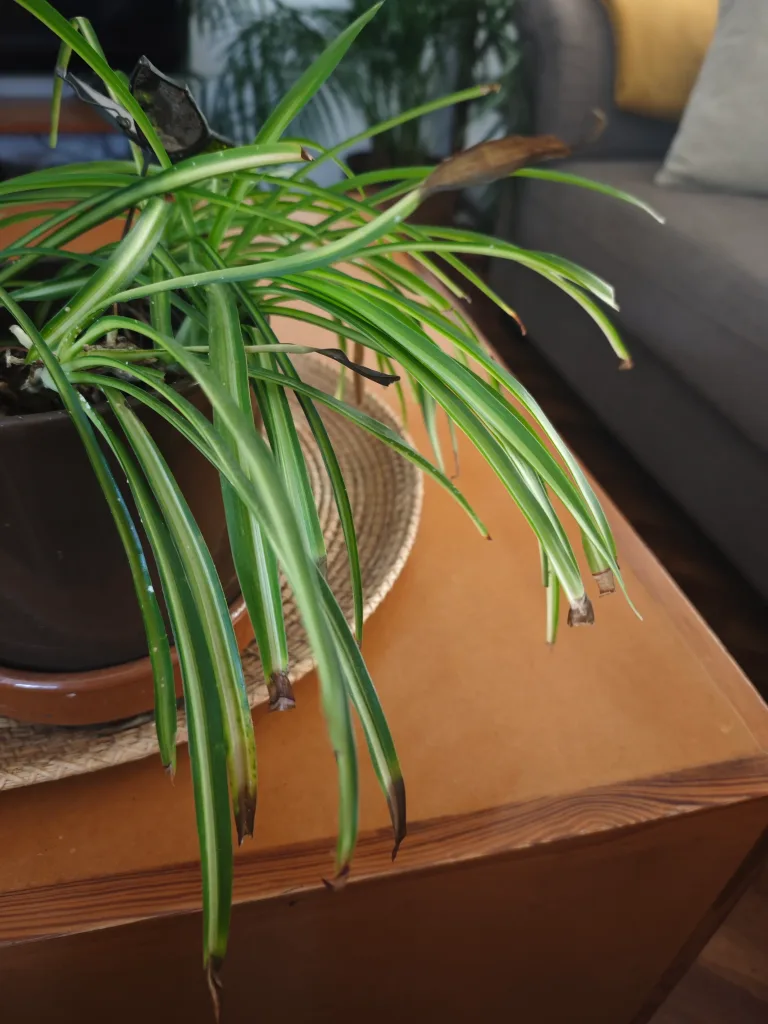
Why are the leaf tips turning brown?
Brown tips are usually triggered by low humidity, exposure to dry heating vents, or letting the root ball dry out completely. Increase ambient air moisture and ensure you water thoroughly whenever the topsoil dries.
Is it normal for lower leaves to turn yellow and drop?
Yes, this is part of the plant's natural life cycle as it sheds older foliage to form a clean, woody trunk. You only need to intervene if yellowing spreads rapidly to upper leaves or new growth.
Can Cordyline australis stay outdoors all year round?
It can remain outside permanently in mild temperate or coastal zones where winter drops do not fall below -5 °C. In regions with harsh, prolonged freezes, grow it in a container and bring it indoors before winter begins.
How often should I repot my cabbage tree?
Repotting is typically needed every two to three years in early spring to refresh the root zone and provide slightly more space. For large, mature specimens in bulky containers, top-dressing with fresh compost each spring is sufficient.
From the same family
Growing red dracaena at home?
Take a photo and we'll tell you how it's doing and what it needs.