
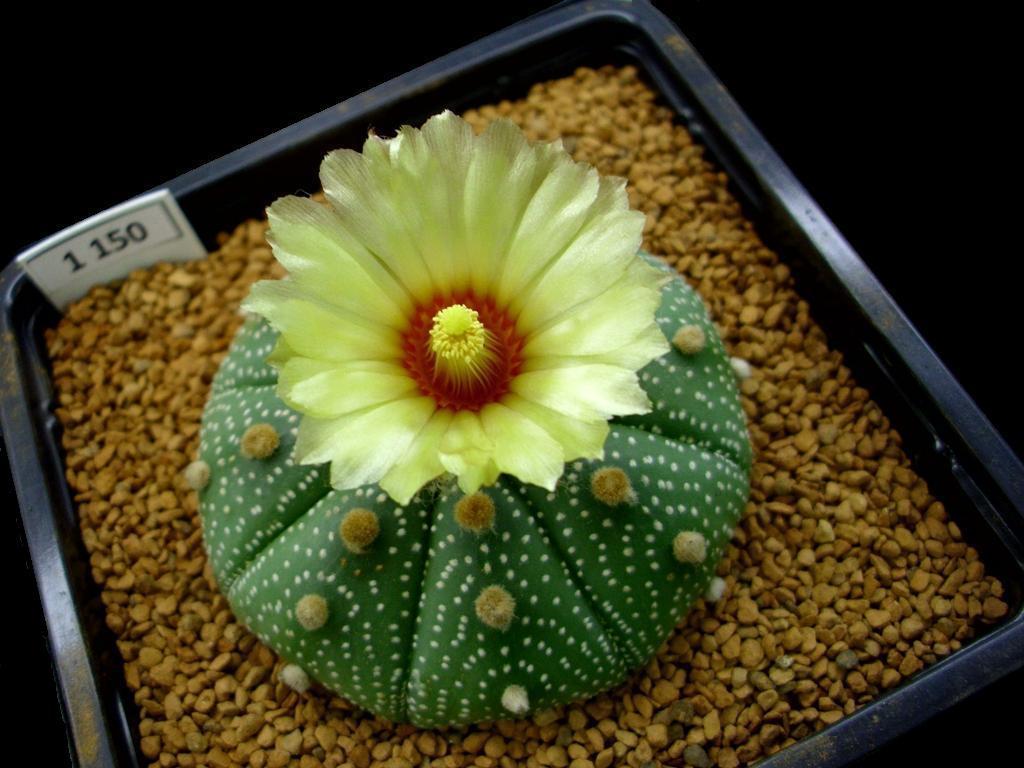
The star cactus (Astrophytum asterias) is a small, spineless cactus from southern Texas and northeastern Mexico, where it grows half-buried in scrub and stony grassland. Its round, flattened body is usually divided into eight ribs and covered with tiny white flecks that give it a grey-green, speckled look. In summer mature plants open wide yellow flowers with an orange-red throat.
At home it suits the brightest windowsill or a sheltered outdoor corner in warm, dry regions, always with protection from prolonged winter rain. It demands a very mineral, fast-draining soil and a shallow pot with a drainage hole, since its short roots rot easily in damp compost. Water sparingly in the growing season and keep it nearly dry from autumn through winter.
Its main enemy is excess moisture: overwatering or a peaty mix swells and splits the body or rots it from the roots. Given strong light, warmth and restraint with the watering can, it is a long-lived, undemanding plant. It grows slowly and almost never offsets, so new plants are raised from seed sown in spring.
Did you know?Wild populations are protected internationally and are threatened by poaching; cultivated plants come from nursery-grown seed, so always buy from reputable growers.
Care
- Watering
- Water thoroughly only when the soil is completely dry, roughly every two or three weeks in spring and summer. From autumn to spring keep it almost dry, with just an occasional light watering. Always empty the saucer so the roots never sit in water.
- Light
- It wants as much light as possible: full sun or the brightest windowsill you have. Acclimatise it gradually after winter or after purchase, since sudden strong sun can scorch the body. A south-facing spot suits it best.
- Temperature
- It grows best between 18 and 30 °C and rests cool and dry in winter. Keep it above 5 °C at all times, since cold combined with damp soil rots it quickly.
- Soil
- Use a very mineral, free-draining cactus mix with pumice, coarse sand or fine gravel and little organic matter. A shallow clay pot with a drainage hole suits its short roots.
- Fertilizer
- Feed sparingly, once in spring and once in midsummer, with cactus fertiliser at half strength. Never feed newly repotted or dormant plants.
- Pruning
- It needs no pruning. Remove spent flowers with your fingers once dry and dust the body occasionally with a soft brush.
- Propagation
- It propagates only from seed, since it almost never produces offsets. Sow fresh seeds in spring on mineral soil, keep them warm and slightly moist until they germinate, and be patient: seedlings grow slowly.
Is Star cactus toxic to cats and dogs?
The ASPCA doesn't list this species. If your pet has chewed it and seems unwell, call your vet.
Common problems
- Overwatering
- Root rot
- Mealybugs and scale
- Too little light
Frequently asked questions
Why is the body turning brown and soft at the base?
A soft, browning base usually means root rot from overwatering or soil that stays damp. Unpot the plant and check the roots: cut away anything brown and mushy, dust the wound, and replant in dry mineral soil. Resume watering only after a couple of weeks.
How often should I water it?
Water only when the mix is bone dry, about every two or three weeks in warm weather and almost never in winter. Drench the pot and let it drain fully rather than giving small sips. When in doubt, skip the watering.
Why has mine never flowered?
Only mature plants, usually several years old, flower, and they need strong light plus a cool, dry winter rest to set buds. Move it to your sunniest spot and keep winter watering to a minimum. Flowers open in summer on warm, bright days.
Can it live outside all year?
Only in frost-free, dry climates with winter protection from rain. It must stay above 5 °C and completely dry in winter, so in most regions it lives indoors or in a greenhouse and summers outdoors. Bring it under cover at the first cold nights.
How do I grow it from seed?
Sow fresh seeds in spring on the surface of damp mineral soil and keep them warm, around 20 to 25 °C, with light but no direct sun. Germination takes one to three weeks. Keep seedlings slightly moist at first and admit air gradually to prevent damping off.
From the same family



Growing Star cactus at home?
Take a photo and we'll tell you how it's doing and what it needs.