
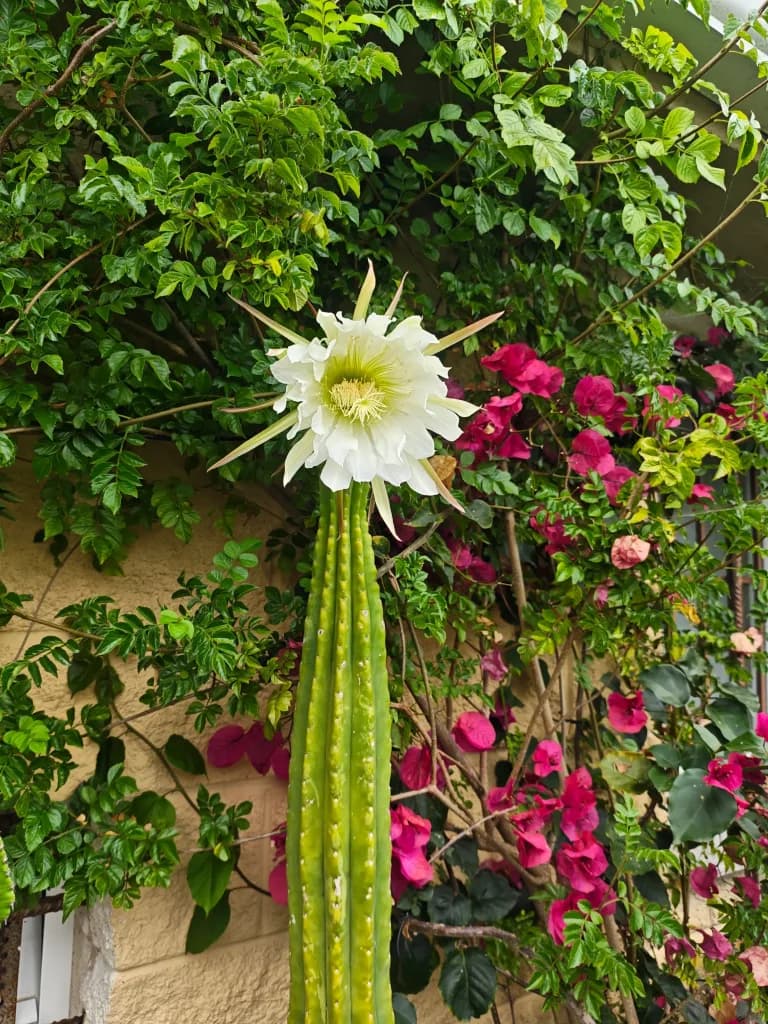
Echinopsis pachanoi, known as the San Pedro Cactus, is a fast-growing columnar cactus native to the Andes. It is distinguished by its dark green stems with 4 to 9 rounded ribs and generally very short or absent spines in adult specimens. It produces spectacular, large white flowers that usually open at dusk and have a fragrant aroma to attract nocturnal pollinators like moths and bats.
It belongs to the Cactaceae family and is native to mountainous regions between 2,000 and 3,000 meters altitude in countries like Peru and Ecuador. Its structure is robust and branched from the base, capable of reaching several meters in height in its natural habitat. It adapts extraordinarily well to various domestic climates as long as soil drainage is optimal and it receives strong direct solar radiation.
It is highly valued in xerophytic gardening for its hardiness and sculptural form. Historically, it has been used by various indigenous cultures in medicinal and spiritual rituals due to its high concentration of mescaline, a potent psychoactive alkaloid. In the home, it is considered one of the easiest cactus species to maintain, making it ideal for beginners due to its drought tolerance.
Did you know?Its huge nocturnal flowers can measure over eight inches across and are pollinated by moths and bats in the wild.
Care
- Watering
- Every 15-20 days in summer; suspend completely during winter.
- Light
- Direct sun minimum 6 to 8 hours daily to flower.
- Temperature
- Ideal between 15°C and 30°C; tolerates brief frosts if dry.
- Soil
- Very porous cactus mix with sand, gravel, and little humus.
- Fertilizer
- Specific cactus fertilizer once a month in spring.
- Pruning
- Routine pruning is unnecessary, except to remove damaged sections or take cuttings for propagation.
- Propagation
- Easily propagated by stem cuttings that are allowed to callous over in the shade for ten days before potting. It can also be grown from fresh seeds sown in a warm, bright propagation tray.
Is San Pedro Cactus toxic to cats and dogs?
The ASPCA doesn't list this species. If your pet has chewed it and seems unwell, call your vet.
Common problems
- Root rot
- Overwatering
- Too little light
- Mealybugs and scale
- Cold damage
Frequently asked questions
Why is the top of my San Pedro cactus becoming thin and pale?
This thinning is known as etiolation and is caused by insufficient light. Gradually introduce the cactus to stronger direct sunlight so new growth develops with its characteristic thickness.
What causes the base of the cactus to feel soft or turn brown?
A squishy base is typically a sign of root rot caused by overwatering or compacted soil. Unpot the cactus immediately, cut away any rotten tissue, let the cut heal, and repot in dry, gritty substrate.
When does a San Pedro cactus bloom?
Flowering occurs in mature plants during mid-to-late summer under optimal sunlight and warm temperatures. The massive white blossoms open after sunset and usually wilt under direct morning heat.
How do you take cuttings from this cactus?
Use a clean, sharp knife to slice off a stem section horizontally. Place the cutting in a dry, shaded location for about a week to let the cut end form a tough callous before potting it up.
From the same family
Growing San Pedro Cactus at home?
Take a photo and we'll tell you how it's doing and what it needs.