
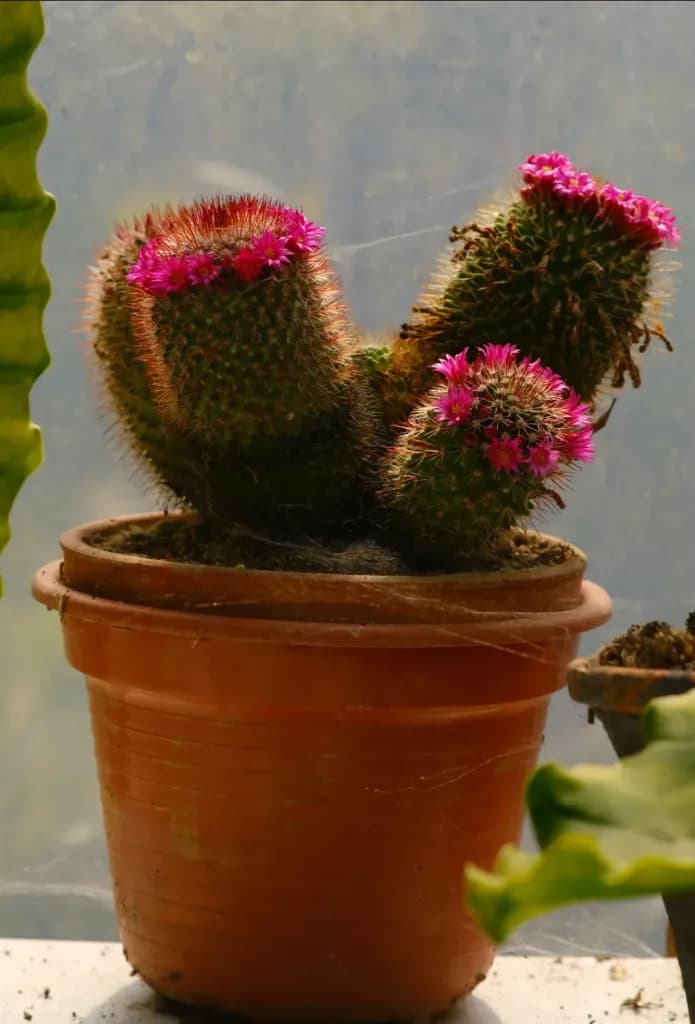
Mammillaria spinosissima, commonly known as the Red-headed Irishman, is a popular cylindrical cactus prized for its dense covering of reddish-brown spines and vibrant floral displays. It typically grows as a single column or in small clusters, reaching up to 30 centimeters in height. Its most striking feature is the "crown" of small, bright pink or deep magenta flowers that emerge in a perfect ring near the top of the stem during the spring.
Belonging to the Cactaceae family, this species is native to the central regions of Mexico, where it thrives in rocky environments at high altitudes. It is expertly adapted to arid conditions, storing water in its succulent body and using its dense spines to reflect intense sunlight and deter herbivores. The plant's tuberous roots allow it to anchor firmly into crevices, making it a resilient survivor in its natural mountain habitat.
In cultivation, this cactus is considered an excellent choice for beginners due to its hardiness and predictable blooming cycle. It requires very well-draining soil and plenty of light to maintain its compact shape and intense spine coloration. While it is generally non-toxic, its sharp spines can cause skin irritation, so it should be handled with care or using thick gloves. It is a frequent favorite in succulent collections worldwide.
Did you know?One of its best-known forms is nicknamed the 'Red-headed Irishman' due to its striking copper-red spines.
Care
- Watering
- Every 2-3 weeks in summer; keep dry during winter months.
- Light
- Full sun or very bright indirect light, 6+ hours daily.
- Temperature
- Prefers 10°C to 30°C; protect from temperatures below 5°C.
- Soil
- Well-draining cactus mix with sand, perlite, or volcanic rock.
- Fertilizer
- Diluted cactus fertilizer once in spring during active growth.
- Pruning
- No pruning is necessary. Simply remove faded flowers or dried debris using tweezers to keep the plant clean and deter fungal issues.
- Propagation
- Propagate by carefully detaching offsets from the base of the mother plant in spring. Allow the cut surface to callus for several days before potting it in dry, gritty substrate.
Is Red headed cactus toxic to cats and dogs?
The ASPCA doesn't list this species. If your pet has chewed it and seems unwell, call your vet.
Common problems
- Root rot
- Mealybugs and scale
- Too little light
- Overwatering
- Cold damage
Common diseases
Frequently asked questions
Why is my cactus stretching and losing its round shape?
Stretching, or etiolation, happens when the plant does not receive enough direct sunlight. Gradually move the cactus to a brighter spot so new growth remains dense and compact.
How do I get my spiny pincushion cactus to bloom?
Encouraging blooms requires a proper winter rest period in a cool, bright location with zero water from late autumn to early spring. Resuming gentle watering as temperatures rise triggers bud formation around the crown.
Why is the base of the cactus turning soft and brown?
A soft base is almost always a sign of root and stem rot caused by overwatering or poorly draining soil. Withhold water immediately, inspect the roots, and consider propagating any healthy, firm top tissue if the base cannot be saved.
How often should it be repotted?
Repot every two to three years in early spring when roots fill the pot or offsets outgrow the container. Always choose a pot with drainage holes that is only slightly larger than the previous one.
From the same family

Growing Red headed cactus at home?
Take a photo and we'll tell you how it's doing and what it needs.