
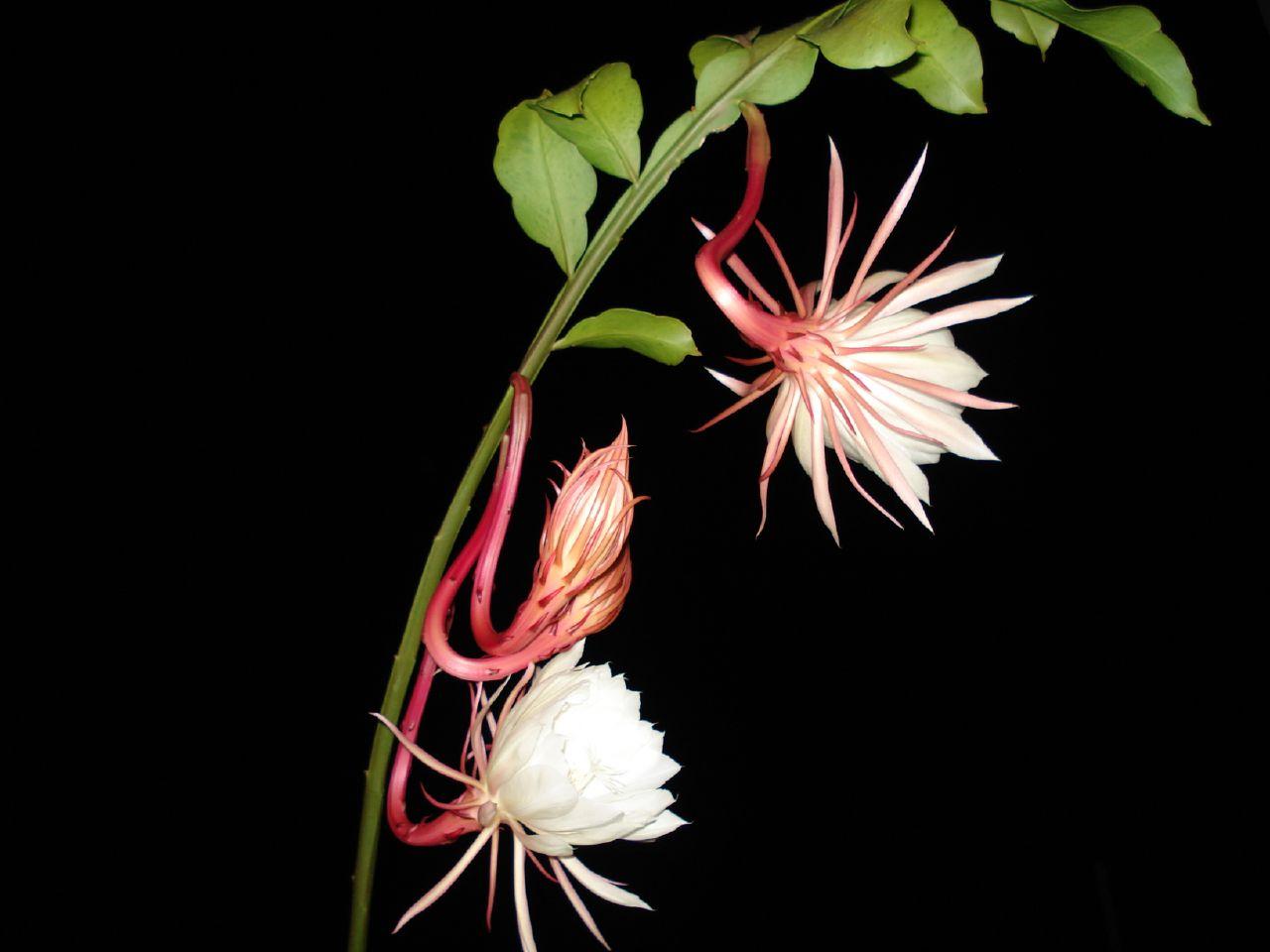
The queen of the night (Epiphyllum oxypetalum) is an epiphytic cactus from the humid forests of southern Mexico, Central America and northern South America, where it grows on tree branches. Its flat, hanging stems look like leaves and can reach well over a metre long. It is famous for its giant white flowers, up to 25 cm across and richly scented, which open on a single summer night and fade by dawn. In Spanish it shares its common name with other night-blooming plants.
At home it suits a hanging basket, with plenty of bright light but no harsh direct sun, which yellows the stems. Water regularly in spring and summer, letting just the surface dry between waterings, and use an open epiphyte mix with bark and peat. In winter, ease off watering and keep it in a bright, cool spot.
Only mature, well-settled plants flower, sometimes after several years of waiting, so patience is part of growing it. A mature plant can open several blooms on the same night, a brief display that repays the wait. Over time it forms dense, long-lived clumps that growers happily pass on to friends.
Did you know?Each bud opens for a single night, so growers often invite friends over and stay up to watch the brief, richly scented bloom.
Care
- Watering
- Water regularly in spring and summer, once the surface of the mix starts to dry. Once or twice a week in hot weather is typical, much less in winter. Avoid waterlogging, which quickly rots its fine roots.
- Light
- It needs plenty of bright, filtered light to grow compactly and bloom. It tolerates gentle morning sun, but harsh midday sun yellows and burns its flat stems.
- Temperature
- It grows well between 18 and 28 °C while active. In winter it prefers a cool rest between 12 and 16 °C, always above 10 °C and free from frost.
- Soil
- Use a light, airy epiphyte mix with pine bark, peat or coconut fibre. It should hold some moisture without becoming compacted.
- Fertilizer
- Feed every two weeks in spring and summer with cactus or green-plant fertiliser. Stop feeding in autumn and winter.
- Pruning
- It barely needs pruning; just remove old or damaged stems with a clean cut. Healthy removed segments can be used as cuttings.
- Propagation
- It propagates easily from stem cuttings about 15 cm long left to dry for a couple of days. Set in slightly moist mix, they root within a few weeks.
Is Queen of the night toxic to cats and dogs?
The ASPCA doesn't list this species. If your pet has chewed it and seems unwell, call your vet.
Common problems
- Overwatering
- Root rot
- Mealybugs and scale
- Too little light
Frequently asked questions
Why is my queen of the night not flowering?
It usually needs maturity, strong light and a cool, drier winter rest before it will bloom. Young plants often wait several years, so keep it bright, ease off water in winter and be patient.
How long does each flower last?
Each bloom lasts a single night, opening after dark and fading by morning. A mature plant may open several flowers at once, and flowering can repeat on different nights through summer.
Why are the stems turning yellow?
Yellowing usually means too much direct sun on the flat stems. Move it into bright but filtered light and the new growth should emerge a healthy green.
How often should I water it?
In spring and summer water when the surface starts to dry, typically once or twice a week. In winter cut back sharply and keep the mix just barely moist.
Can it live outdoors?
Yes, where winters stay frost-free it enjoys a shaded patio in the warm months. Bring it under cover before the first cold nights, as it does not tolerate frost.
From the same family



Growing Queen of the night at home?
Take a photo and we'll tell you how it's doing and what it needs.