
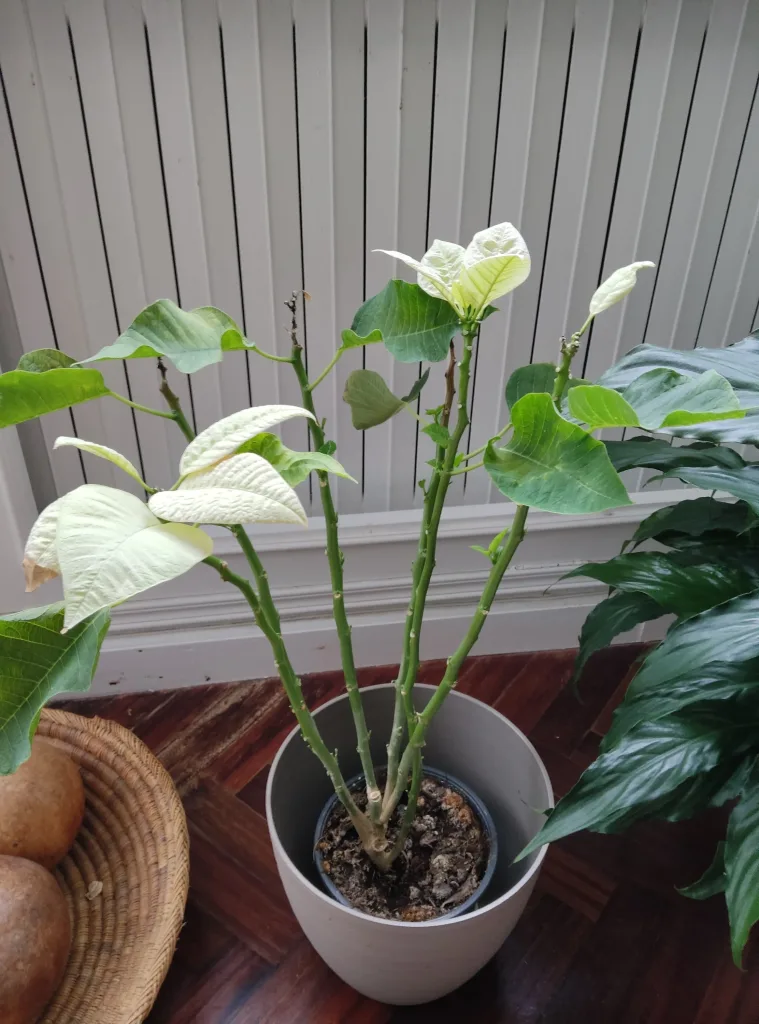
Euphorbia pulcherrima, popularly known as Poinsettia or Christmas Star, is a deciduous shrub famous for its striking colorful bracts. While the most common are red, commercial varieties exist in white, cream, pink, or even marbled tones. In its natural state, it can reach several meters in height, but in homes, it is cultivated as an ornamental plant with a compact habit, standing out especially during winter for its decorative value.
It belongs to the Euphorbiaceae family and originates from the tropical regions of Mexico and Central America. In its habitat, it grows in dry tropical forests, preferring warm climates. A distinctive characteristic of this species, like others in its genus, is the presence of a whitish latex inside its stems and leaves, which acts as a defense mechanism against herbivores but can be irritating to humans.
Its domestic cultivation is a challenge for many, as it is sensitive to drafts and overwatering. It is a 'photoperiodic' plant, meaning the coloring of its bracts strictly depends on the duration of the night. After the winter season, it usually enters a dormant period where it loses its color and some foliage, requiring strategic pruning to regrow vigorously in the following season.
Did you know?The vivid red displays on poinsettias are actually modified leaves called bracts rather than flowers, which are tiny yellow buds at the center.
Care
- Watering
- Moderate, twice a week, letting the substrate dry between waterings.
- Light
- Abundant indirect light; avoid intense direct sun.
- Temperature
- Between 15°C and 22°C; avoid sudden changes and direct heat.
- Soil
- Universal mix with good drainage, peat, and perlite.
- Fertilizer
- Balanced liquid fertilizer every 15 days in spring and summer.
- Pruning
- Cut the stems back to about four inches above the soil in mid-spring to promote bushy, fresh growth.
- Propagation
- Propagate by taking stem cuttings in late spring or early summer using healthy new shoots. Dip the cut ends in cool water to stop the sap flow before planting them in moist rooting medium.
Is Poinsettia toxic to cats and dogs?
Yes. According to the ASPCA, it is toxic to cats and dogs.
- Cats
- Toxic
- Dogs
- Toxic
Usual signs: It can irritate the mouth and stomach and occasionally cause vomiting, though its toxicity is generally overrated.
If your pet has chewed it and shows symptoms, call your vet or the nearest emergency vet.
Source: ASPCA Animal Poison Control
Common problems
- Root rot
- Overwatering
- Cold damage
- Dry air
- Whitefly
Common diseases
Frequently asked questions
Why is my poinsettia dropping its leaves?
Leaf loss is usually triggered by exposure to cold drafts, rapid temperature shifts, or soggy soil from overwatering. Ensure the plant sits away from drafty windows, air vents, and heating radiators.
How do I get my poinsettia to turn red again?
Starting in late September, place the plant in total, uninterrupted darkness for about fourteen hours every night for eight to ten weeks. During daytime hours, return it to bright indirect light and maintain routine care.
How often should I water my poinsettia?
Watering is typically needed once or twice per week depending on room temperature and humidity. Check the soil moisture first and water only when the surface layer feels dry.
What should I do with the plant after the holidays?
Continue watering moderately until late winter when the bracts naturally fade and fall off. Prune the stems in spring, refresh the soil, and place the pot in bright light to support vigorous new growth.
From the same family
Growing Poinsettia at home?
Take a photo and we'll tell you how it's doing and what it needs.