
Treatment guide
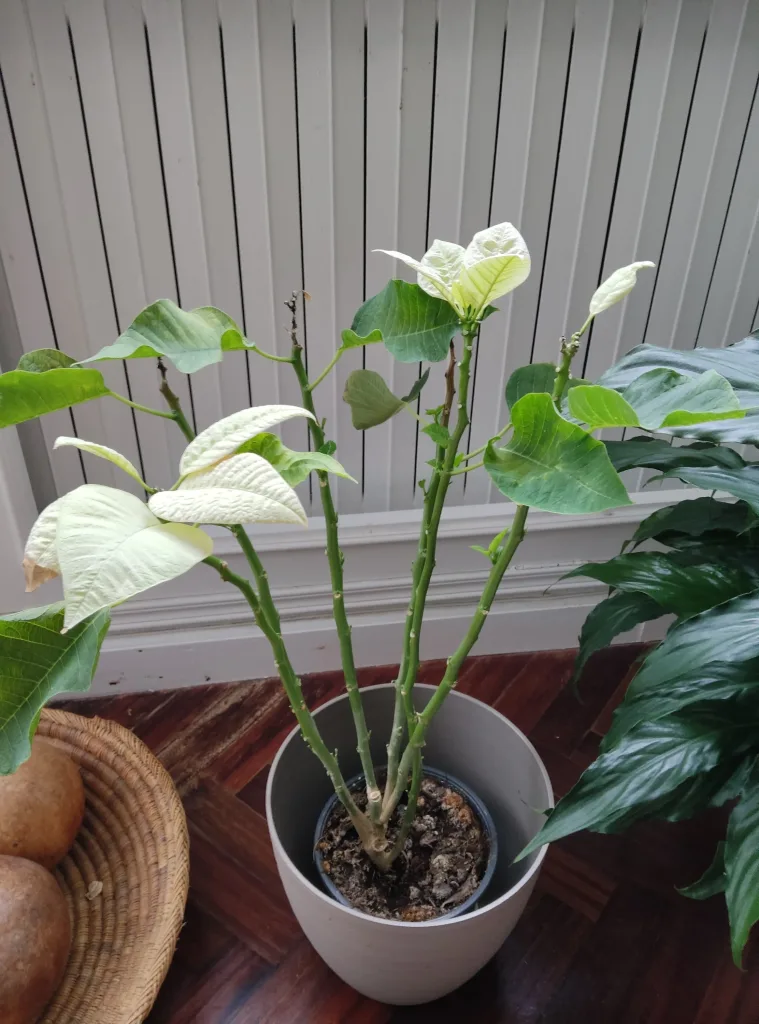
Abiotic stress due to lack of light and proximity to heat source
on Poinsettia
Moderate1 recorded case
What is it?
The plant does not suffer from a pathogen infection, but rather a physiological disorder called etiolation caused by inadequate environmental conditions. Insufficient sunlight causes the stems to grow excessively long and weak in an attempt to reach light, while the dry heat from the nearby radiator causes the lower leaves to fall. This combination of factors weakens the plant's structure, leaving it with sparse foliage and a lanky appearance.
Treatment plan
Immediate
Immediate relocation
Move the plant away from the radiator to prevent dry air and excessive heat from continuing to stress the foliage.
1-3 days
Light optimization
Place in a bright room, near a window but protected by a thin curtain from direct sun.
1 week
Sanitation pruning
Trim the longest and barest stems a few centimeters above a node to encourage lower branching.
Immediate
Increase ambient humidity
Place the pot on a saucer with pebbles and water, ensuring the bottom of the pot does not touch the water.
Prevention
Watering adjustment
Check substrate moisture with your finger before watering to prevent root rot in etiolated stems.
Care during recovery
- Watering
- Moderate, twice a week, letting the substrate dry between waterings.
- Light
- Abundant indirect light; avoid intense direct sun.
- Temperature
- Between 15°C and 22°C; avoid sudden changes and direct heat.
- Soil
- Universal mix with good drainage, peat, and perlite.
- Fertilizer
- Balanced liquid fertilizer every 15 days in spring and summer.
Seeing these symptoms on your plant?
Analyze it for free and get a plan made for it.