
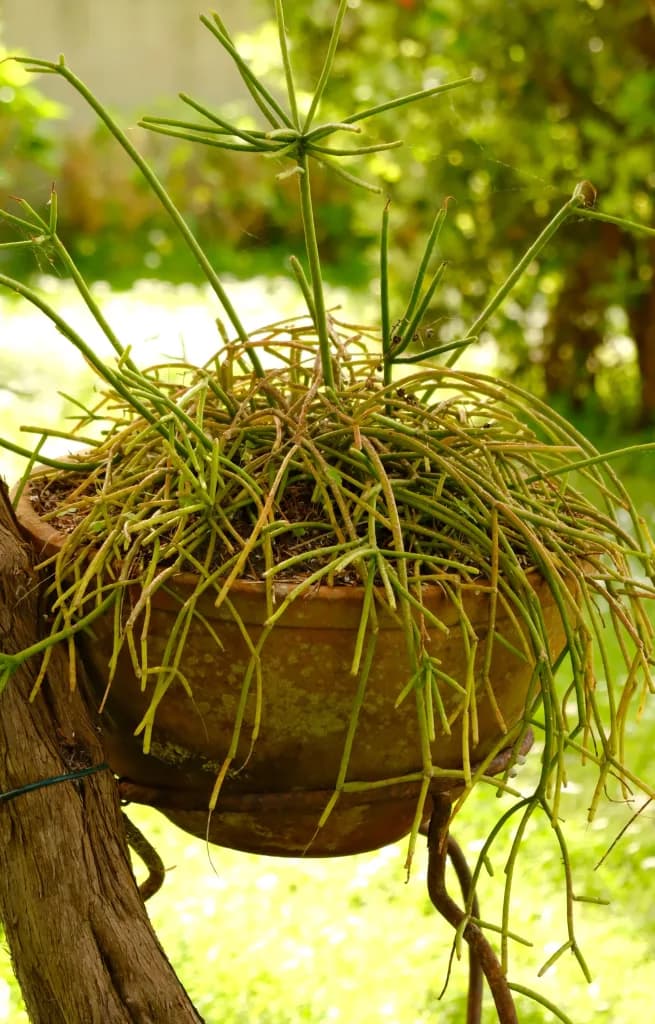
The Pencil Cactus, also known as "pencil tree" or "milk bush", is a unique shrubby succulent, prized for its slender, cylindrical, intense green stems that lack true leaves. These smooth branches perform photosynthesis, giving it an architectural and minimalist appearance highly valued in modern landscaping and interior decoration for its unique form.
It belongs to the Euphorbiaceae family and originates from the semi-arid tropical regions of Africa and parts of India. In its natural habitat, it can grow into a large tree, although in pots it typically remains a moderately growing compact shrub. It is evolutionarily adapted to survive extreme drought conditions thanks to its ability to store water in its fleshy, cylindrical stems.
A critical characteristic of this species is its milky white sap (latex), which is highly toxic and irritating upon contact with skin, eyes, or if ingested. Despite this, it is popular for its very low maintenance and ease of propagation through cuttings. It is an ideal plant for low-water gardens in warm climates and for those seeking a resilient indoor plant that tolerates periods of neglect.
Did you know?Its white sap is a caustic latex that can cause temporary blindness if it touches the eyes.
Care
- Watering
- Scarce, only when substrate is dry (every 15-20 days).
- Light
- Full sun or very bright filtered light (minimum 6 hours).
- Temperature
- Warm, avoid frost and temperatures below 10°C.
- Soil
- Cactus mix with excellent drainage (sand, perlite, peat).
- Fertilizer
- Diluted succulent fertilizer once a month in spring.
- Pruning
- Prune back leggy or overcrowded stems in early spring using clean shears to maintain a balanced and sturdy branch canopy.
- Propagation
- Stem cuttings root easily when taken during warm weather and allowed to callous over for several days before planting. Insert the dried cutting into barely damp, gritty mix and keep it in bright indirect light until roots establish.
Is Pencil cactus toxic to cats and dogs?
Yes. According to the ASPCA, it is toxic to cats and dogs.
- Cats
- Toxic
- Dogs
- Toxic
Usual signs: Causes irritation to the mouth and stomach, occasionally with vomiting, though its toxicity is generally overrated.
If your pet has chewed it and shows symptoms, call your vet or the nearest emergency vet.
Source: ASPCA Animal Poison Control
Common problems
- Root rot
- Overwatering
- Mealybugs and scale
- Cold damage
- Too little light
Common diseases
Frequently asked questions
Why are the stems of my pencil cactus becoming soft or wrinkled?
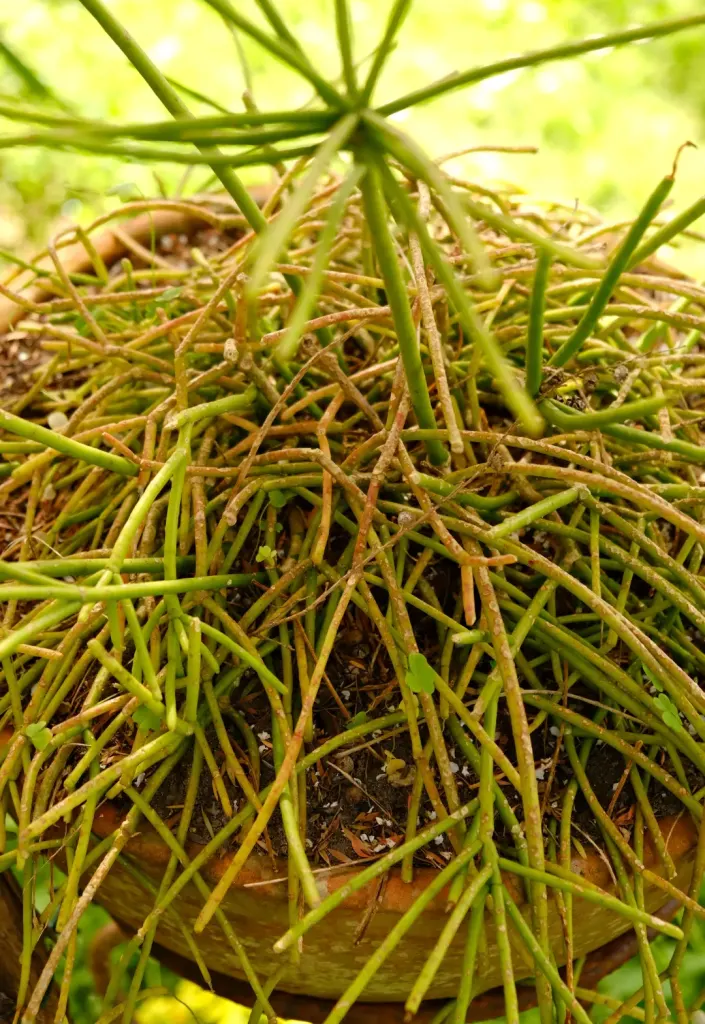
Soft, mushy stems indicate root rot caused by overwatering or compacted soil that retains excessive moisture. If the stems are wrinkled but still firm, the plant is dehydrated and needs a thorough watering.
Why is my plant stretching and losing its dense shape?
Etiolation occurs when the plant receives insufficient light, prompting it to grow pale and thin as it stretches toward a light source. Move it gradually into direct sun to encourage thicker, more compact stem clusters.
Can I grow a pencil cactus outdoors all year round?
Outdoor cultivation is possible year-round only in warm, frost-free regions corresponding to USDA hardiness zones 10 through 12. In colder climates, keep it in a container that can easily spend winters inside the house.
What precautions should I take when trimming the branches?
Always wear protective rubber gloves and eye protection when cutting stems, as the milky sap can irritate skin and eyes. Wipe your cutting tools thoroughly afterward to prevent sap buildup on the metal blades.
From the same family
Growing Pencil cactus at home?
Take a photo and we'll tell you how it's doing and what it needs.