
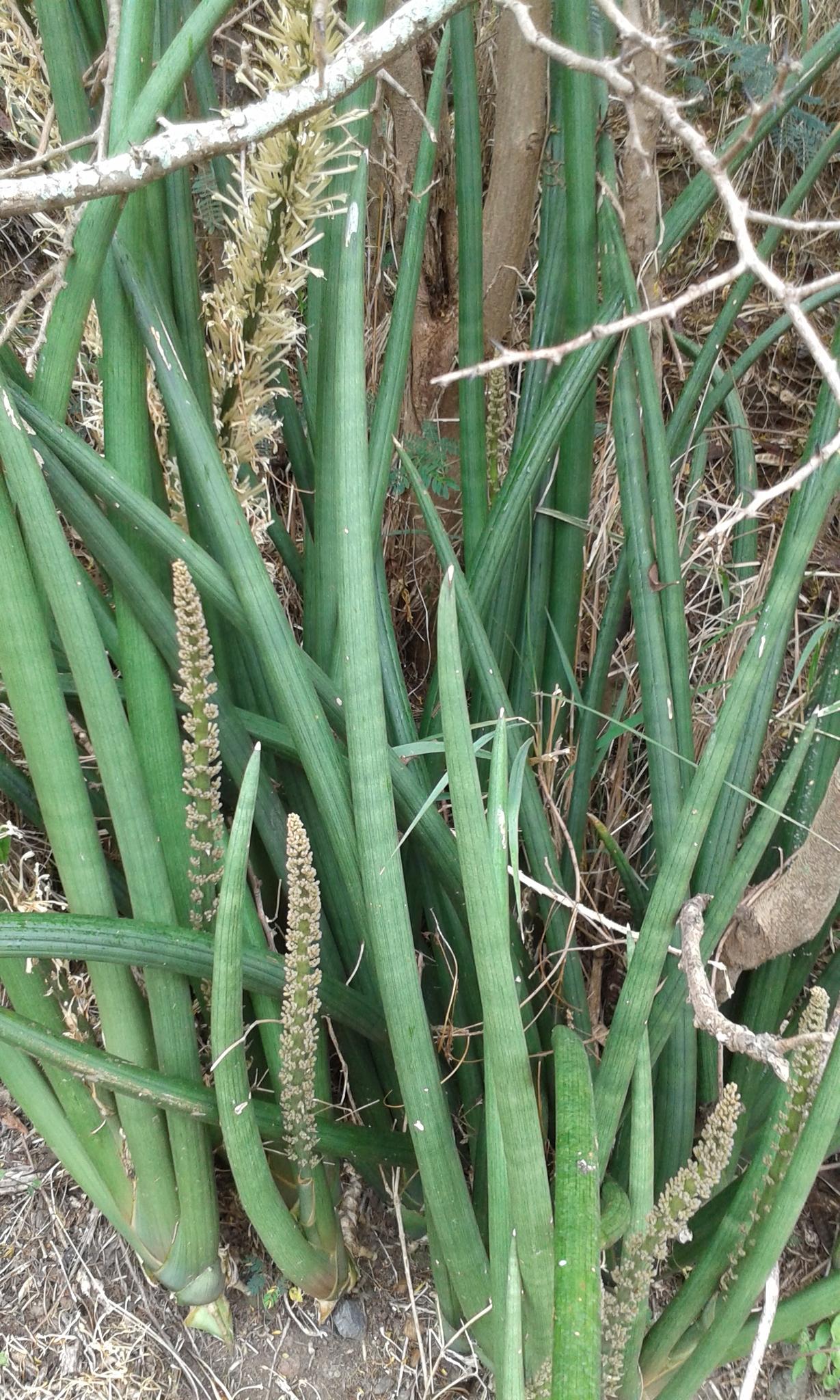
The cylindrical snake plant (Dracaena angolensis) is a succulent plant from the arid regions of southern Africa, especially Angola, with stiff, round, upright leaves like green spears. The foliage grows in an elegant fan from a creeping underground rhizome and needs almost no attention to look architectural. It is among the toughest houseplants available, forgiving weeks of neglect that would finish most others.
Its secret is thrift: the fleshy spears store water, so it prefers to dry out completely between thorough waterings. More specimens are lost to kindness, meaning weekly watering in a sunless corner, than to any pest or disease. Good light keeps the spears firm and upright, while a very free-draining mix and a pot with holes remove the only real danger, which is rot.
With that spare routine it lives for many years and slowly fills its pot with new spears from the rhizome. Dust the leaves occasionally, feed almost nothing, and repot only when the rhizome threatens to crack the pot. In frost-free gardens it also thrives outdoors in beds and rockeries, provided the soil drains sharply.
Did you know?Its round spears grow in a fan pattern from an underground rhizome, and mature clumps slowly form a sculptural rosette.
Care
- Watering
- Water sparingly: soak the mix only once it has dried out completely, roughly every 2 to 3 weeks indoors. In winter, once a month is often enough.
- Light
- It prefers bright light with some gentle sun, which keeps the spears stiff and upright. It tolerates medium light but grows weaker and may lean without good brightness.
- Temperature
- It is comfortable between 18 and 28 °C and tolerates heat well. Keep it above 12 °C in winter and away from frosty windows.
- Soil
- Use a very free-draining mix for succulents or cacti in a heavy, stable pot with drainage holes. A shallow, wide container suits its spreading rhizome.
- Fertilizer
- Feed lightly with a balanced liquid fertiliser once a month in spring and summer. It needs nothing at all in autumn and winter.
- Pruning
- No pruning is needed; simply pull away fully dry leaves from the base. Damaged spear tips do not regrow, so trim them cleanly only if they look unsightly.
- Propagation
- The easiest method is dividing the rhizome when repotting, keeping roots on each piece. Leaf cuttings also root in mix or water, but they take many months.
Is Cylindrical snake plant toxic to cats and dogs?
Yes. According to the ASPCA, it is toxic to cats and dogs.
- Cats
- Toxic
- Dogs
- Toxic
Usual signs: Vomiting (occasionally with blood), depression, loss of appetite, hypersalivation and dilated pupils in cats.
If your pet has chewed it and shows symptoms, call your vet or the nearest emergency vet.
Source: ASPCA Animal Poison Control
Common problems
- Overwatering
- Root rot
- Mealybugs and scale
- Too little light
Frequently asked questions
How often should I water a cylindrical snake plant?
Only once the mix has dried out fully, about every 2 to 3 weeks indoors and even less in winter. When in doubt, wait a few more days: underwatering is harmless, while soggy soil rots the base.
Why is the base soft or mushy?
A soft, yellowing base is classic overwatering and early rot. Stop watering, let the pot dry completely, and remove any rotted tissue; repot into dry, gritty mix if the roots look brown.
Why are the spears leaning or flopping?
Leaning spears usually follow too little light combined with too much water. Move the plant to a brighter spot, lengthen the interval between waterings, and stake the worst spears until they firm up.
How do I propagate it?
Divide the rhizome at repotting time, making sure each piece keeps roots and at least one spear. Leaf sections also root in mix or water, but expect many months before new shoots appear.
Can it grow outdoors?
In frost-free climates it grows outdoors all year in well-drained beds and pots. Elsewhere, bring it inside before temperatures approach 10 °C and keep it dry through winter.
From the same family


Growing Cylindrical snake plant at home?
Take a photo and we'll tell you how it's doing and what it needs.