
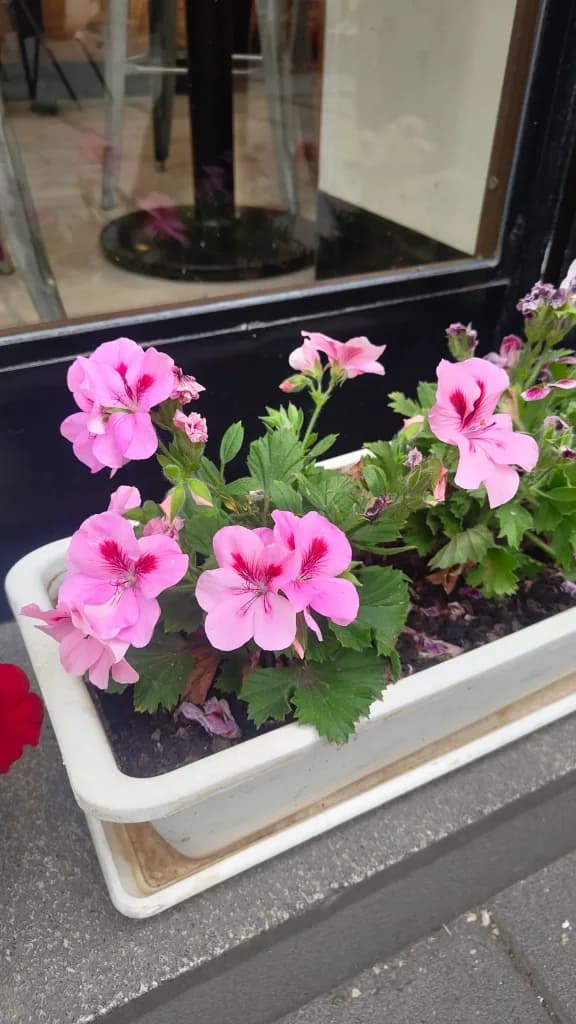
The zonal geranium is one of the most popular ornamental plants on balconies and gardens worldwide. It stands out for its umbel-shaped inflorescences with vibrantly colored flowers, such as the intense pink with dark spots seen in the image, and its rounded leaves with a characteristic dark band or "zone." Its habit is upright and bushy, providing a persistent explosion of color during the warm months of the year.
It belongs to the Geraniaceae family and is native to South Africa. Botanically, it is a perennial sub-shrub that prefers temperate climates and very well-drained soils to prevent root rot. Its stems tend to become woody with age, and its leaves have glandular hairs that release a characteristic aroma when rubbed, which often acts as a natural repellent against certain insects.
Its cultivation is extremely simple, making it the ideal plant for gardening beginners. It requires direct sun exposure for strong flowering and moderate watering, always letting the top layer of the substrate dry out. A botanical curiosity is that, although commonly called geraniums, they technically belong to the Pelargonium genus, differing from true Geraniums by the slight asymmetry of their flowers.
Did you know?Commonly called geraniums, they technically belong to the genus Pelargonium, differing from true Geraniums by the slight asymmetry of their flowers.
Care
- Watering
- 2-3 times/week in summer; let substrate dry between waterings.
- Light
- Full sun or very bright partial shade; minimum 6 hours daily.
- Temperature
- Ideal 15-25°C; protect from intense frost.
- Soil
- Universal mix with good drainage; avoid prolonged waterlogging.
- Fertilizer
- Flowering plant fertilizer every 15 days (spring-summer).
- Pruning
- Deadhead spent flower heads and prune yellowing leaves regularly to encourage fresh bud formation. Cut leggy stems back by roughly one-third in late winter to maintain a compact, bushy shape.
- Propagation
- Propagate easily by taking stem cuttings from healthy new growth in late spring or summer. Let the cut stem dry for several hours before inserting it into moist rooting compost.
Is Zonal Geranium toxic to cats and dogs?
Yes. According to the ASPCA, it is toxic to cats and dogs.
- Cats
- Toxic
- Dogs
- Toxic
Usual signs: Primarily gastrointestinal upset, with potential ataxia, muscle weakness, depression, or hypothermia in larger exposures, cats being most sensitive.
If your pet has chewed it and shows symptoms, call your vet or the nearest emergency vet.
Source: ASPCA Animal Poison Control
Common problems
- Caterpillars
- Root rot
- Botrytis (grey mould)
- Rust
- Overwatering
Common diseases
Frequently asked questions
Why are my zonal geranium leaves turning yellow?
Yellowing foliage is most commonly caused by overwatering or poor drainage that deprives roots of oxygen. It can also indicate a nutrient deficiency or simply the natural shedding of older leaves near the base.
How do I protect zonal geraniums during the winter?
In frost-prone regions, bring potted geraniums indoors to a bright, cool room before the first freeze. Cut back watering significantly and withhold fertilizer until active spring growth resumes.
Why is my zonal geranium not blooming?
A lack of direct sunlight is the primary reason for poor flowering, as the plant needs several hours of direct light daily. Over-fertilizing with high-nitrogen food can also encourage lush foliage at the expense of floral buds.
How can I manage geranium bronze butterfly caterpillars?
Look for hollowed buds, damaged stems, and small dark droppings that signal caterpillar activity. Remove affected stems promptly and apply a targeted organic caterpillar treatment like Bacillus thuringiensis.
From the same family
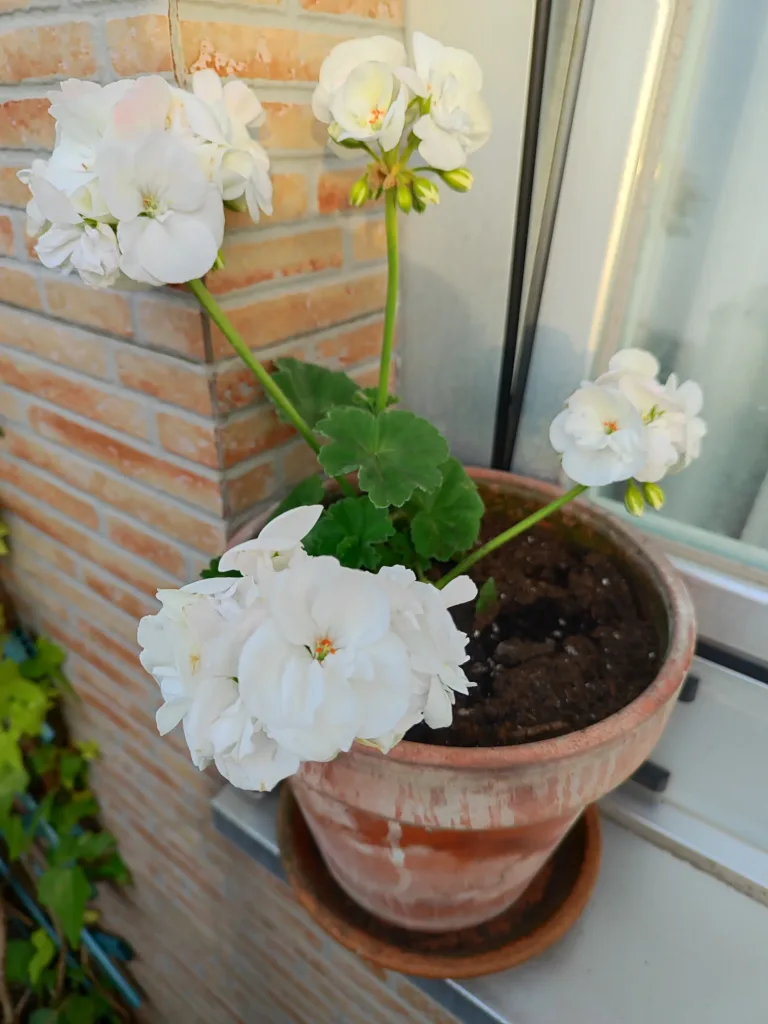
Growing Zonal Geranium at home?
Take a photo and we'll tell you how it's doing and what it needs.