
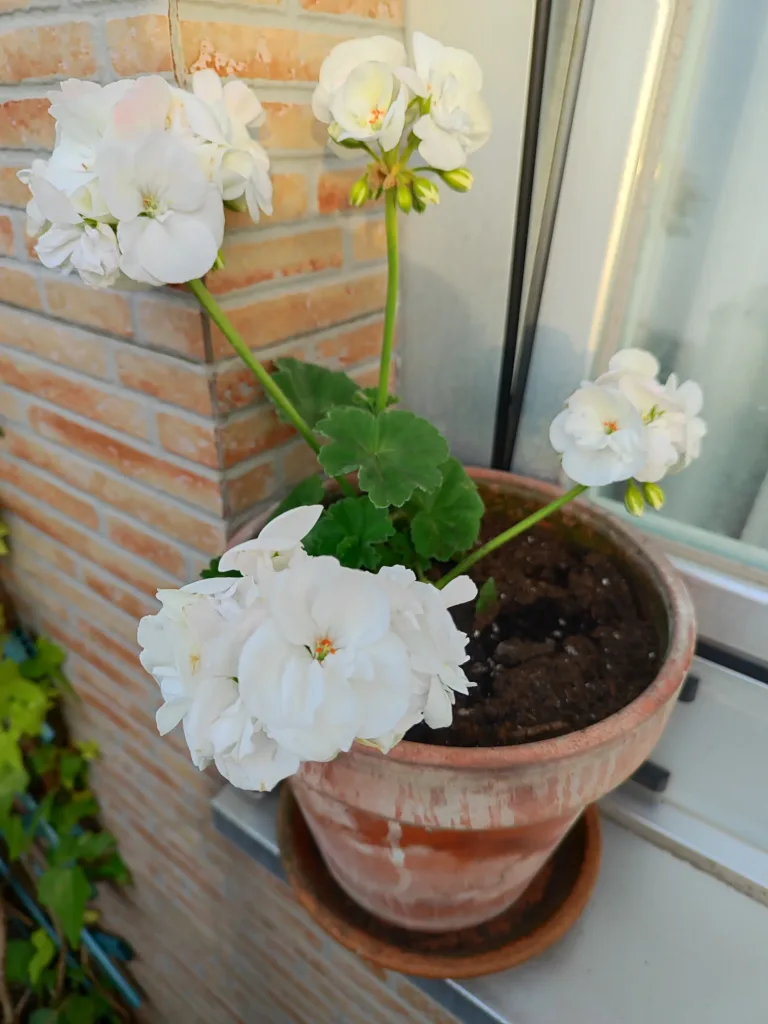
Pelargonium hortorum, commonly known as the zonal geranium or simply geranium, is one of the most popular ornamental plants worldwide. It is distinguished by its striking flower clusters which, in this variety, present a very elegant pure white. Its leaves are fleshy, rounded, and often display a dark, horseshoe-shaped band, a characteristic that gives it its "zonal" name. It is a plant highly valued for its ability to flower continuously during warm months.
It belongs to the Geraniaceae family and originates from South Africa, although current garden specimens are complex hybrids developed to improve their resilience and coloration. In its natural habitat or in Mediterranean climates, it grows as a sub-shrub with stems that tend to become woody over time. It prefers well-ventilated locations and soils with excellent drainage to prevent rotting of its succulent stems, being able to tolerate short periods of drought once established.
Its cultivation is extremely simple, making it the ideal choice for balconies, terraces, and windowsills. In addition to its aesthetic value, geraniums are known for their resistance to many common garden pests. They are propagated with great ease through stem cuttings, a common practice among enthusiasts to multiply the plant. Although it is an outdoor plant, it can be kept in very bright indoor spaces during winter in cold climates.
Did you know?The dark horseshoe-shaped pattern found on the foliage gives this plant its traditional botanical name, zonal geranium.
Care
- Watering
- 1-2 times per week in summer, allowing the surface to dry between waterings.
- Light
- Full sun or very bright partial shade, ideally 6 hours of direct light.
- Temperature
- Between 15°C and 25°C; protect from intense frost and extreme cold.
- Soil
- Universal mix with good drainage, avoiding root waterlogging.
- Fertilizer
- Liquid fertilizer for flowering plants every 15 days in spring and summer.
- Pruning
- Regularly snap off faded flowers at the base of their stalks to encourage new buds. Cut back straggly stems by half in late winter or early spring to restore a dense, bushy form.
- Propagation
- Easily propagated through stem cuttings taken in spring or late summer using non-flowering shoots. Insert cuttings into moist, well-aerated potting mix where roots form within three weeks.
Is White Geranium toxic to cats and dogs?
Yes. According to the ASPCA, it is toxic to cats and dogs.
- Cats
- Toxic
- Dogs
- Toxic
Usual signs: Primarily gastrointestinal upset, potentially causing ataxia, muscle weakness, lethargy, or hypothermia in larger ingestions, with cats being most sensitive.
If your pet has chewed it and shows symptoms, call your vet or the nearest emergency vet.
Source: ASPCA Animal Poison Control
Common problems
- Root rot
- Caterpillars
- Botrytis (grey mould)
- Overwatering
- Rust
Frequently asked questions
Why are my geranium leaves turning yellow?
Overwatering and poorly draining soil are the most frequent causes of yellowing foliage. It can also be caused by standard bottom leaf aging or a lack of light and nutrients.
Why is my geranium not blooming?
The most common reason is inadequate direct sunlight, which geraniums need in abundance to initiate buds. Excess nitrogen fertilizer can also favor lush leaf growth while preventing flower formation.
How should I overwinter geraniums?
Bring potted plants indoors before the first hard frost and place them in a cool, bright location with minimal watering. Alternatively, take late-summer stem cuttings to grow fresh, compact plants for the following spring.
Why are stems turning black or hollow?
Black or hollowed stems often indicate caterpillar damage boring through tissues, or fungal stem rot caused by waterlogged soil. Prune away all damaged sections immediately and adjust your watering routine.
From the same family
Growing White Geranium at home?
Take a photo and we'll tell you how it's doing and what it needs.