
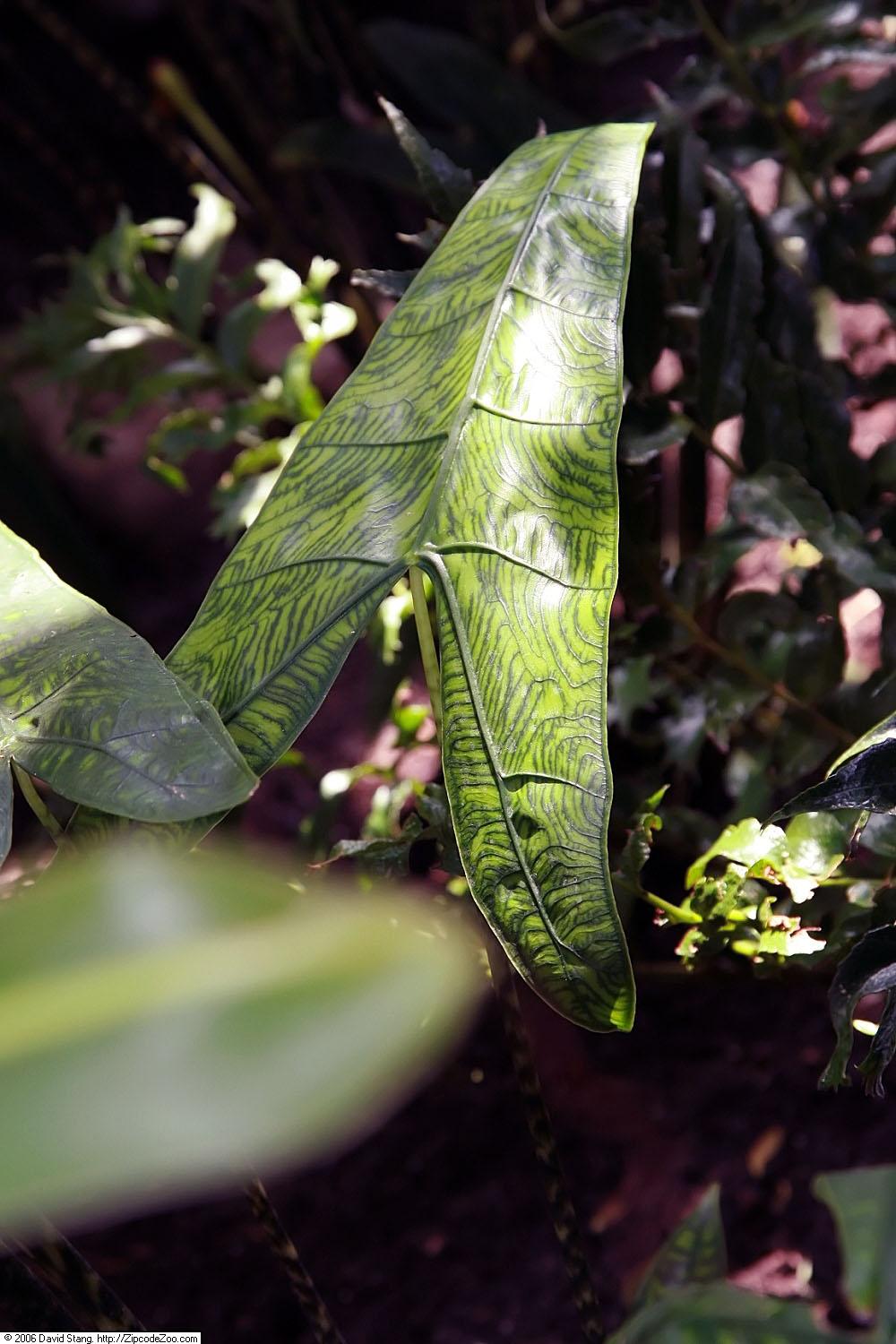
The zebra alocasia (Alocasia zebrina) is an herbaceous plant in the Araceae family, famous for its tall petioles banded in cream and green like zebra stripes. Native to the tropical forests of the Philippines, it grows from a fleshy rhizome and holds its arrow-shaped leaves high, which gives it a light, architectural silhouette. Indoors the leaves usually reach 20 to 30 cm, smaller than in the wild but equally striking.
It asks for bright light without direct sun, steady warmth between 18 and 27 °C and high humidity to keep the leaf margins in good shape. Watering should keep the mix evenly moist during growth and drier in winter, when the plant may slow down or drop a leaf to rest. A loose, well-drained mix and a pot with good drainage holes matter more than frequent feeding.
It is a plant with character: it dislikes moves, cold drafts and sudden changes, and it often drops an older leaf when a new one unfolds. Red spider mites are its main enemy indoors, so leaves deserve regular inspection and cleaning. With stable conditions and patient watering, it produces a steady parade of striped stems and sculptural leaves.
Did you know?Each leaf is held by a tall striped stalk, and the plant can shed leaves in winter to rest and sprout again in spring.
Care
- Watering
- Keep the mix evenly moist in spring and summer, watering when the top 2 cm feel dry. In autumn and winter, let it dry a little deeper, since the plant slows down and may shed leaves. Always drain the saucer, because the fleshy rhizome rots in standing water.
- Light
- It needs bright, indirect light to keep the leaves large and the stems striped. A few hours of soft morning sun are fine, but harsh midday sun burns the blades.
- Temperature
- It grows well between 18 and 27 °C and suffers below about 15 °C. Keep it away from cold drafts and radiators, and expect slower growth or rest in cool, dark winters.
- Soil
- Use a loose, airy mix with coco coir, pine bark and perlite that holds moisture yet drains fast. A pot with generous drainage holes is more important than a large pot.
- Fertilizer
- Feed with a half-strength balanced liquid fertilizer every 2 to 3 weeks in spring and summer. Pause feeding in autumn and winter, when the plant barely grows or rests.
- Pruning
- It needs no real pruning: cut off yellow or damaged leaves at the base of the petiole. Clean the blades with a damp cloth so dust does not block the light.
- Propagation
- The practical method at home is dividing the rhizome or separating offsets during spring repotting. Each division should keep roots and at least one shoot. Plant in an airy mix and water lightly until new growth shows.
Is Zebra alocasia toxic to cats and dogs?
Yes. According to the ASPCA, it is toxic to cats and dogs.
- Cats
- Toxic
- Dogs
- Toxic
Usual signs: Oral irritation with pain and swelling of the mouth, tongue and lips, excessive drooling, vomiting and difficulty swallowing.
If your pet has chewed it and shows symptoms, call your vet or the nearest emergency vet.
Source: ASPCA Animal Poison Control
Common problems
- Spider mites
- Overwatering
- Root rot
- Dry air
Frequently asked questions
How often should I water a zebra alocasia?
In spring and summer, water when the top 2 cm of the mix feel dry, keeping it evenly moist but never soggy. In autumn and winter, space waterings and let the mix dry deeper, since growth slows. If the stems feel soft at the base, it is getting too much water.
Why are the leaves turning yellow?
One older leaf yellowing as a new one opens is normal in alocasias. Several yellow leaves at once usually mean excess water, cold or too little light. Check drainage, move it somewhere warmer and brighter, and trim only fully yellow leaves.
Is it normal for it to lose leaves in winter?
Yes, many plants slow down or shed leaves when days shorten and rooms cool. Reduce watering, stop feeding and keep the rhizome in a bright spot above 15 °C. It usually sprouts again in spring when warmth and light return.
How do I keep the air humid enough?
Group it with other plants, use a humidifier or place the pot on a tray of pebbles with water below the pot base. Mist only briefly, since constantly wet leaves spot easily. Aim for humidity above 50 % without soaking the foliage.
Why are there tiny webs under the leaves?
Fine webs with stippled, dull leaves point to red spider mites, the classic pest of this plant. Rinse the foliage with lukewarm water, wipe both sides of each leaf and repeat weekly. Isolate the plant and raise humidity while you treat it.
From the same family


Growing Zebra alocasia at home?
Take a photo and we'll tell you how it's doing and what it needs.