
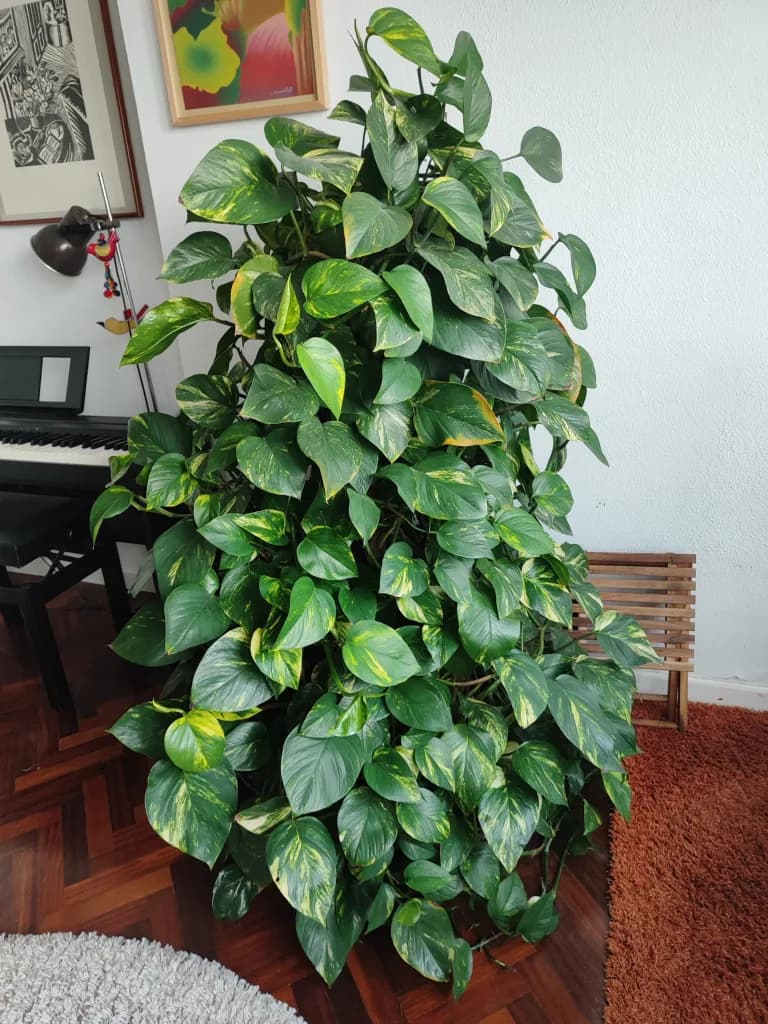
The Pothos is one of the most popular and resilient houseplants worldwide. It is distinguished by its heart-shaped leaves of vibrant green with yellow spots or streaks (variegation) that intensify with light exposure. It is a very versatile climbing or trailing plant, capable of adapting to various decor styles thanks to its rapid growth and dense, lush foliage.
It belongs to the Araceae family and is native to the Solomon Islands in Southeast Asia. In its natural habitat, it is a vigorous liana that climbs tree trunks, reaching gigantic dimensions with leaves that develop fenestrations similar to Monstera. In domestic conditions, it maintains a manageable size but retains its epiphytic nature and extraordinary adaptability.
It is famous for its air-purifying properties, being capable of removing common toxins such as formaldehyde and benzene. Its cultivation is extremely simple, making it the ideal choice for beginners, as it tolerates periods of drought and low light conditions. It propagates with extreme ease through stem cuttings in water, allowing the plant to be multiplied effortlessly.
Did you know?Famous for its air-purifying properties, capable of removing common toxins.
Care
- Watering
- Moderate, allow the top layer to dry (every 7-10 days).
- Light
- Bright indirect, tolerates partial shade. Avoid direct sun.
- Temperature
- Ideal between 65-80°F (18-27°C). Avoid cold drafts.
- Soil
- All-purpose mix with good drainage (perlite or coco coir).
- Fertilizer
- Balanced liquid fertilizer every 30 days during warm seasons.
- Pruning
- Trim back overly long or leggy vines in spring to encourage bushier, fuller growth near the base. The trimmed stem cuttings can be easily saved and rooted to start new plants.
- Propagation
- Propagate by taking stem cuttings that include at least one leaf and one aerial root node. Place the cuttings in water or moist potting soil, and roots will reliably emerge within a few weeks.
Is Variegated Pothos toxic to cats and dogs?
Yes. According to the ASPCA, it is toxic to cats and dogs.
- Cats
- Toxic
- Dogs
- Toxic
Usual signs: Oral irritation, pain and swelling of the mouth, tongue, and lips, excessive drooling, vomiting, and difficulty swallowing.
If your pet has chewed it and shows symptoms, call your vet or the nearest emergency vet.
Source: ASPCA Animal Poison Control
Common problems
- Root rot
- Overwatering
- Too little light
- Mealybugs and scale
- Underwatering
Common diseases
Frequently asked questions
Why are my pothos leaves turning yellow?
Yellow leaves are most commonly caused by overwatering or soil that stays waterlogged for too long. Check the drainage holes to ensure excess water escapes freely and let the topsoil dry out before watering again.
Why is my pothos losing its variegated leaf pattern?
Loss of variegation indicates that the plant is not receiving sufficient indirect light. When placed in darker rooms, pothos produces more chlorophyll to absorb available light, turning the leaves solid green.
Can pothos grow permanently in water?
Yes, pothos can survive indefinitely in a vase of fresh water if the water is replaced regularly. However, plants grown exclusively in water will grow at a slower rate than those planted in nutrient-rich potting soil.
Is pothos better as a hanging plant or climbing on a pole?
Both styles work wonderfully depending on your space and personal decorative preference. Allowing vines to climb a moss pole encourages the leaves to grow noticeably larger, while trailing them keeps leaves compact and uniform.
Growing Variegated Pothos at home?
Take a photo and we'll tell you how it's doing and what it needs.