
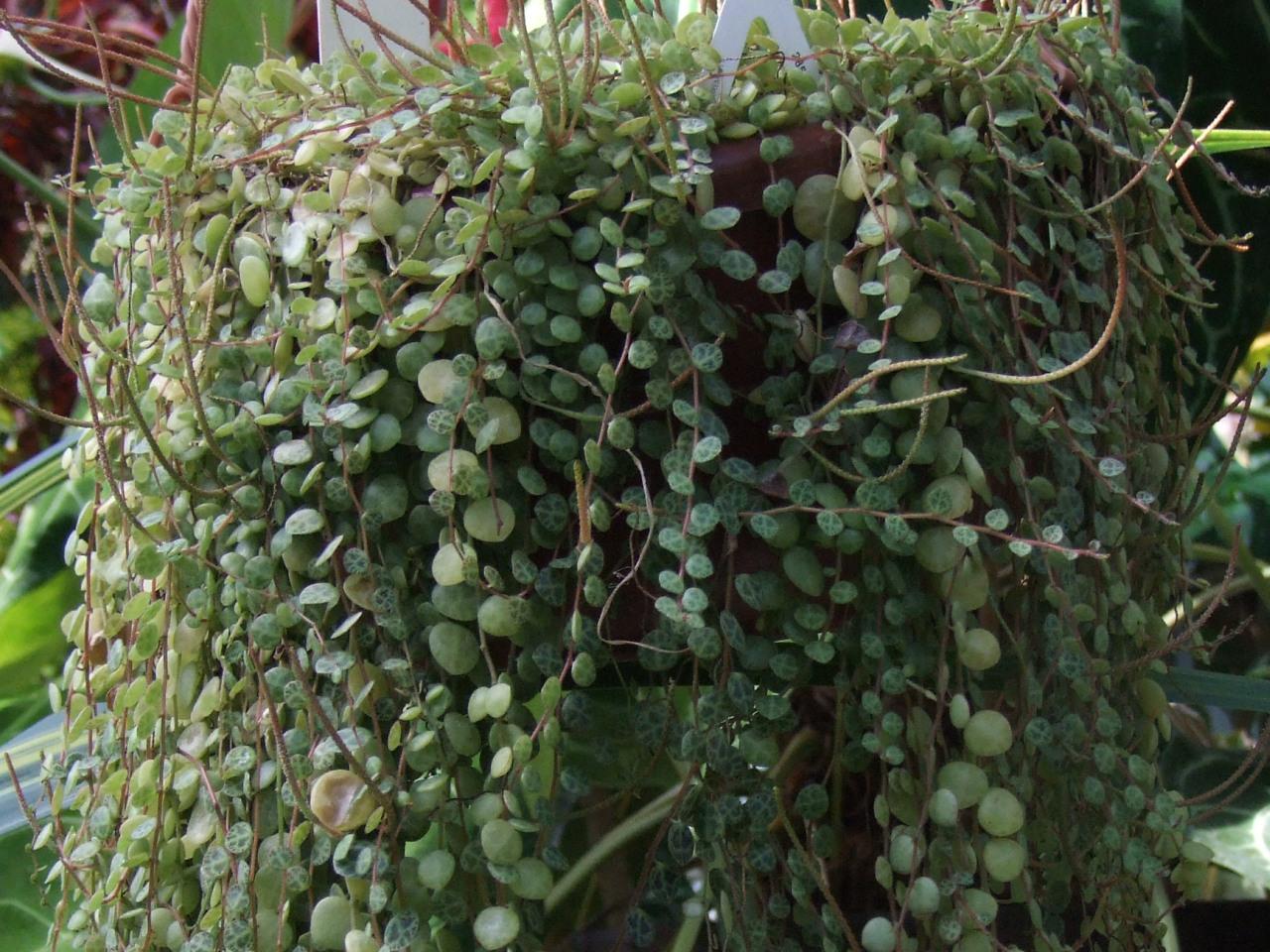
The string of turtles (Peperomia prostrata) is a trailing plant from the humid forests of Ecuador, loved for its small, round, fleshy leaves patterned like tiny tortoise shells. Its slender stems spill downwards and slowly build dense curtains of foliage, so it looks at its best in hanging baskets and on high shelves. It is slow growing, takes up little room, and suits flats with good light.
Like other thick-leaved peperomias, it stores water in its foliage and would rather go slightly thirsty than sit with wet roots. The classic mistake is watering it like a thin-leaved tropical plant: it needs a very airy mix with the top layer left to dry out between waterings. Bright indirect light keeps growth compact and the leaf pattern vivid, while dim spots make the stems stretch and thin out.
Given those two basics, decent light and restrained watering, it is a long-lived plant that asks for little feeding and hardly any pruning. Overlong trailing stems can be trimmed and used as cuttings to raise new plants with ease. In temperate climates it lives indoors all year, kept away from cold draughts and from heaters that parch the air.
Did you know?Its patterned leaves inspired the common name, and strings can trail well over half a metre on a mature plant.
Care
- Watering
- Water when the top 2 or 3 centimetres of mix feel dry, which indoors usually means every 7 to 10 days in summer and every 2 to 3 weeks in winter. Check with a finger or a wooden skewer first, and empty any water left in the saucer.
- Light
- It wants bright, indirect light, for instance near an east-facing window or behind a sheer curtain. It copes with a little gentle morning sun, but harsh midday sun scorches the leaves.
- Temperature
- It grows well between 18 and 27 °C and dislikes cold: below about 12 to 13 °C it suffers damage. Keep it away from cold draughts and from radiators that dry the air.
- Soil
- Use a very free-draining, airy mix, such as a succulent mix with added perlite or fine bark, in a pot with drainage holes.
- Fertilizer
- Feed sparingly: a half-strength balanced liquid feed once a month in spring and summer is plenty, and give it nothing in autumn and winter.
- Pruning
- It barely needs pruning; trim any overlong or bare stems in late spring to keep the plant bushy.
- Propagation
- Take stem cuttings with several leaves in spring and root them in water or moist mix. Single leaves with a piece of stalk also root, though more slowly.
Is String of turtles toxic to cats and dogs?
The ASPCA doesn't list this species. If your pet has chewed it and seems unwell, call your vet.
Common problems
- Overwatering
- Root rot
- Too little light
- Fungus gnats
Frequently asked questions
How often should I water a string of turtles?
Water when the top 2 or 3 centimetres of mix are dry, roughly every 7 to 10 days in summer and every 2 to 3 weeks in winter indoors. Always check first with your finger, because this plant forgives drought far better than waterlogging.
Why are the leaves dropping or going soft?
Soft, translucent or falling leaves almost always point to too much water or a mix that stays soggy. Let the pot dry out, check that the drainage holes are open, and consider repotting into a grittier mix if the problem persists.
Why is it losing its turtle pattern and growing leggy?
Faded patterning and long gaps between leaves mean it needs more light. Move it to a brighter spot with indirect light, though still out of harsh midday sun, and new growth will come through compact again.
How do I propagate it?
Snip stem sections with several leaves in spring and root them in water or moist mix, keeping them warm and lightly humid. Single leaves with a bit of stalk can work too, but they root more slowly.
Why does it have fungus gnats around the pot?
Tiny flies hovering over the soil signal persistently damp mix and decaying matter at the surface. Allow the top layer to dry fully between waterings and remove fallen leaves from the pot.
From the same family


Growing String of turtles at home?
Take a photo and we'll tell you how it's doing and what it needs.