
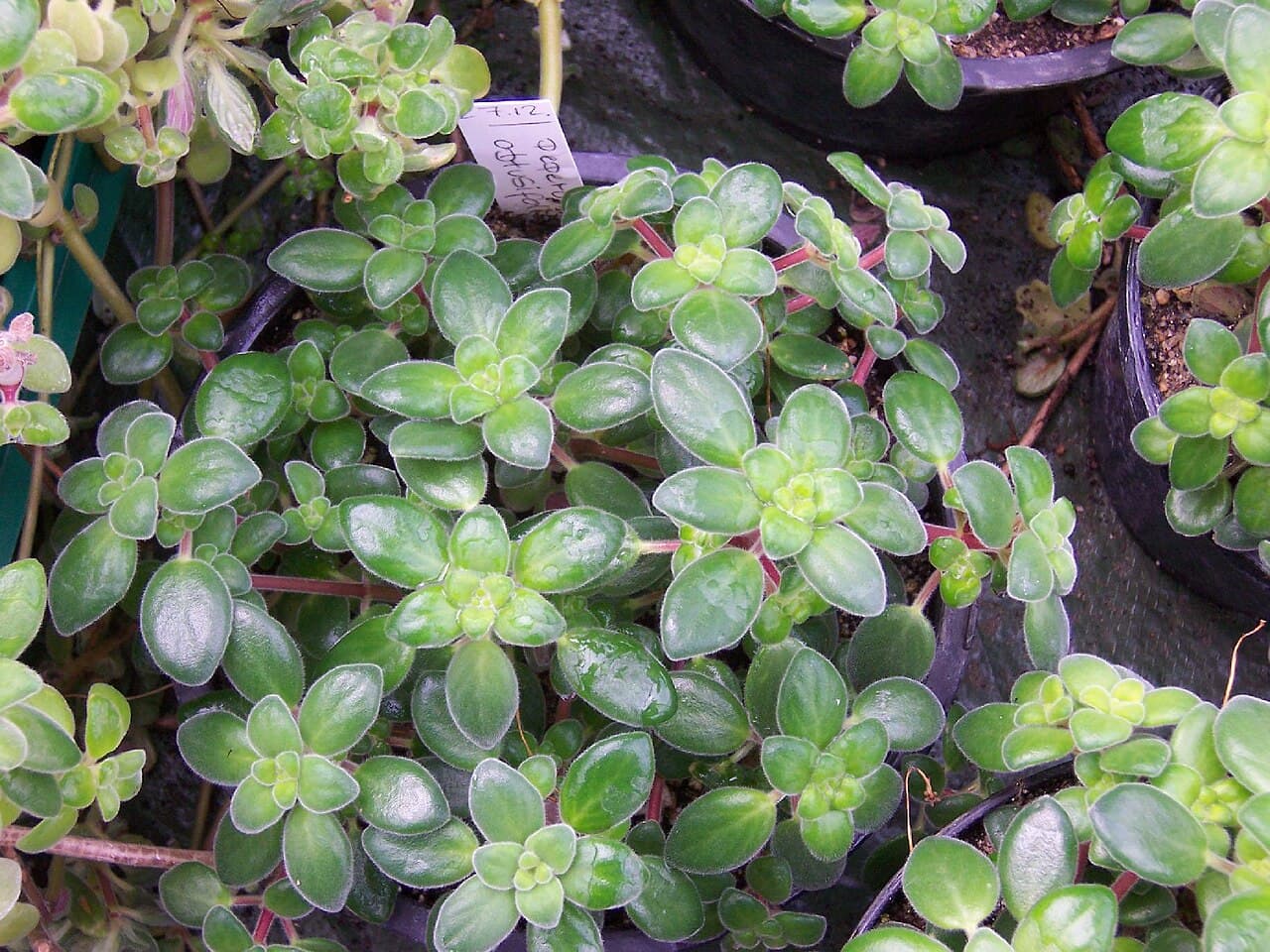
The baby rubber plant (Peperomia obtusifolia) is a popular, compact perennial native to the tropical rainforests of Central America, South America, and Florida. Despite its common name, it is not related to the true rubber tree; instead, it belongs to the pepper family, Piperaceae. It is widely admired for its thick, cupped foliage and sturdy stems that hold significant moisture.
In the wild, this versatile plant frequently grows as an epiphyte on moss-covered trees or as ground cover beneath dense jungle canopies. Because its roots are accustomed to shallow, aerated organic matter, it thrives indoors in modest pots with loose, fast-draining potting soil. It adapts remarkably well to household environments with moderate humidity.
Extremely easy to grow, the baby rubber plant is well-suited for novice plant parents who occasionally forget to water. Its succulent leaves store moisture efficiently, allowing it to withstand brief periods of drought without dropping foliage. With moderate indirect light and reasonable warmth, it will maintain its compact habit for many years.
Did you know?Despite its common name and succulent-like foliage, it is actually a member of the pepper family and unrelated to true rubber trees.
Care
- Watering
- Water only when the top half to two-thirds of the soil has dried out completely, which usually means every 7 to 10 days in summer and every two weeks in winter. Always check soil moisture with a wooden skewer or your finger before adding water to prevent soggy roots.
- Light
- Provide medium to bright indirect sunlight near an east or west-facing window. Avoid harsh direct midday sun, which can scorch the thick leaves and wash out their rich color.
- Temperature
- Keep your plant in temperatures between 18°C and 26°C throughout the year. Protect it from cold drafts, air conditioners, and temperatures falling below 12°C.
- Soil
- Use a lightweight, well-aerated potting mix combining houseplant soil with equal parts perlite or orchid bark to ensure rapid drainage.
- Fertilizer
- Feed once a month during spring and summer with a balanced liquid houseplant fertilizer diluted to half strength. Suspend feeding entirely in autumn and winter when growth naturally slows.
- Pruning
- Pinch back leggy stems in early spring to encourage bushy, compact growth throughout the growing season. Remove any yellowing or damaged bottom leaves cleanly at the stem base.
- Propagation
- Propagate readily by taking stem or leaf cuttings in late spring and rooting them in water or moist perlite mix. Place the cuttings in bright indirect light and maintain mild warmth until sturdy roots establish.
Is Baby rubber plant toxic to cats and dogs?
No. According to the ASPCA, it is not toxic to cats or dogs.
- Cats
- Non-toxic
- Dogs
- Non-toxic
Source: ASPCA Animal Poison Control
Common problems
- Root rot
- Overwatering
- Mealybugs and scale
- Too little light
- Cold damage
Frequently asked questions
Why are green leaves suddenly dropping off my plant?
Sudden leaf drop while foliage is still green usually points to overwatering or sudden exposure to cold air. Inspect the roots for rot, allow the potting mix to dry thoroughly, and move the pot away from drafty areas.
Why are the leaves becoming soft and wrinkled?
Soft, wrinkled foliage is a classic sign of underwatering or severe dehydration. If the soil is dry and pulling away from the pot, give the plant a thorough soak so the roots can rehydrate.
Why is my baby rubber plant growing tall and leggy?
Stems stretch and become sparse when the plant receives insufficient light. Relocate it closer to a brighter light source and trim the elongated stems to stimulate fuller branching.
Does Peperomia obtusifolia produce flowers?
Yes, it sends up slender, pale green flower spikes resembling mouse tails during spring and summer. While not showy, these spikes indicate that the plant is happy with its light and care conditions.
Growing Baby rubber plant at home?
Take a photo and we'll tell you how it's doing and what it needs.