
Treatment guide
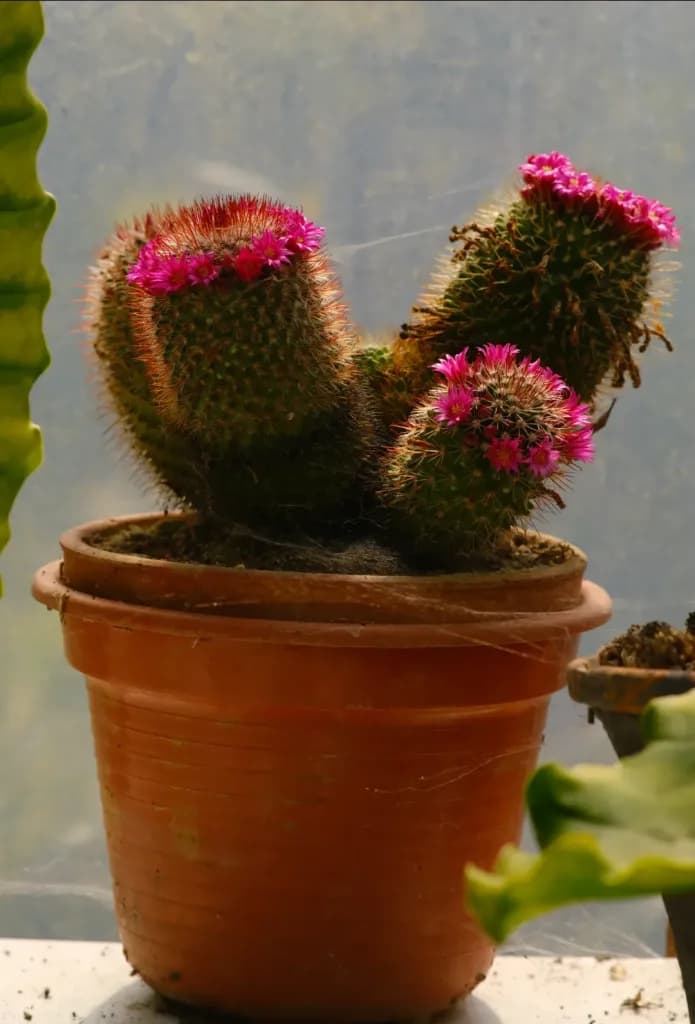
Potential pests (spider mites) or harmless spiders; some basal corking.
Mild1 recorded case
What is it?
The presence of webbing on a cactus can indicate the arrival of spider mites or simply common household spiders. Spider mites are tiny arachnids that thrive in hot, dry, and stagnant air, feeding on the plant's sap and leaving fine silk behind to protect their eggs. If the webbing is dense and accompanied by yellow mottling on the cactus skin, it is a pest issue. However, if the webbing is loose and contains no tiny moving specks, it is likely just a harmless spider using the spines as an anchor.
Treatment plan
Immediate
Visual Inspection
Use a magnifying glass to check if the webbing is from common spiders or tiny mites.
1-3 days
Mechanical Cleaning
Gently remove the webbing and dust using a soft, dry paintbrush or cotton swab.
1-3 days
Alcohol Treatment
If white cottony spots (mealybugs) are found at the base, dab them with 70% isopropyl alcohol.
1 week
Isolation
Keep the plant away from other houseplants until you are sure no pests are present.
1 week
Preventive Spray
Apply neem oil or insecticidal soap if tiny moving dots (mites) are spotted.
2-4 weeks
Environment Adjustment
Increase air ventilation around the pot to discourage spider mite webbing and fungal growth.
Care during recovery
- Watering
- Every 2-3 weeks in summer; keep dry during winter months.
- Light
- Full sun or very bright indirect light, 6+ hours daily.
- Temperature
- Prefers 10°C to 30°C; protect from temperatures below 5°C.
- Soil
- Well-draining cactus mix with sand, perlite, or volcanic rock.
- Fertilizer
- Diluted cactus fertilizer once in spring during active growth.
Seeing these symptoms on your plant?
Analyze it for free and get a plan made for it.