
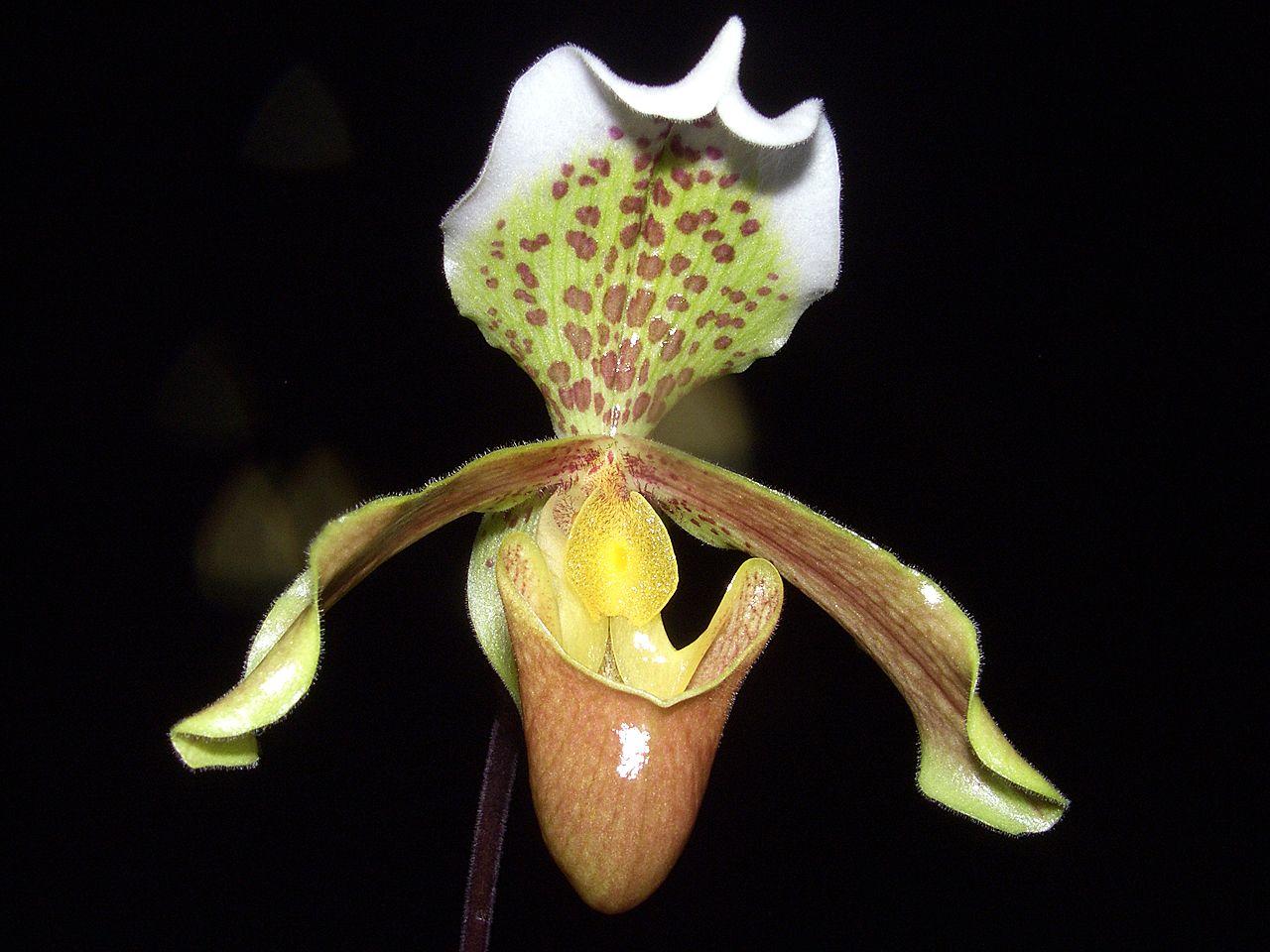
The lady's slipper orchid (Paphiopedilum insigne) is a terrestrial orchid from the hills of northeastern India, Bangladesh and Nepal, where it grows in forest soil and among rocks. Its long leaves, often mottled, form a fan with no pseudobulbs. Each flower stem carries a single long-lasting bloom with a slipper-shaped pouch in shades of green, brown and pink.
At home it suits indoor growing with moderate light and no direct sun, in a small pot of fine bark, perlite and some moss. With no storage organs, it likes steady, light moisture: water as the surface begins to dry, without waterlogging. It prefers soft or rain water, since built-up salts burn the leaf tips.
Each fan blooms once a year, usually in autumn or winter, and the flower lasts for weeks on the plant. Over time it produces side fans that build into a dense clump, easily divided when repotting. It is a slow but long-lived orchid, ideal for anyone seeking elegant flowers without technical fuss.
Did you know?Its pouch traps visiting insects so they can only escape past the pollen, a pollination trick found nowhere else among houseplant orchids.
Care
- Watering
- Water as the surface layer starts to dry, keeping the mix lightly and evenly moist. Twice a week in summer and once in winter is typical. Use soft or rain water and always empty the saucer.
- Light
- It needs moderate, filtered light with no direct sun burning its leaves. A north- or east-facing sill suits it perfectly.
- Temperature
- It grows well between 16 and 24 °C for most of the year. It welcomes somewhat cool autumn nights, but should never drop below 10 °C.
- Soil
- Use a mix of fine bark, perlite and a little moss or peat that holds some moisture. Repot every two years, since the fine roots suffer once the mix breaks down.
- Fertilizer
- Feed every two or three weeks while growing with very diluted orchid fertiliser. Excess salts harm it more than a missed feeding.
- Pruning
- It needs no pruning; cut only the flower stem once faded and any fully dry lower leaves. Leave healthy fans alone, even after they have bloomed.
- Propagation
- Propagate by division when repotting, separating fans that already carry their own roots. Each division needs at least two or three fans to establish strongly.
Is Lady's slipper orchid toxic to cats and dogs?
The ASPCA doesn't list this species. If your pet has chewed it and seems unwell, call your vet.
Common problems
- Overwatering
- Root rot
- Hard water
- Dry air
Frequently asked questions
Why are the leaf tips turning brown?
Brown tips usually mean salts from hard water or overfeeding building up in the mix. Switch to soft or rain water, rinse the pot thoroughly and feed at half strength.
Why is my lady's slipper not flowering?
It needs a mature fan, steady moderate light and slightly cooler autumn nights to set buds. Tiny single fans often wait a year or two, so keep it comfortable and be patient.
Should I cut the flower stem after blooming?
Yes, cut the faded stem at its base once the flower withers, but leave the fan of leaves standing. That same fan will not bloom again, yet it feeds the young fans beside it.
How long does each flower last?
A single bloom commonly lasts six to eight weeks on the plant in cool indoor conditions. Keep it away from heat and draughts to enjoy the full display.
Does it prefer a big or a small pot?
A small, snug pot suits it best, since its fine roots like steady moisture without sogginess. Repot every two years into fresh mix rather than moving it into a much larger container.
From the same family



Growing Lady's slipper orchid at home?
Take a photo and we'll tell you how it's doing and what it needs.