
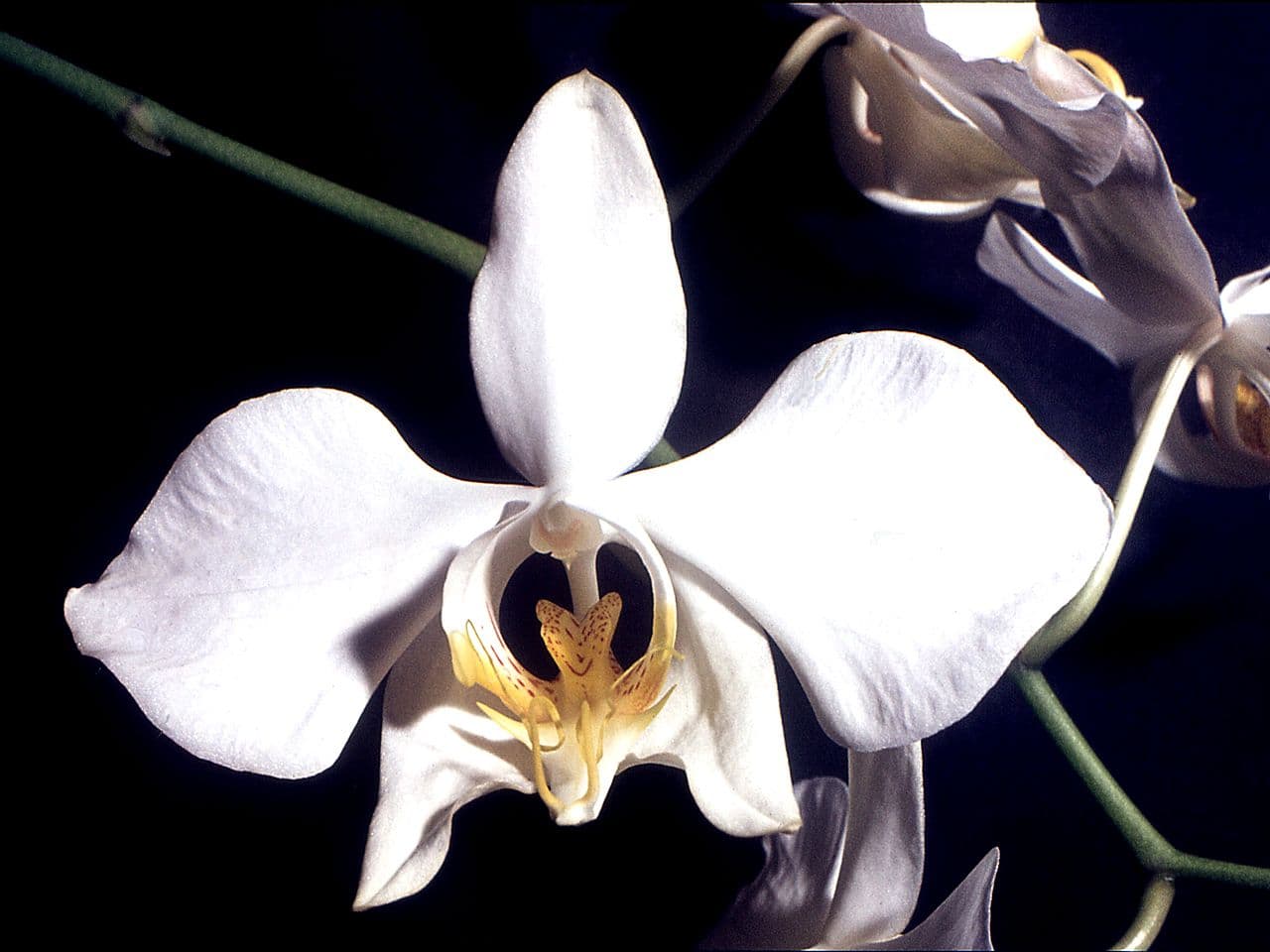
Phalaenopsis amabilis, widely celebrated as the moth orchid, is perhaps the most iconic and rewarding flowering houseplant available to indoor gardeners. It is characterized by thick, glossy green foliage arranged in a compact rosette, accompanied by gracefully arching stems that display long-lasting, sculpted blooms for several consecutive months.
In its natural tropical canopy habitat, this species thrives as an epiphyte, anchoring firmly to tree bark to capture dappled sunlight and ambient moisture. Because its aerial roots perform photosynthesis and depend on atmospheric flow, planting it in traditional potting soil quickly suffocates the root system. Transparent plastic pots paired with chunky bark allow these unique roots to stay healthy and visible.
Contrary to common belief, moth orchids are straightforward to maintain once their moisture signals are understood. Providing bright indirect light, comfortable room temperatures, and allowing the roots to breathe between waterings ensures exceptional vigor. With just a little seasonal patience, this resilient plant will reliably rebloom year after year.
Did you know?The generic name Phalaenopsis translates from Greek to 'moth-like,' as early botanists mistook the bright white blooms clustered in the wild for flitting tropical moths.
Care
- Watering
- Water only when the roots inside the clear pot shift from vibrant green to a silvery-gray tone. The most reliable method is soaking the pot in room-temperature water for ten minutes, allowing all excess moisture to drain thoroughly before returning it to its saucer.
- Light
- Position the orchid in generous bright, indirect daylight, such as an east-facing exposure or behind a sheer curtain. Avoid intense direct sunlight, which scorches the fleshy foliage and leaves permanent bleached patches.
- Temperature
- Maintain ambient room temperatures between 18 °C and 26 °C, avoiding drops below 15 °C at night. A slight nighttime drop of a few degrees during autumn naturally stimulates the emergence of new flowering spikes.
- Soil
- Use an airy, coarse orchid bark mix amended with charcoal or perlite to promote root aeration. Avoid standard potting soil entirely, as dense mediums retain too much moisture and induce root rot.
- Fertilizer
- Feed with a balanced orchid fertilizer diluted to half strength every two or three waterings during active spring and summer growth. Suspend fertilizer applications during the winter resting period and while the plant is in full bloom.
- Pruning
- Prune spent flowering spikes close to the base with sterilized pruning snips once they have turned completely brown and dried out. Allow yellowing lower leaves to detach naturally rather than pulling them off by force.
- Propagation
- Propagate via plantlets known as 'keikis' that occasionally sprout directly from nodes on the flower spike. Detach and repot a keiki only after it has produced at least three leaves and several roots measuring about five centimeters.
Is Moth orchid toxic to cats and dogs?
No. According to the ASPCA, it is not toxic to cats or dogs.
- Cats
- Non-toxic
- Dogs
- Non-toxic
Source: ASPCA Animal Poison Control
Common problems
- Root rot
- Overwatering
- Mealybugs and scale
- Sunburn
- Dry air
Frequently asked questions
Why are my moth orchid's leaves turning yellow?
If only the lowest leaf is yellowing, it is simply natural senescence and can be left to shed on its own. If multiple leaves turn limp and yellow, the cause is usually overwatering or water trapped in the central crown.
How do I tell when my orchid needs to be watered?
Observe the roots through the clear plastic pot rather than checking the top bark. Bright green roots show that moisture levels are adequate, while silvery-gray roots indicate that it is time for a thorough watering.
What should I do with the stem after the flowers drop?
If the spike shrivels and turns brown, cut it cleanly off near the base using clean shears. If the stem stays green and healthy, you can leave it alone or trim it just above a node to prompt secondary flower shoots.
Why is my moth orchid not reblooming?
The most frequent reasons are insufficient indirect light and an environment with flat, unchanging temperatures. Move the plant to a brighter spot and allow it to experience slightly cooler nights for a few weeks in the fall to initiate bloom spikes.
Growing Moth orchid at home?
Take a photo and we'll tell you how it's doing and what it needs.