
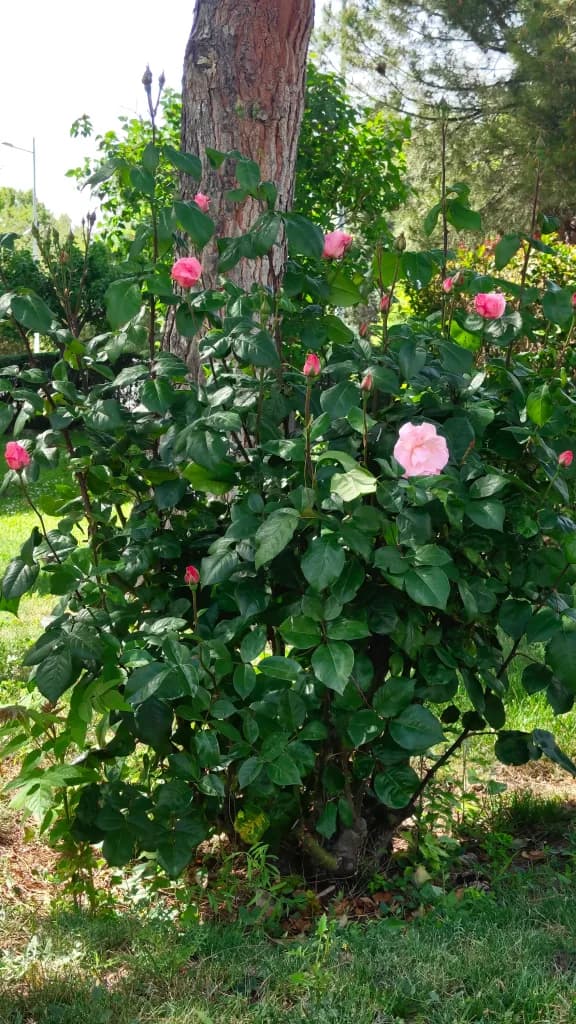
The garden rose is one of the most appreciated and cultivated ornamental shrubs worldwide due to the spectacular nature of its flowers and its characteristic fragrance. It is distinguished by its thorny stems and compound leaves, generally with serrated edges. Over the centuries, hybridization has resulted in an immense variety of colors, shapes, and sizes, from miniature roses to vigorous climbers that adorn pergolas and walls.
Botanically, it belongs to the Rosaceae family and its natural distribution mainly covers the temperate regions of the Northern Hemisphere, including Asia, Europe, and North America. It prefers open habitats with good lighting and well-structured, deep soils. They are perennial plants that play a vital ecological role by attracting numerous pollinators, such as bees and butterflies, which are drawn to the shape and aroma of their petals.
In popular culture and landscaping, roses symbolize affection and sophistication, being essential in the perfume industry and high-end floristry. Domestic cultivation requires periodic attention, especially regarding winter pruning to rejuvenate the plant and preventive control of pests like aphids or fungi like powdery mildew. In addition to their aesthetic value, some varieties produce rose hips, fleshy fruits used in gastronomy and natural medicine.
Did you know?Garden roses attract numerous pollinators like bees and butterflies.
Care
- Watering
- 2-3 times/week, moistening soil without wetting foliage.
- Light
- Full sun, at least 6 hours of direct light.
- Temperature
- Ideal 15-25°C; tolerates cold, protect from extreme frost.
- Soil
- Rich in organic matter, well-drained, slightly acidic pH.
- Fertilizer
- Balanced fertilizer every 15-20 days in spring/summer.
From the same family
Growing Garden rose at home?
Take a photo and we'll tell you how it's doing and what it needs.