
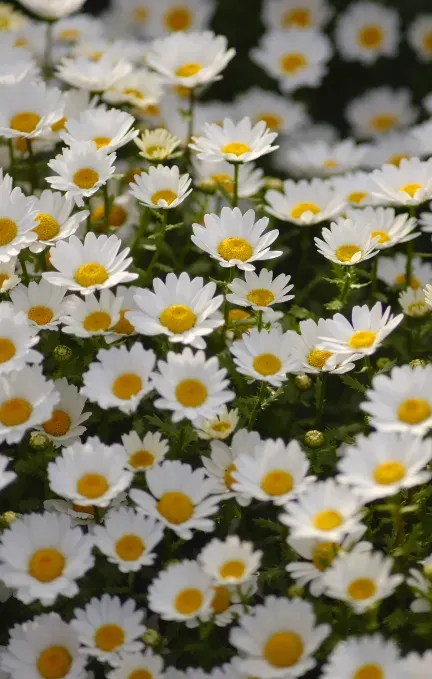
The White Daisy, scientifically known as Argyranthemum frutescens, is one of the most popular ornamental plants worldwide due to its simple beauty and its ability to produce flowers almost continuously. It is characterized by its classic flower heads, composed of a central disc of yellow flowers surrounded by white "petals" (ray florets). Its foliage is perennial, with deeply divided grayish-green leaves forming a dense, rounded shrub.
Botanically, it belongs to the Asteraceae family and is endemic to the Canary Islands. In its natural habitat, it grows in coastal areas and sun-exposed slopes, which has given it great resistance to salinity and short periods of drought. Although it behaves as a perennial shrub in temperate climates, in areas with very harsh winters it is often cultivated as an annual plant or requires greenhouse protection.
In home gardening, it is highly valued for its versatility, performing perfectly in both large pots and garden borders. It is a plant that symbolizes innocence and purity in the language of flowers. In addition to its aesthetic value, it attracts numerous pollinators such as bees and butterflies, contributing to environmental biodiversity. Its cultivation is rewarding, mainly requiring direct sun and basic pruning maintenance.
Care
- Watering
- Moderate to frequent, 2-3 times/week, avoiding waterlogging.
- Light
- Full sun, requires at least 6 hours of direct sunlight daily.
- Temperature
- Ideal 15-25°C. Protect from harsh frosts.
- Soil
- Well-drained, light soil rich in organic matter.
- Fertilizer
- Liquid fertilizer for flowering plants every 15 days during the season.
- Pruning
- Deadhead spent blooms regularly to encourage the continuous production of fresh flower buds. In late winter, trim back the stems lightly to maintain a bushy, compact shape without cutting into old, bare wood.
- Propagation
- Propagate by taking softwood or semi-ripe cuttings in late spring or late summer. They root readily within three to four weeks when kept in moist, free-draining compost under bright, indirect light.
Is White Daisy toxic to cats and dogs?
The ASPCA doesn't list this species. If your pet has chewed it and seems unwell, call your vet.
Common problems
- Aphids
- Powdery mildew
- Root rot
- Cold damage
- Underwatering
Frequently asked questions
Why has my marguerite daisy stopped blooming in midsummer?
Intense heat above 30 °C can cause the plant to pause flower production temporarily. Removing spent flowers and providing regular feeding with a high-potassium fertilizer will help restart blooming once temperatures moderate.
How do I protect marguerite daisies in winter?
In frost-prone areas, move potted plants to a sheltered, frost-free greenhouse or bright porch before the first freeze. For garden beds, apply a thick mulch around the base and protect the branches with fleece during cold snaps.
Why are the lower leaves turning yellow and dry?
Lower leaves naturally turn yellow and drop as stems mature and inner foliage gets shaded by new growth. However, if yellowing is widespread, it often points to root rot caused by soggy, poorly drained soil.
How often should I water marguerite daisies in pots?
During the active growing season, check the pot every two days and water whenever the upper soil layer feels dry. In cooler months, water sparingly once a week or whenever the compost begins drying out.
Growing White Daisy at home?
Take a photo and we'll tell you how it's doing and what it needs.