
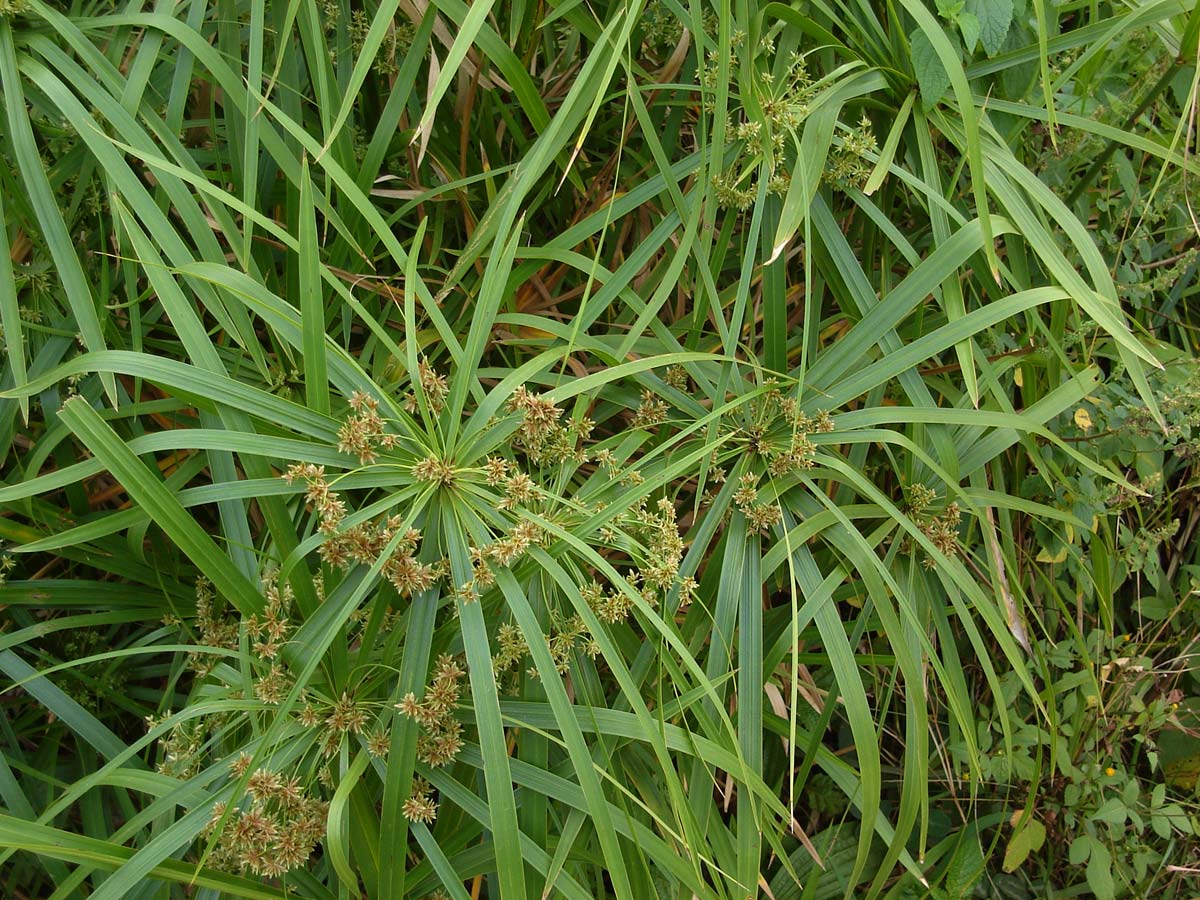
Umbrella papyrus (Cyperus alternifolius) is a bog plant with straight stems crowned by a tuft of fine leaves arranged like an umbrella. It belongs to the sedge family, Cyperaceae, and comes from the wetlands of Madagascar, where it grows along riverbanks and shallow pools. Its graphic, elegant habit makes it popular both in pots and in ponds and water margins.
It is one of the thirstiest houseplants: the soil should stay moist at all times, and it welcomes a saucer kept permanently filled. Water daily in summer and ease off somewhat in winter, never letting the soil dry out. It asks for plenty of light, between 15 and 27 °C, and even tolerates direct sun when its roots are kept wet.
Brown tips are the classic warning that it has gone thirsty or that the air is very dry. It tolerates hard pruning: old stems are cut to the base and the plant resprouts strongly. With constant water and repotting once it fills the pot, it forms dense clumps of great decorative value.
Did you know?Cut umbrellas root reliably when floated upside down in water, a curious and dependable way to propagate it.
Care
- Watering
- Keep the soil moist at all times and leave water standing permanently in the saucer: it is a bog plant. In summer it may need daily watering, especially in heat. In winter, ease off a little, but never let the soil dry out.
- Light
- It asks for plenty of light and tolerates direct sun while its roots stay thoroughly wet. Indoors, place it beside the brightest window in the house.
- Temperature
- It grows well between 15 and 27 °C during the growing season. Protect it from frost, which badly damages the stems.
- Soil
- Use a moisture-retentive mix, such as universal soil with some clay or compost. Here water retention matters more than drainage.
- Fertilizer
- Feed every two or three weeks in spring and summer with standard liquid fertilizer. Do not feed in autumn and winter.
- Pruning
- Cut old, dried or damaged stems to the base to encourage regrowth. You can also trim dried tips for looks.
- Propagation
- Propagate by dividing the clump in spring, keeping groups of stems with roots in each part. Cut umbrellas also root when floated upside down in water.
Is Umbrella papyrus toxic to cats and dogs?
The ASPCA doesn't list this species. If your pet has chewed it and seems unwell, call your vet.
Common problems
- Underwatering
- Dry air
- Spider mites
- Natural ageing
Frequently asked questions
Why are the leaf tips drying out?
It is almost always a lack of water or very dry air. Keep the soil permanently moist and leave water standing in the saucer. Trim the dried tips with clean scissors to improve its looks.
Can it live with its roots in water?
Yes, it is a bog plant and tolerates the base of the pot sitting a few centimetres deep in water. That is why it suits pond margins and pots with a constantly full saucer. Change the saucer water often so it never stagnates.
Does it need a lot of sun?
It grows best in strong light and accepts direct sun while its roots never run dry. Indoors, place it beside your brightest window. In dim light the stems emerge weak and flop over.
How do I propagate it?
The easiest way is dividing the clump in spring, keeping groups of rooted stems in each part. Cut umbrellas also root when floated upside down in water. Each division needs constant moisture until it establishes.
What care does it need in winter?
Water somewhat less, but never let the soil dry out. Shield it from hard cold, because it cannot stand prolonged frost. If it lives outdoors, bring it inside before the first frosts.
Growing Umbrella papyrus at home?
Take a photo and we'll tell you how it's doing and what it needs.