
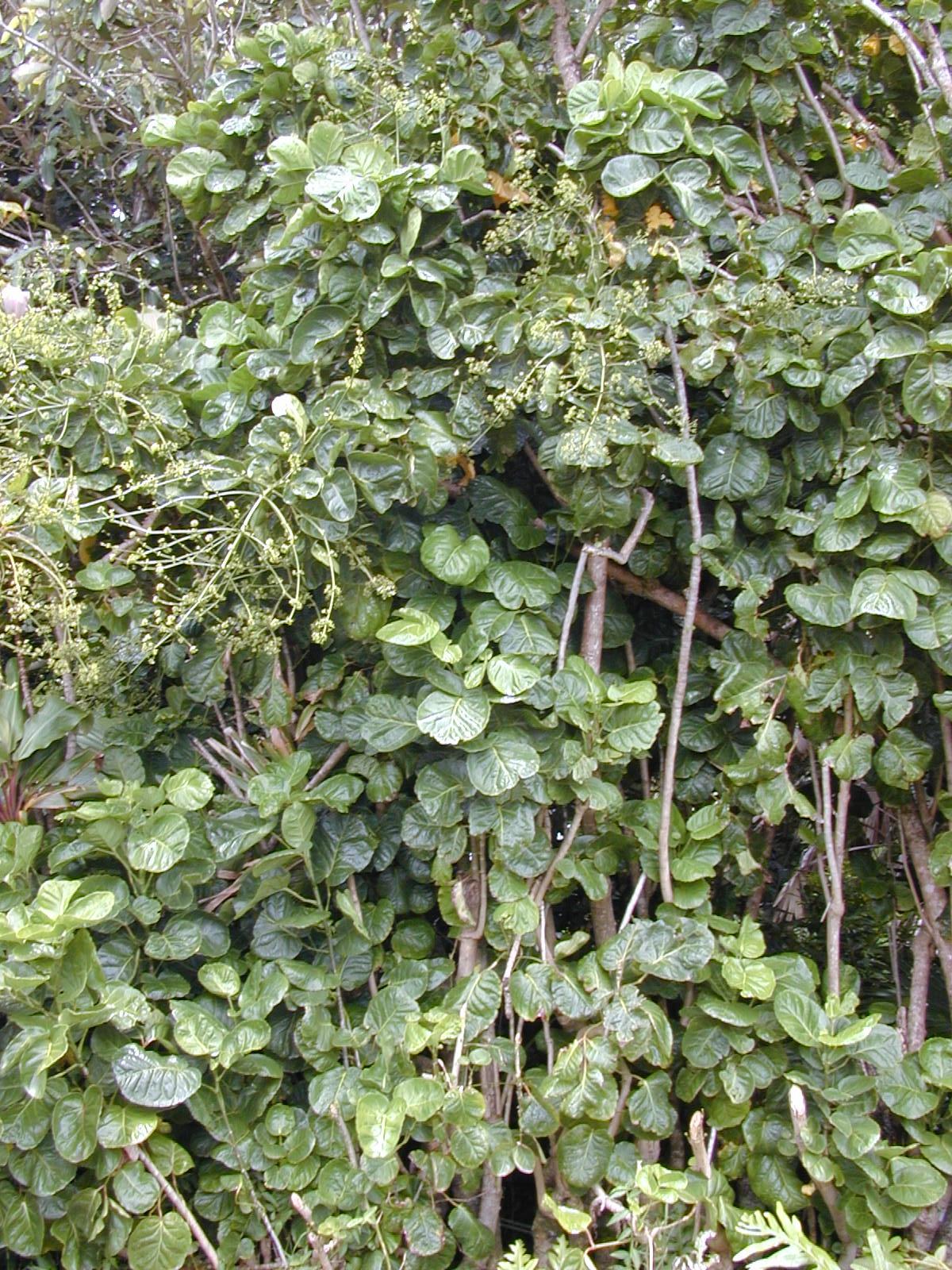
The shield aralia (Polyscias scutellaria) is a leafy shrub from the tropical islands of the south-western Pacific, grown for its unusual round leaves with finely scalloped edges. The foliage sits on slender upright stems and forms a light, airy canopy, sometimes edged or blotched in cream according to the variety. It brings a distinctly tropical yet tidy presence to bright rooms.
Its reputation for fussiness comes mostly from one habit: it drops leaves whenever its conditions change abruptly. A move across the room, a cold draught or a missed watering can all trigger shedding, though the plant recovers once settled. Apart from that sensitivity it asks for ordinary care: bright indirect light, even moisture without waterlogging, and steady warmth.
Once it accepts its spot it becomes a reliable, slow-growing shrub that needs only light shaping in spring. Keep the air reasonably humid, dust the leaves so they breathe, and feed lightly in the growing season. Repot every two or three years in spring, handling the root ball gently, and raise new plants from stem cuttings taken at pruning time.
Did you know?The round, cupped leaves with scalloped edges give rise to its shield name, and varieties range from plain green to cream-edged.
Care
- Watering
- Keep the mix evenly moist but never soggy, watering when the top couple of centimetres dry out. Indoors that is usually weekly in summer and every 10 to 14 days in winter.
- Light
- It wants bright, indirect light to keep the foliage dense and the leaf edges crisp. It tolerates some gentle morning sun but scorches in harsh midday rays.
- Temperature
- It grows best between 18 and 27 °C and hates cold draughts: keep it above 15 °C. Avoid sudden temperature swings and icy blasts from doors and windows.
- Soil
- Use a fertile, well-drained universal mix with perlite or bark, in a pot with drainage holes. It dislikes compacted soil that stays wet around the roots.
- Fertilizer
- Feed with a balanced liquid fertiliser at half strength every two to four weeks in spring and summer. Do not feed in autumn and winter.
- Pruning
- Prune lightly in spring to shape the plant and encourage branching, cutting back to just above a leaf. Always remove fallen leaves from the pot surface.
- Propagation
- Take semi-woody stem cuttings of 10 to 15 centimetres in spring and root them in moist mix kept warm and humid. Rooting is slow, so patience of several weeks is needed.
Is Shield aralia toxic to cats and dogs?
The ASPCA doesn't list this species. If your pet has chewed it and seems unwell, call your vet.
Common problems
- Transplant shock
- Dry air
- Spider mites
- Mealybugs and scale
Frequently asked questions
Why is my shield aralia dropping leaves?
Leaf drop is its classic response to change: a recent move, a cold draught or irregular watering. Put it somewhere bright, warm and sheltered, keep the routine steady, and new growth will follow.
How often should I water Polyscias scutellaria?
Water when the top couple of centimetres are dry, roughly weekly in summer and every 10 to 14 days in winter. Keep the mix evenly moist but never soggy, and always empty the saucer.
What light does it need?
Bright, indirect light suits it best, with perhaps a little gentle morning sun. Too little light thins the canopy, while harsh midday sun scorches the leaf edges.
How do I propagate it?
Take semi-woody stem cuttings of 10 to 15 centimetres in spring, set them in moist mix and keep them warm and humid. Rooting takes several weeks, so keep conditions stable and do not disturb them.
Why are the leaf edges browning?
Brown, dry edges usually signal dry air, irregular watering or a nearby heat source. Water more evenly, move it away from heaters, and group it with other plants to lift humidity.
From the same family


Growing Shield aralia at home?
Take a photo and we'll tell you how it's doing and what it needs.