
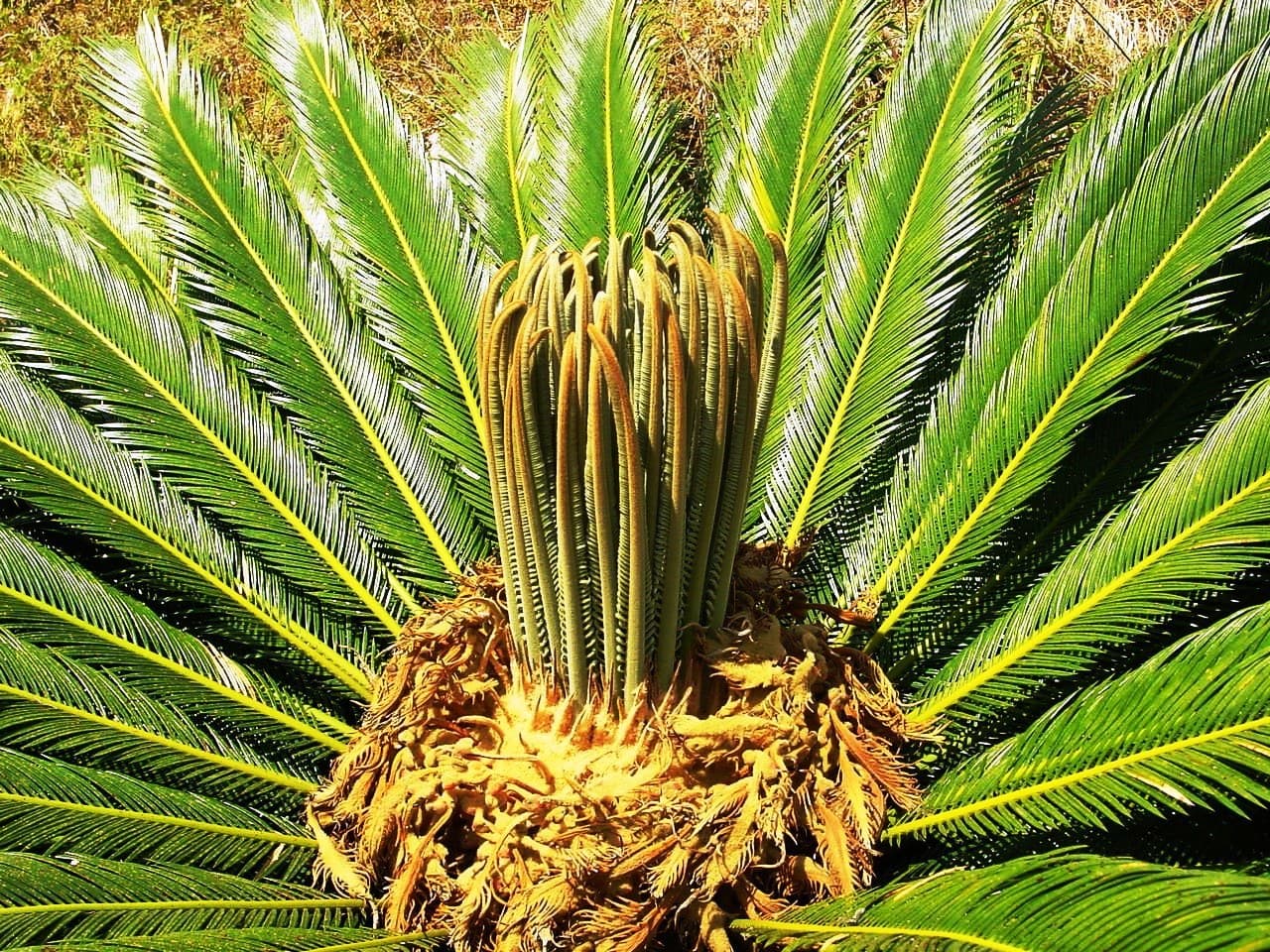
Sago palm (Cycas revoluta) is an ancient, slow-growing cycad admired for its symmetrical crown of deep green, stiffly arching fronds. Despite its common name and palm-like appearance, it is botanically unrelated to true palms and is more closely allied with conifers and ginkgoes. Its rugged, rough trunk adds a bold architectural presence to any landscape or interior setting.
This species develops at a remarkably modest pace, typically producing just one fresh flush of foliage each year under favorable conditions. That slow growth makes it exceptionally well-suited for container gardening on sunny patios or in bright indoor rooms, where it provides structural elegance without quickly outgrowing its space.
Exceptionally drought-tolerant once established, sago palms thrive in warm climates with plenty of light and sharp drainage. They demand little ongoing attention, but they strongly dislike soggy soil and prolonged freezing weather, making proper watering and a well-aerated potting medium the keys to their longevity.
Did you know?Often called a living fossil, this prehistoric plant has thrived since the age of dinosaurs over two hundred million years ago.
Care
- Watering
- Allow the soil to dry out almost completely between waterings to prevent root issues. Water roughly every ten to fourteen days during warm months, and reduce watering to once a month or less in winter.
- Light
- Provide full sun to bright filtered light outdoors, protecting foliage from harsh desert afternoon sun. Indoors, place it directly near a bright, sunny window that receives plenty of natural light.
- Temperature
- Optimal temperatures range between 15 °C and 28 °C throughout the active growing season. Mature plants can tolerate brief cold snaps down to -3 °C, but prolonged freezing temperatures will damage the fronds.
- Soil
- Use a loose, fast-draining potting mix, blending standard potting soil with coarse sand, perlite, or pumice to prevent moisture retention.
- Fertilizer
- Feed with a balanced, slow-release fertilizer formulated for palms or ornamental foliage once in early spring and again in early summer.
- Pruning
- Trim away only completely yellowed or brown lower leaves close to the trunk using clean, sharp pruning shears.
- Propagation
- Propagate by carefully detaching offsets or basal pups from the base of the trunk during late winter or early spring. Propagation from seed is also possible, though germination can take several months to a year.
Is Sago palm toxic to cats and dogs?
Yes. According to the ASPCA, it is toxic to cats and dogs.
- Cats
- Toxic
- Dogs
- Toxic
Usual signs: Ingestion can cause vomiting, black tarry stools, jaundice, increased thirst, hemorrhagic gastroenteritis, bruising, coagulopathy, liver failure, and death.
If your pet has chewed it and shows symptoms, call your vet or the nearest emergency vet.
Source: ASPCA Animal Poison Control
Common problems
- Mealybugs and scale
- Overwatering
- Root rot
- Magnesium deficiency
- Natural ageing
Frequently asked questions
Why are the leaves on my sago palm turning yellow?
Older lower leaves naturally turn yellow and brown as part of the plant's normal growth cycle. However, widespread yellowing or discolored new fronds typically point to overwatering, poor drainage, or a micronutrient deficiency such as magnesium.
How often does a sago palm produce new leaves?
A healthy sago palm generally produces one flush of new leaves per year during late spring or summer. In low-light environments or small containers, it may skip a year between flushes.
Can a sago palm be grown indoors?
Yes, provided it receives several hours of bright, direct or indirect sunlight daily right beside a window. Insufficient light leads to stretched, weak fronds that snap easily.
How do I treat scale insects on my sago palm?
Cycas species are prone to scale insects, which appear as white or brown crusty bumps on the fronds. Treat infestations by wiping affected areas with insecticidal soap or horticultural oil, repeating applications every few weeks.
Growing Sago palm at home?
Take a photo and we'll tell you how it's doing and what it needs.