
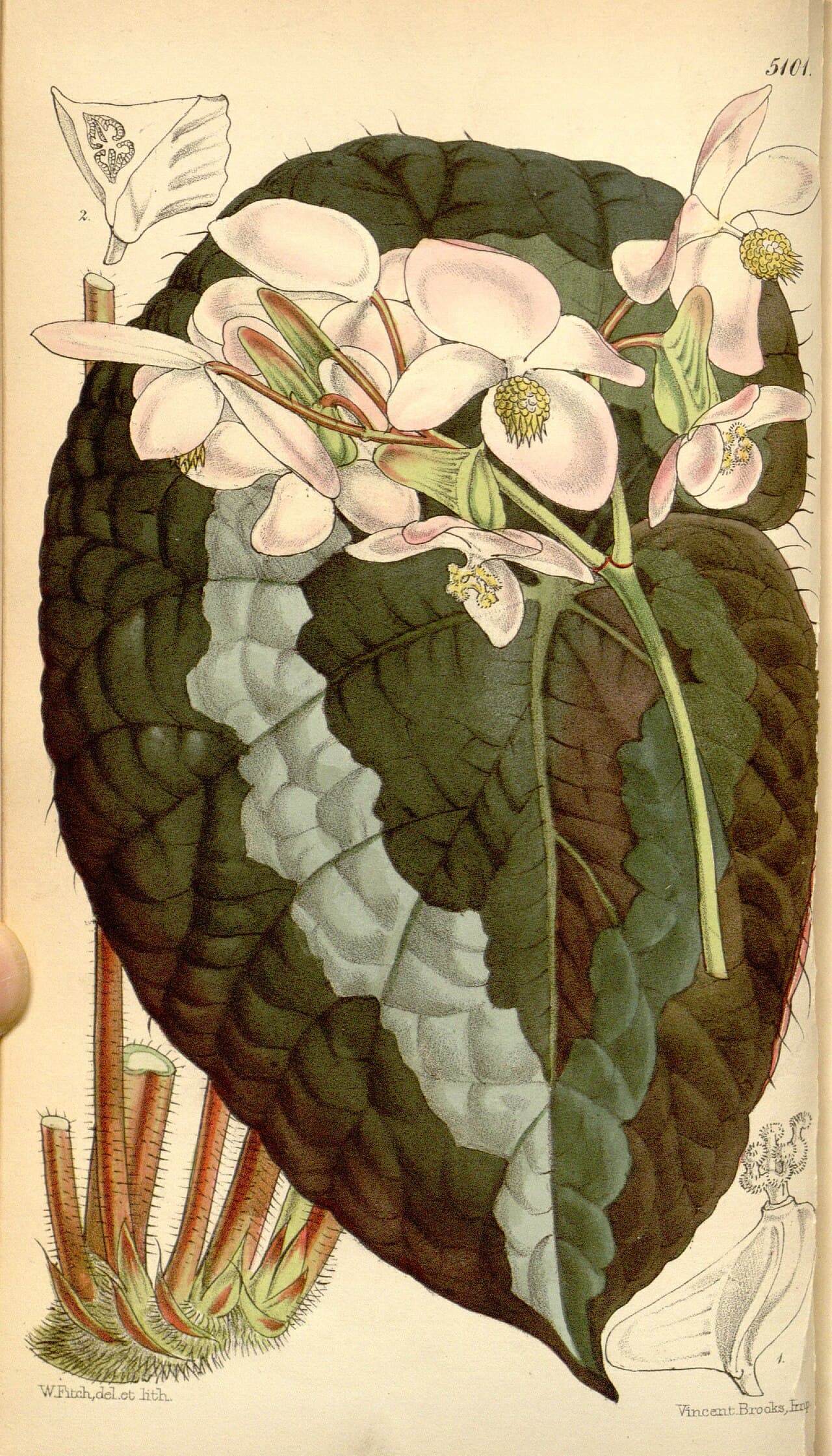
Rex begonia, often called the king begonia or painted-leaf begonia, is a rhizomatous perennial native to the subtropical forests of southern Asia. It is celebrated across the world for its dramatic and intricately patterned foliage, which displays striking swirls of silver, metallic green, deep burgundy, and vibrant pink.
While the plant produces modest blooms during the warmer months, gardeners grow it almost exclusively for its architectural leaves. It develops a low, mounding habit from thick surface rhizomes, sending up fuzzy leaf stalks crowned with broad, asymmetrical blades. When given the proper environment, it forms a lush decorative centerpiece that enlivens any indoor space year-round.
This plant thrives indoors under filtered light and performs well in shaded summer patios protected from harsh drafts. Cultivating a healthy Rex begonia hinges on maintaining moderate to high ambient humidity while avoiding soggy potting mix, as its sensitive roots and fleshy stems easily succumb to rot under saturated conditions.
Did you know?Rex begonias can produce entire new plantlets directly from a single leaf cutting or severed leaf vein placed on moist substrate.
Care
- Watering
- Water when the top inch or two of soil feels dry to the touch, which typically means once a week in summer and less frequently in winter. Always pour water onto the potting medium rather than the leaves to prevent fungal infections.
- Light
- Provide bright, indirect sunlight throughout the day to keep leaf patterns vibrant. Direct midday sun will scorch the thin foliage, while too much shade dulls its colors.
- Temperature
- Ideal temperatures range between 16°C and 24°C (60°F–75°F). Keep the plant protected from cold drafts and never expose it to temperatures below 12°C (54°F).
- Soil
- Use a well-draining, airy potting mix containing peat moss, perlite, and fine bark. Good aeration around the root zone is crucial for preventing rot.
- Fertilizer
- Feed with a balanced liquid houseplant fertilizer diluted to half strength once a month during spring and summer. Suspend feeding in late autumn and winter when growth slows.
- Pruning
- Snip away aging, yellowed, or damaged leaves at the base of the stem with sterile shears. This improves airflow through the foliage and discourages mildew.
- Propagation
- Propagate easily through leaf cuttings by slicing across the main veins and pinning the leaf onto damp potting mix. You can also divide rhizomes during springtime repotting.
Is Rex begonia toxic to cats and dogs?
Yes. According to the ASPCA, it is toxic to cats and dogs.
- Cats
- Toxic
- Dogs
- Toxic
Usual signs: Causes vomiting and salivation in dogs and cats, and kidney failure in grazing animals, with the underground parts being the most toxic.
If your pet has chewed it and shows symptoms, call your vet or the nearest emergency vet.
Source: ASPCA Animal Poison Control
Common problems
- Powdery mildew
- Botrytis (grey mould)
- Root rot
- Dry air
- Overwatering
Frequently asked questions
Why are the leaf edges turning crispy and brown?
Crispy brown margins usually indicate low relative humidity or exposure to dry air from heating vents. Increase humidity by placing the pot on a pebble tray filled with water or running a room humidifier nearby.
Why is there a white powdery film on the leaves?
A white coating indicates powdery mildew, a common fungus encouraged by high humidity paired with poor air circulation. Remove infected foliage, increase ventilation around the plant, and avoid wetting the leaves when watering.
How can I tell if I am overwatering my Rex begonia?
Overwatering causes stems to become soft, mushy, and translucent, while lower leaves yellow and collapse. Allow the soil to dry out moderately between waterings and ensure the container has functional drainage holes.
Why are the leaves losing their vibrant colors?
A loss of metallic sheen and vivid pigmentation typically means the plant is receiving insufficient light. Move it closer to a bright window with filtered light to restore its bold coloration.
Growing Rex begonia at home?
Take a photo and we'll tell you how it's doing and what it needs.