
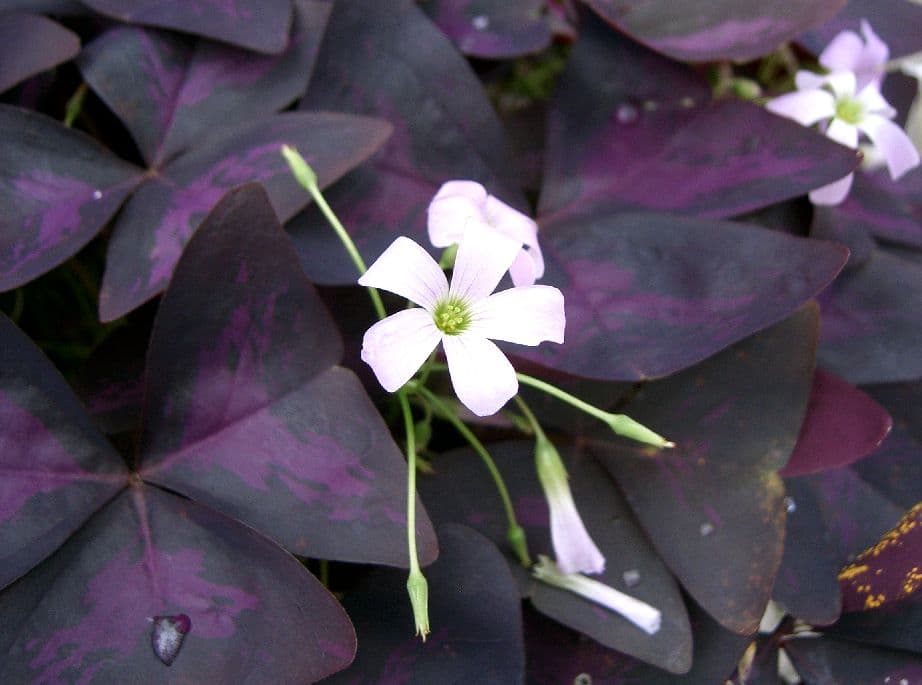
Purple shamrock is an eye-catching bulbous perennial celebrated for its deep purple, triangular foliage and delicate habit. While commonly referred to as a shamrock or false shamrock, it actually sprouts from small subterranean tubers that store energy and moisture.
A fascinating feature of this plant is photonasty, a movement whereby its leaves fold downward like tiny umbrellas in low light or at night, unfolding fully as daylight returns. From spring through summer, it frequently produces soft pink or white trumpet-like flowers that stand out against the dark foliage.
It makes an exceptional, low-maintenance houseplant that also thrives in shaded outdoor borders in mild climates. The plant naturally enters dormant phases where leaves may wither and drop; during this time, the bulbs simply rest before producing fresh, vigorous growth.
Did you know?Its leaves fold closed at night or on overcast days in response to darkness, a phenomenon known as photonastic movement.
Care
- Watering
- Water thoroughly once the top inch of soil feels dry, typically once or twice a week during active growth. Cut back on watering significantly if the foliage dies back for dormancy.
- Light
- Thrives best in bright, indirect light to keep its foliage deep and vibrant. Shield it from harsh direct afternoon sun, which can scorch its delicate leaves.
- Temperature
- Maintains optimal growth between 15°C and 24°C (60°F to 75°F). Keep it away from cold drafts and frost, as it does not tolerate temperatures below 10°C (50°F).
- Soil
- Use a light, well-draining potting mix enhanced with perlite to prevent excess moisture around the bulbs.
- Fertilizer
- Feed with a balanced liquid houseplant fertilizer diluted to half strength once a month through spring and summer. Stop fertilizing during dormant periods.
- Pruning
- Trim away any spent flowers or yellowing stems near the base to keep the clump tidy. Structural pruning is not required.
- Propagation
- Easily propagated by separating the small scaly tubers during repotting in late winter. Plant the divided rhizomes about an inch deep in fresh soil.
Is Purple shamrock toxic to cats and dogs?
Yes. According to the ASPCA, it is toxic to cats and dogs.
- Cats
- Toxic
- Dogs
- Toxic
Usual signs: Ingesting large quantities can cause colic in horses and potentially lead to kidney failure.
If your pet has chewed it and shows symptoms, call your vet or the nearest emergency vet.
Source: ASPCA Animal Poison Control
Common problems
- Root rot
- Too little light
- Overwatering
- Underwatering
- Spider mites
Frequently asked questions
Why are my purple shamrock leaves closing during the day?
Leaves close naturally at night, but if they remain shut during daylight hours, the plant may need more light or may be suffering from dehydration or extreme heat. Move it to a brighter spot and verify soil moisture.
What should I do if all the leaves die back?
Complete dieback is usually a natural sign of dormancy rather than plant death. Stop feeding, reduce watering to a minimum, and resume care once fresh shoots begin to sprout.
Why are the purple leaves turning green or dull?
A lack of adequate light causes the plant to lose its distinctive deep purple coloration. Transition the plant to a brighter location with plenty of indirect sun.
How often does purple shamrock flower?
It produces delicate blooms repeatedly from spring through late summer when given bright indirect light. Individual blooms last a few days, with new flower stalks emerging continually throughout the growing season.
Growing Purple shamrock at home?
Take a photo and we'll tell you how it's doing and what it needs.