
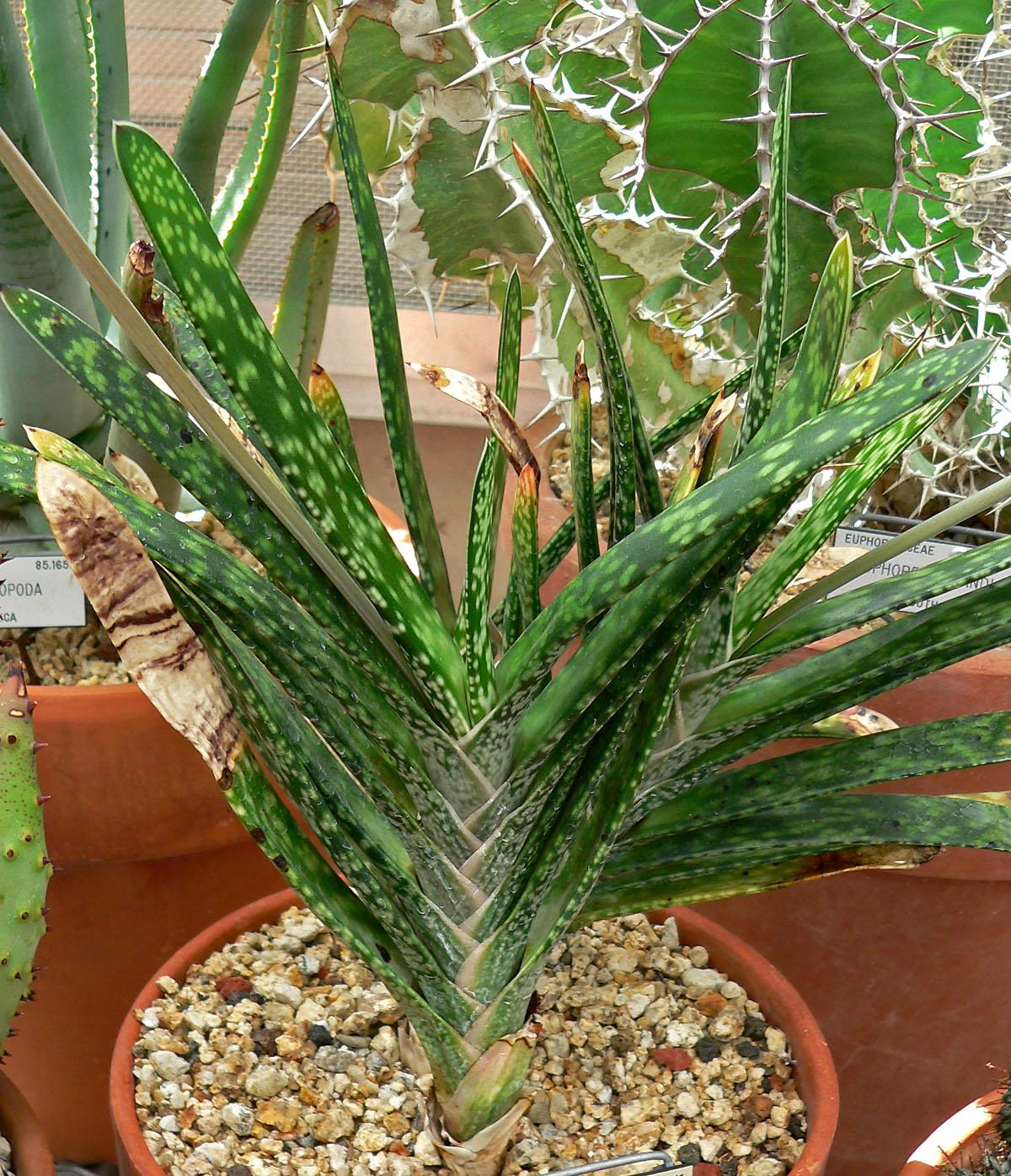
Ox tongue (Gasteria bicolor) is a slow-growing succulent from the Eastern Cape of South Africa, where it shelters under shrubs and among rocks. It forms loose rosettes of thick, tongue-shaped leaves, dark green with paler spots and rough warts that make each plant slightly different. Mature clumps spread into generous colonies, and in spring tall arching stalks appear with dangling bell-shaped flowers in coral pink and green.
It is one of the most shade-tolerant succulents, which explains its long career as a houseplant in cooler climates. It copes with bright windowsills, patios in light shade and the shade of larger plants outdoors where frosts are mild. Growth is unhurried but steady, and a well-kept plant can live for decades in the same pot, simply widening its clump.
Care is straightforward: a gritty mix, careful watering and shelter from fierce midday sun. It forgives occasional neglect far better than overwatering, so letting the soil dry between waterings is the golden rule. Anyone looking for a tough, sculptural plant for a shaded corner will find ox tongue a reliable companion.
Did you know?Gasteria flowers hang like little stomach-shaped bells, which is where the genus name comes from, from the Greek word for belly.
Care
- Watering
- Water deeply when the soil is fully dry, about every 10 to 14 days in summer. In winter water sparingly, roughly once a month.
- Light
- It prefers bright, indirect light with a little gentle morning sun. Harsh afternoon sun can scorch the leaves and fade their patterns.
- Temperature
- It grows well between 18 °C and 26 °C and tolerates brief dips to around 5 °C. Protect it from frost and from dry, scorching heat.
- Soil
- Plant in a coarse, fast-draining succulent mix with sand or perlite. A shallow pot with drainage holes suits its short roots.
- Fertilizer
- Feed lightly once a month in spring and summer with diluted cactus fertiliser. Skip feeding in autumn and winter while the plant rests.
- Pruning
- No pruning is needed; simply pull away dry lower leaves by hand. Keep the base clear so air reaches the crown.
- Propagation
- Separate offsets with roots in spring and pot them directly into gritty mix. Leaf cuttings also work but root far more slowly.
Is Ox tongue toxic to cats and dogs?
The ASPCA doesn't list this species. If your pet has chewed it and seems unwell, call your vet.
Common problems
- Root rot
- Overwatering
- Mealybugs and scale
- Sunburn
Frequently asked questions
How often should I water ox tongue?
Soak the soil only when it is completely dry, roughly every 10 to 14 days in the growing season. In winter cut back to about once a month. Always tip away excess water from the saucer.
Why are the leaves turning pale or brown at the tips?
Pale, scorched patches usually mean too much direct sun, while brown dry tips can follow long drought. Move the plant to bright indirect light and water normally again. Damaged areas will not heal, but new leaves will grow in healthy.
Can it grow in low light indoors?
It tolerates shade better than most succulents, but it still needs a bright spot near a window to stay compact. In deep shade the leaves stretch and the spots fade. A sheer curtain plus a few hours of gentle sun is ideal.
How do I propagate Gasteria bicolor?
Divide offsets from the mother plant in spring, keeping some roots on each piece. Pot them in gritty mix and wait a few days before the first light watering. Single leaves can root too, though they take many months.
From the same family



Growing Ox tongue at home?
Take a photo and we'll tell you how it's doing and what it needs.