
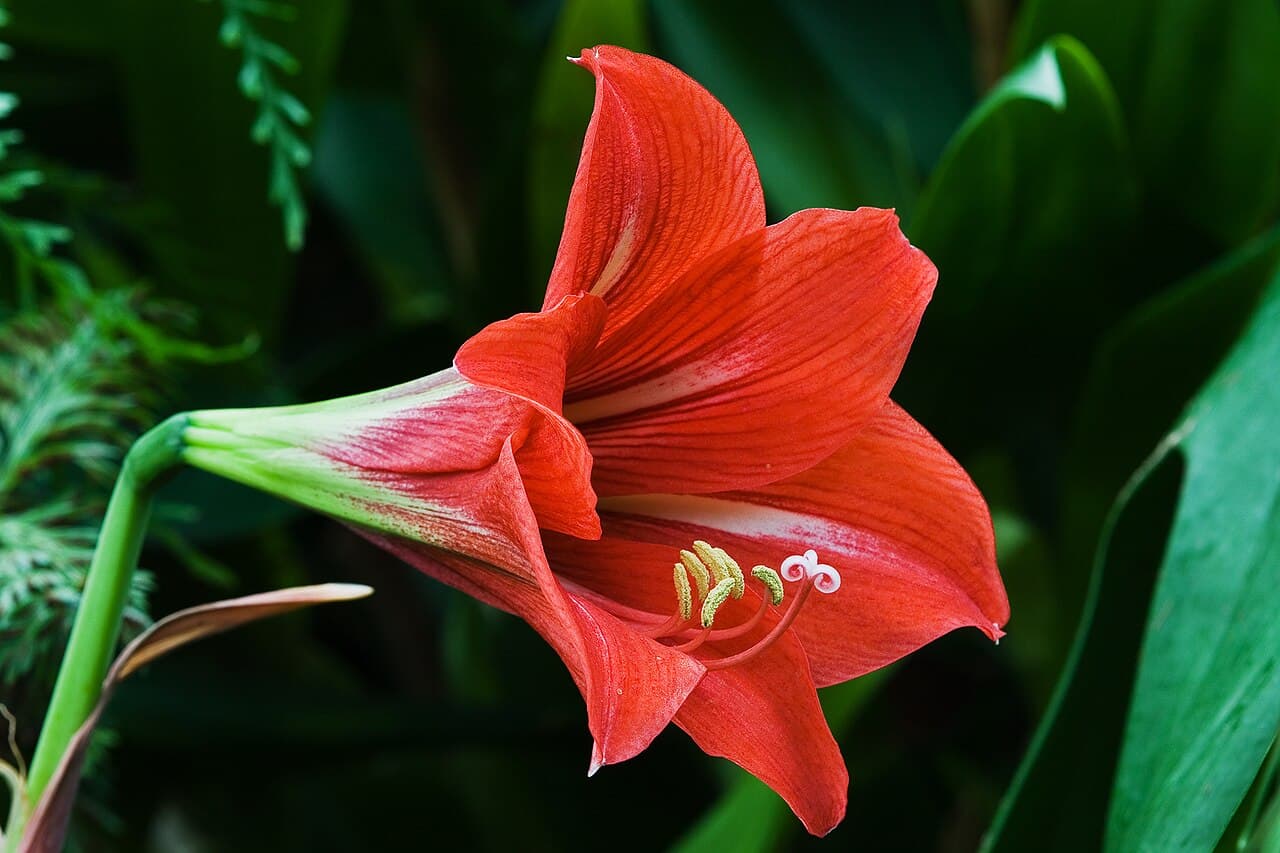
Amaryllis (Hippeastrum hybridum) is a striking tender bulbous perennial famous for producing giant, trumpet-shaped blooms. While widely known by the common name amaryllis, cultivated hybrids actually belong to the South American genus Hippeastrum. Each thick, hollow stalk typically bears between two and six dramatic flowers available in vibrant shades of red, pink, white, salmon, and striking bicolors.
Its long, strappy foliage is deep green and emerges alongside or shortly after flower stalks develop. Grown primarily as an indoor winter-flowering centerpiece, it performs best when planted in snug containers with the top third of the bulb exposed above the potting mix. This exposed planting method helps prevent neck rot and encourages sturdy stem development.
After the flowering show finishes, caring for the foliage with bright light, proper watering, and feeding is essential so the bulb can replenish its energy. Following a cool, dry dormancy period in late summer or early fall, the bulb will eagerly break rest to produce another breathtaking display year after year.
Did you know?True botanical Amaryllis consists of only two species native to South Africa, whereas holiday gift varieties are hybrid Hippeastrum native to the Americas.
Care
- Watering
- Water sparingly until the first sprout appears, then increase moisture to roughly once a week as stems develop actively. Always verify that the top layer of potting mix feels dry before watering and never pour water directly onto the bulb crown.
- Light
- Provide bright, indirect sunlight or gentle morning sun to keep the flower scapes sturdy and compact. Insufficient lighting will cause stems to stretch awkwardly toward windows and flop under the weight of the blossoms.
- Temperature
- Keep your plant in a comfortable room temperature between 18 °C and 24 °C during active growth and flowering. Shield it from drafts and never expose it to temperatures below 10 °C, which cause chilling injury to tender bulbs.
- Soil
- Use a rich, well-draining potting mix containing peat moss or coco coir combined with perlite or coarse sand to prevent stagnant water.
- Fertilizer
- Feed every two weeks with a balanced water-soluble fertilizer from petal fall through late summer to nourish bulb reserves for future flowers.
- Pruning
- Trim spent flower stems down to about an inch above the bulb once blooms wither, but allow all healthy green foliage to keep growing.
- Propagation
- Propagate by gently detaching bulbils or side offsets from the parent bulb during repotting in dormant periods. You can also grow them from seed, though seedlings take several years to reach flowering maturity.
Is Amaryllis toxic to cats and dogs?
Yes. According to the ASPCA, it is toxic to cats and dogs.
- Cats
- Toxic
- Dogs
- Toxic
Usual signs: Ingestion causes vomiting, salivation, and diarrhea, with large amounts triggering tremors, convulsions, low blood pressure, and arrhythmias, with bulbs being the most toxic part.
If your pet has chewed it and shows symptoms, call your vet or the nearest emergency vet.
Source: ASPCA Animal Poison Control
Common problems
- Root rot
- Overwatering
- Fungal or bacterial leaf spots
- Cold damage
Frequently asked questions
Why is my amaryllis not flowering?
Non-blooming is usually caused by lack of light during leaf development or omitting a distinct dormant rest period. The bulb needs full leaves and nourishment all summer, followed by two months of cool dryness to initiate new buds.
How do I get amaryllis to rebloom next year?
Cease watering in late summer, cut back dying foliage, and store the potted bulb in a cool, dark location for eight to ten weeks. Bring it back into warm room temperatures and bright light to trigger new shoots.
Why are the flower stems drooping or flopping?
Stems flop when low light levels cause excessive elongation, making the tall stalks too weak to support the heavy blooms. Rotate the pot frequently for even growth and insert a stake alongside the stem for support.
How deep should an amaryllis bulb be planted?
Pot the bulb so that the top third to half remains exposed above the soil surface in a tight container. Leaving the neck exposed prevents moisture buildup around the growth point and guards against rot.
Growing Amaryllis at home?
Take a photo and we'll tell you how it's doing and what it needs.