
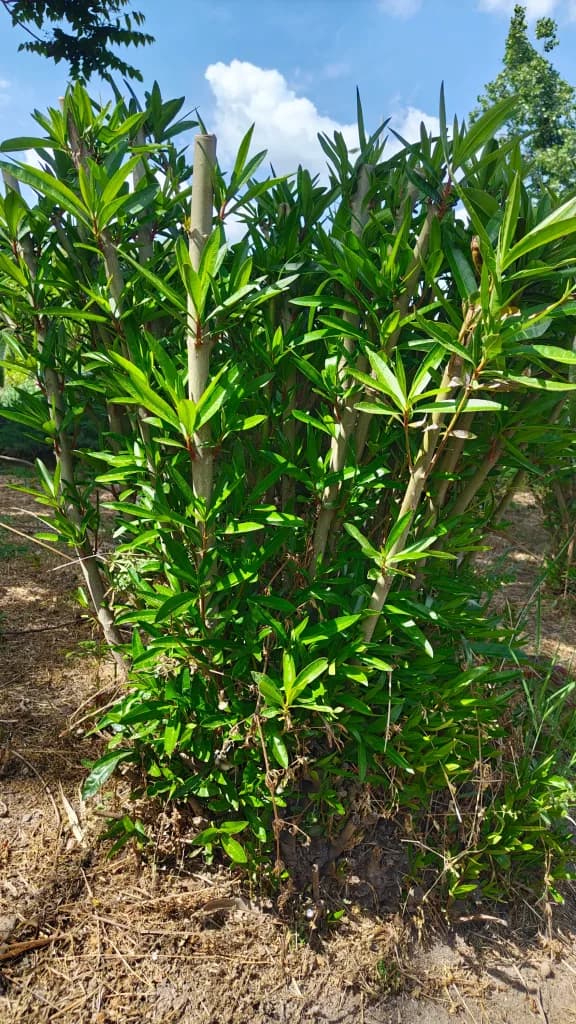
Oleander is a perennial shrub extremely popular in ornamental gardening thanks to its extraordinary resilience and profuse blooming. It is characterized by its leathery, lanceolate leaves of grayish-green or intense color, which grow oppositely or in whorls of three along straight, woody stems. Although the image primarily shows its green growth stage, it is famous for producing clusters of flowers that can range from pure white to pink, red, or yellow, depending on the variety.
Botanically, it belongs to the Apocynaceae family and is native to a wide area stretching from the Mediterranean basin to Southeast Asia. In the wild, it is usually found along riverbanks and dry stream beds, where its roots seek deep moisture, although it has demonstrated astonishing adaptability to extreme drought conditions and polluted urban environments. Its growth is rapid and it can reach several meters in height if not subjected to training pruning.
In cultivation, it is valued for its low maintenance and its ability to form dense hedges or specimen plants in sunny gardens. However, it is crucial to remember that it is one of the most toxic plants commonly cultivated; it contains cardiac glycosides that can be lethal if ingested. Therefore, it is recommended to avoid planting it in areas accessible to children or livestock, and to always handle it with caution during maintenance tasks.
Did you know?Oleander is widely planted along highway medians due to its remarkable ability to withstand heavy traffic pollution, poor soil, and intense summer heat.
Care
- Watering
- Moderate in summer, scarce in winter. Tolerates extreme drought.
- Light
- Full direct sun, minimum 6 hours daily to flower.
- Temperature
- Very resistant (-5°C to 45°C). Protect from persistent frost.
- Soil
- Indifferent, requires excellent drainage. Tolerates poor and calcareous soils.
- Fertilizer
- Shrub fertilizer in spring and summer every 20 days.
- Pruning
- Prune in late winter or early spring to clear away dead wood and cut back older stems to encourage fresh growth.
- Propagation
- Easily propagated through semi-hardwood cuttings taken in early summer and rooted in water or moist soil. It can also be grown from seeds sown in warm spring conditions.
Is Oleander toxic to cats and dogs?
Yes. According to the ASPCA, it is toxic to cats and dogs.
- Cats
- Toxic
- Dogs
- Toxic
Usual signs: Drooling, abdominal pain, diarrhea, colic, depression, and death.
If your pet has chewed it and shows symptoms, call your vet or the nearest emergency vet.
Source: ASPCA Animal Poison Control
Common problems
- Mealybugs and scale
- Aphids
- Sooty mould
- Root rot
- Cold damage
Frequently asked questions
Why is my oleander not blooming?
Lack of direct sunlight is the most common reason, as this plant needs several hours of full sun to form buds. Inappropriate pruning that removed budding branches or excessive nitrogen fertilizer can also suppress flowering.
Why are the leaves on my oleander turning yellow?
Yellowing foliage is usually a sign of overwatering or soil that retains too much moisture around the roots. Allow the ground to dry out between waterings and make sure container plants drain freely.
When and how should I prune oleander?
Late winter or early spring before new growth starts is the best time for pruning. Cut back spent flowering stems by about a third and thin out older branches to open up the canopy.
What pests commonly attack oleander?
Oleander aphids and scale insects frequently congregate on tender new shoots during warm weather. Spray the affected stems with insecticidal soap or horticultural oil to keep infestations in check.
Growing Oleander at home?
Take a photo and we'll tell you how it's doing and what it needs.