
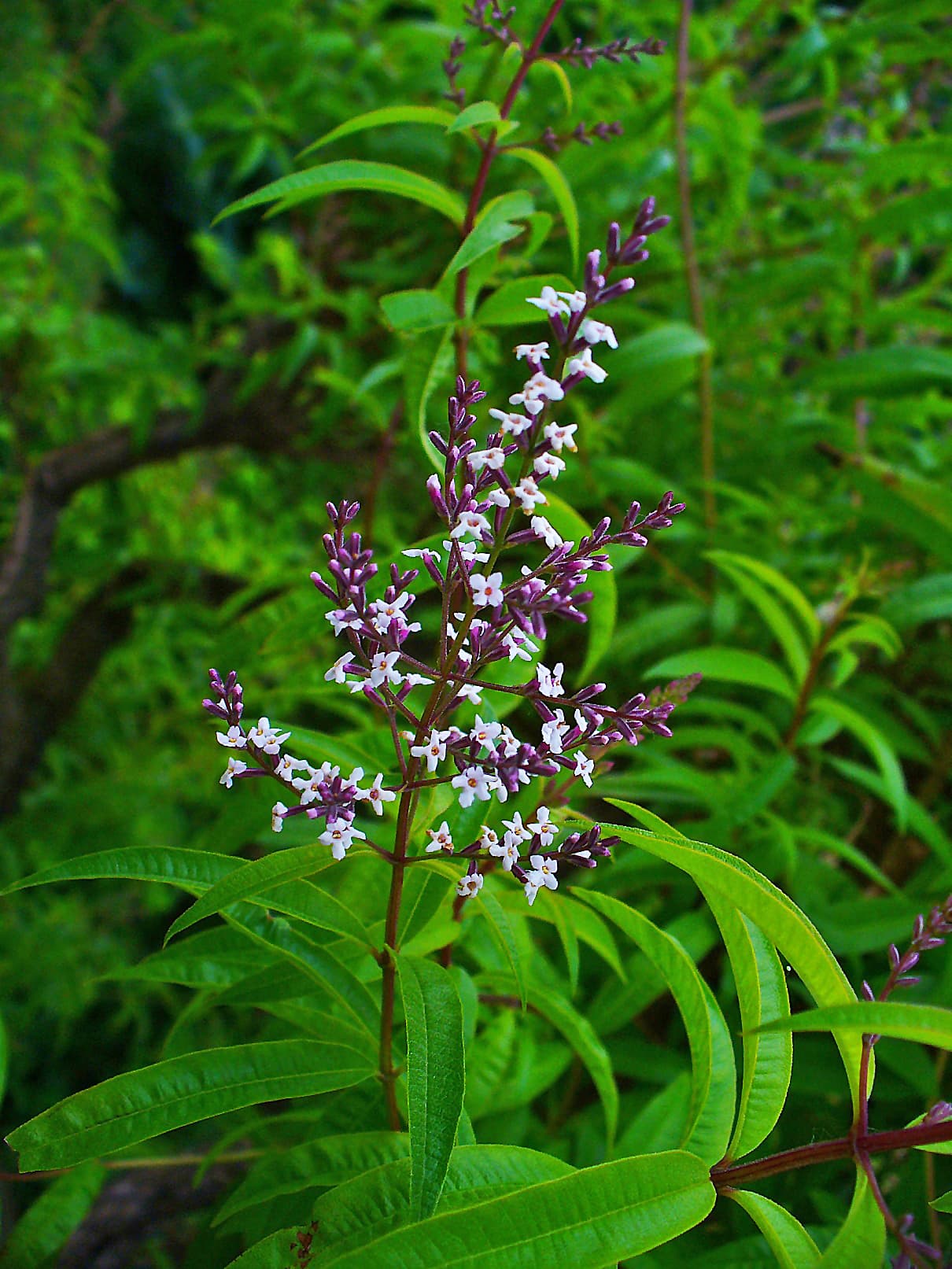
Lemon verbena is a fragrant deciduous woody shrub native to South America, celebrated around the world for its remarkably clean and intense lemon scent. Its pale green, lance-shaped leaves have a slightly rough texture and release their bright citrus perfume at the slightest touch, making it a favorite for sensory gardens and sunny balconies.
In the ground, this vigorous shrub can easily reach up to two or three meters in height, though it also thrives comfortably in large containers on warm patios. Throughout mid to late summer, it produces delicate terminal spikes packed with tiny blossoms ranging from pure white to pale lilac, adding a subtle decorative charm to its lush foliage.
To perform at its best, lemon verbena demands plenty of direct sunlight and loose, well-draining soil, as waterlogged roots cause rapid decline. In cooler regions, the plant naturally sheds all of its foliage in late autumn to enter winter dormancy, safely weathering cold conditions before rebounding with robust new growth once warm spring weather returns.
Did you know?Brushing against its leaves releases a powerful lemon aroma due to high concentrations of natural essential oils like citral.
Care
- Watering
- Water moderately, allowing the upper layer of soil to dry out between waterings. Provide water once or twice a week during hot summers, and reduce watering drastically in winter.
- Light
- Requires full sun with at least six hours of direct light daily. Bright exposure is essential for vigorous branch growth and rich aroma production.
- Temperature
- Performs best in warm climates with optimal temperatures between 15 °C and 28 °C. Established plants can endure brief light freezes down to -3 °C by dropping leaves.
- Soil
- Demands an airy, porous soil mix with sharp drainage to prevent water accumulation. Amending standard potting soil with perlite or coarse grit works perfectly.
- Fertilizer
- Apply organic compost or a balanced fertilizer in early spring as new buds emerge. A light monthly feed throughout the summer supports steady foliage production.
- Pruning
- Prune back hard in late winter or early spring before fresh growth begins. Cutting back older woody stems keeps the shrub compact and prevents leggy branches.
- Propagation
- Root semi-hardwood cuttings taken in late summer using a light soil mix. Softwood spring cuttings also establish quickly in water or moist substrate.
Is Lemon verbena toxic to cats and dogs?
The ASPCA doesn't list this species. If your pet has chewed it and seems unwell, call your vet.
Common problems
- Root rot
- Spider mites
- Aphids
- Whitefly
- Cold damage
Frequently asked questions
Why is my lemon verbena losing all its leaves?
Lemon verbena is naturally deciduous, meaning autumn leaf drop is normal as days grow shorter. As long as stems stay pliable, new green shoots will appear in spring.
Why are the leaves turning yellow?
Yellow foliage is most frequently caused by soggy soil or overwatering. Let the topsoil dry out before watering again and ensure the pot has clear drainage holes.
Can lemon verbena grow well in containers?
Yes, it thrives in pots that are at least 30 cm wide with reliable drainage holes. Keep the pot outdoors in the sunniest location available for healthy growth.
How should I harvest leaves without harming the plant?
Trim the leafy branch tips with sharp shears instead of pulling off individual leaves. Harvesting in summer encourages the shrub to branch out and become bushier.
Growing Lemon verbena at home?
Take a photo and we'll tell you how it's doing and what it needs.