
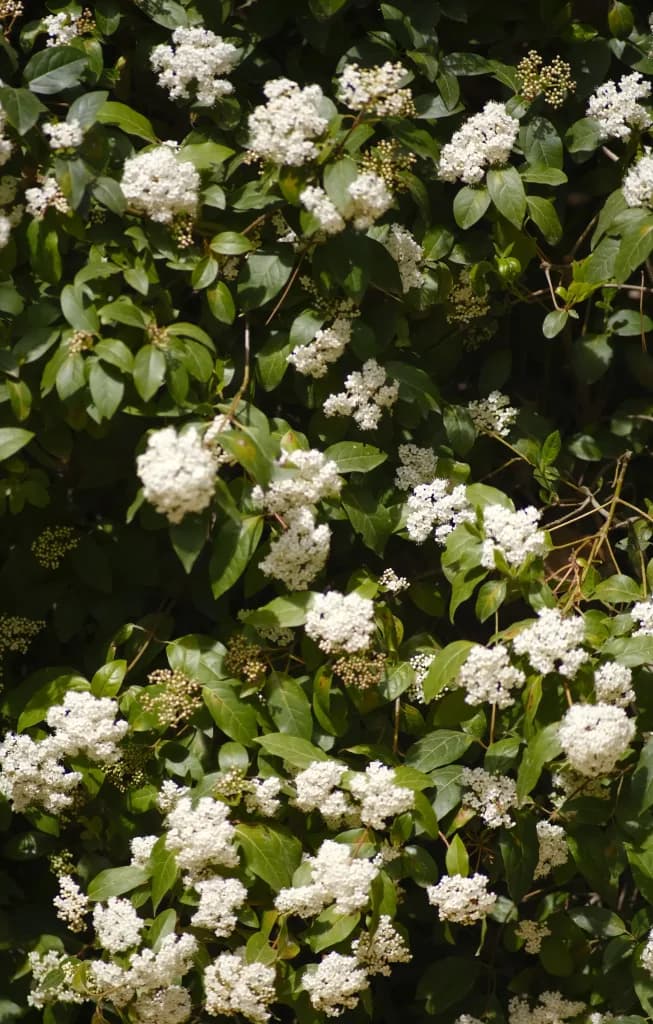
Viburnum tinus, popularly known as laurustinus, is an evergreen shrub highly valued in ornamental gardening for its ability to provide greenery and color during the winter months and early spring. It grows densely and rounded, typically reaching between two and four meters in height. It is characterized by its leathery leaves, dark green and glossy on the upper surface and lighter on the underside, which provide an elegant backdrop for its spectacular bloom.
It belongs to the Adoxaceae family and is native to the Mediterranean basin, where it grows naturally in oak forests and maquis. Its flowers are small, white or slightly pink when in bud, and are grouped in terminal corymb inflorescences (like small flat umbrellas). After flowering, it produces fleshy fruits of a striking metallic blue color that turn black when ripe, which persist on the plant throughout the winter, serving as food for birds.
In garden design, it is an extremely versatile plant frequently used to form hedges, privacy screens, or as a specimen plant. It stands out for its great hardiness, being able to withstand moderate frosts, urban pollution, and periods of drought. In addition to its aesthetic beauty, it is an excellent species for promoting biodiversity, as its flowers attract early pollinators when other nectar sources are not yet available in the environment.
Did you know?Laurustinus often displays its metallic blue fruit clusters alongside newly opening flower buds, creating a simultaneous show of flowers and berries.
Care
- Watering
- Moderate, 1-2 times per week; tolerates drought once established.
- Light
- Full sun or partial shade; blooms best with good light.
- Temperature
- Resistant to intense cold (up to -10°C) and Mediterranean heat.
- Soil
- Well-drained soil, rich in organic matter or clay.
- Fertilizer
- Organic fertilizer or compost in late winter.
- Pruning
- Prune immediately after flowering concludes in late spring to shape the plant and maintain dense branching. Avoid trimming late in the season so you do not cut off the developing flower buds for the coming winter.
- Propagation
- Propagate through semi-hardwood cuttings taken in late summer using a well-draining rooting medium. It can also be grown from cleaned seeds after a period of cold stratification over winter.
Is laurustinus toxic to cats and dogs?
The ASPCA doesn't list this species. If your pet has chewed it and seems unwell, call your vet.
Common problems
- Powdery mildew
- Aphids
- Spider mites
- Root rot
Frequently asked questions
Why are my Laurustinus leaves turning brown or dropping?
Leaf drop is usually caused by overwatering, poor root drainage, or drought stress during hot spells. It can also indicate spider mites in dry conditions; check the undersides of leaves and monitor soil moisture.
When is the best time to prune Laurustinus?
The ideal time to prune is late spring, right after the shrub finishes flowering. Trimming late in summer or autumn will inadvertently remove the flower buds prepared for the following winter season.
Why is my Laurustinus not producing flowers?
A lack of flowers is usually caused by excessive shade, pruning too late in the year, or high-nitrogen fertilizers that encourage leaves over blooms. Provide more direct sunlight and limit nitrogen applications.
Can Laurustinus be grown in containers?
Yes, it thrives in large pots as long as they provide adequate drainage holes and a porous, gritty potting mix. Potted specimens will dry out faster and require more frequent watering during summer than garden plants.
Growing laurustinus at home?
Take a photo and we'll tell you how it's doing and what it needs.