
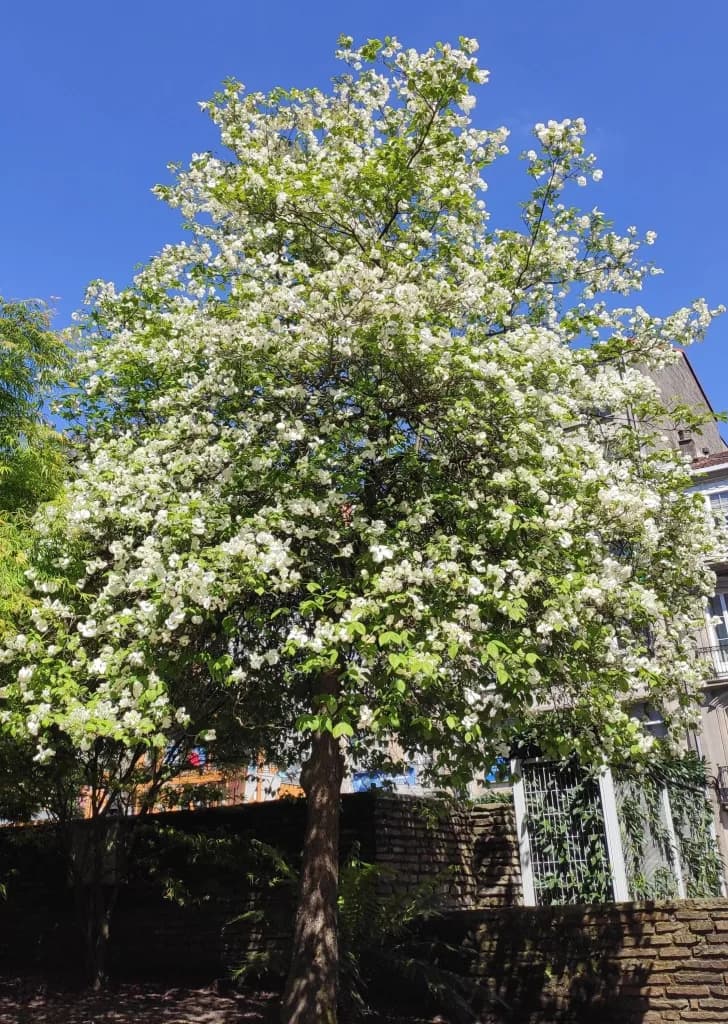
The Kousa Dogwood is a small to medium ornamental tree, highly prized in landscaping for its spectacular and prolonged spring flowering. What are popularly considered white petals are actually pointed, modified bracts surrounding the tiny true flowers at the center. Its elegant habit, initially upright and then spreading, along with its glossy green foliage, makes it a perfect centerpiece for home gardens and urban parks.
Belonging to the Cornaceae family, it is native to the temperate regions of East Asia, where it naturally grows in forests and on mountain slopes. It is distinguished from other common dogwoods by its pointed bracts and by possessing greater genetic resistance to serious fungal diseases such as anthracnose. It is a deciduous species that prefers well-drained soils, rich in organic matter, and with a slightly acidic pH.
In addition to its undeniable aesthetic value during spring, this tree offers visual interest throughout the year. In autumn, it produces globose, bright red fruits that are edible and have a sweet flavor reminiscent of peach. Its leaves turn striking reddish and purple hues before falling, and its bark tends to exfoliate with maturity, revealing patches of different colors that decorate the trunk during winter.
Did you know?The prominent white blooms are actually modified leaves called bracts, while the true flowers are clustered tightly in the small central dome.
Care
- Watering
- 2-3 times per week, keeping soil moist but not waterlogged.
- Light
- Full sun or partial shade; more blooms with good exposure.
- Temperature
- Tolerates down to -15°C; ideal for temperate climates.
- Soil
- Rich, well-drained soil, with acidic to neutral pH.
- Fertilizer
- Balanced fertilizer in early spring before sprouting.
- Pruning
- Pruning needs are minimal, limited primarily to removing dead, diseased, or crossing branches in late winter. Preserve its natural layered canopy by avoiding drastic heading cuts or unnatural shaping.
- Propagation
- Propagate by sowing seeds after cold stratification, though seedlings may take many years to flower. Softwood or semi-hardwood cuttings taken in early summer offer a more reliable way to reproduce specific cultivars.
Is Kousa Dogwood toxic to cats and dogs?
The ASPCA doesn't list this species. If your pet has chewed it and seems unwell, call your vet.
Common problems
- Iron chlorosis
- Underwatering
- Sunburn
- Powdery mildew
Frequently asked questions
Why are my Kousa dogwood leaves turning yellow?
Interveinal yellowing is typically a sign of iron chlorosis caused by high soil pH or poor drainage. Apply chelated iron to address symptoms and amend the surrounding soil with organic compost to lower the pH.
Are Kousa dogwood berries edible?
Yes, the round, raspberry-like fruits are edible and feature a sweet, creamy pulp with hints of peach and pumpkin. The outer skin has a gritty texture, so most people discard the rind and eat only the soft interior.
Why is my Kousa dogwood not flowering?
Young trees often need several years to establish their root systems before producing reliable blossoms. Insufficient sunlight or over-fertilizing with high-nitrogen plant food can also inhibit the formation of flower buds.
When is the best time to plant a Kousa dogwood?
Plant dormant bare-root or container specimens in early spring before new growth emerges, or in mid-autumn after leaves drop. Planting during cooler months allows the root system to establish without heat stress.
Growing Kousa Dogwood at home?
Take a photo and we'll tell you how it's doing and what it needs.