
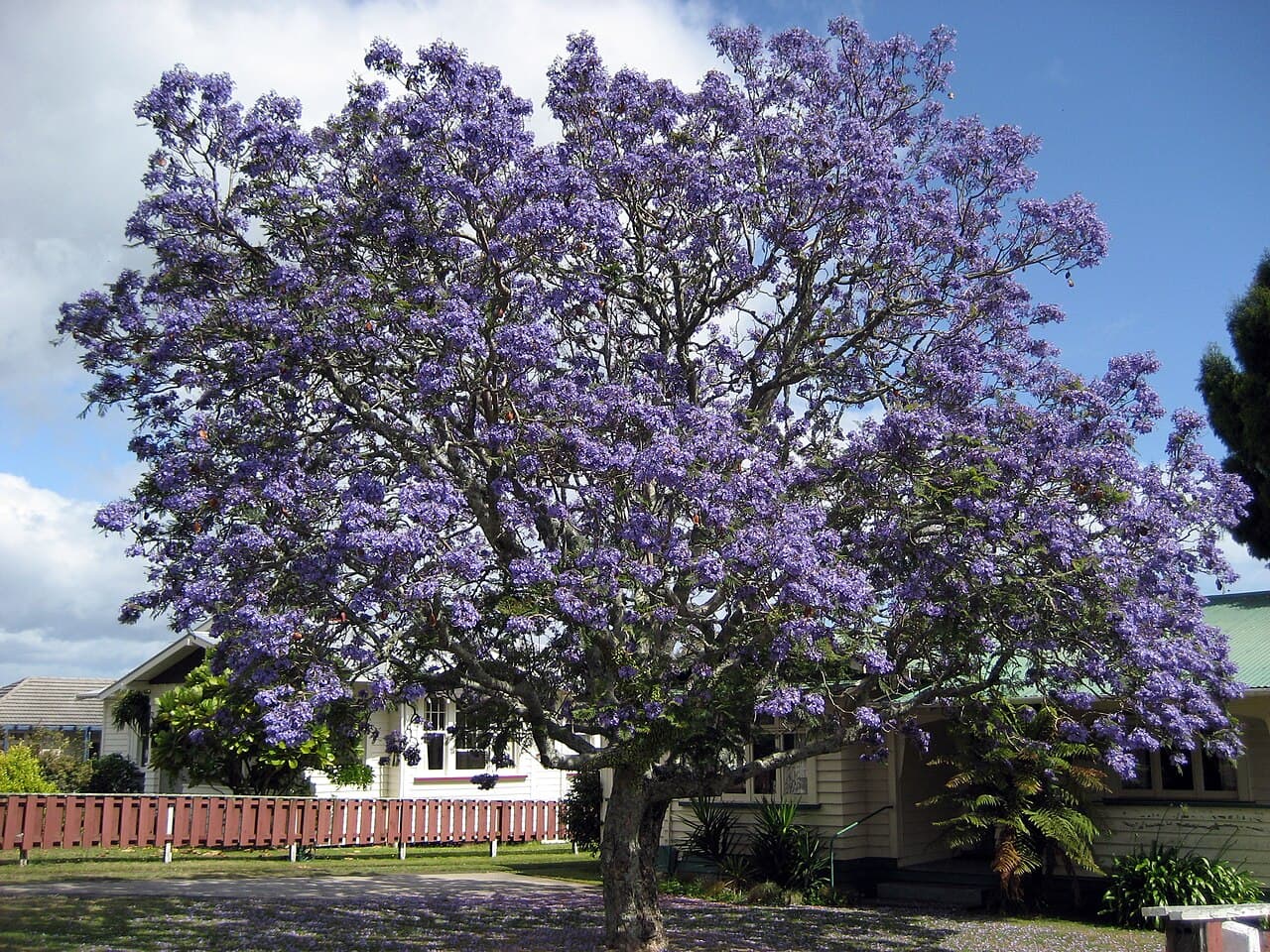
Jacaranda (Jacaranda mimosifolia) is a stunning deciduous or semi-deciduous tree native to the subtropical valleys of northwestern Argentina and southern Bolivia. It is globally celebrated for its breathtaking late-spring bloom, during which the entire canopy transforms into an impressive cloud of vibrant lavender-blue blossoms before the bulk of the leaves emerge.
Its foliage is finely textured, bipinnately compound, and closely resembles the delicate fronds of ferns or mimosas. Under ideal conditions in open ground, it typically grows between 8 and 15 meters tall, creating an expansive, umbrella-shaped canopy that provides pleasant, dappled shade throughout the warm summer months.
To thrive and bloom reliably, this tree demands full sun exposure and sharply drained soil, as it has little tolerance for waterlogged roots or prolonged freezing temperatures. While best suited for gardens and wide urban avenues, young specimens can be grown in large outdoor containers for a few seasons or trained as bonsai by dedicated enthusiasts.
Did you know?In several Southern Hemisphere cities, the purple blooming of jacaranda trees signals the beginning of summer and is traditionally associated with university examination periods.
Care
- Watering
- Water deeply once or twice a week during hot dry spells while the tree is young. Allow the top layers of soil to dry out between waterings and reduce moisture significantly during winter dormancy.
- Light
- Jacaranda requires full sunlight throughout the day to support vigorous growth and maximum flowering. Insufficient light results in sparse branches, weak stems, and poor flower production.
- Temperature
- This tree performs best in warm, temperate to subtropical climates between 18 °C and 30 °C. Mature trees tolerate brief dips down to -2 °C, but prolonged or severe frosts will kill young wood and foliage.
- Soil
- It thrives in sandy or loamy, well-draining soil with a neutral to slightly acidic pH.
- Fertilizer
- Feed in early spring with a balanced, slow-release fertilizer or a generous top-dressing of organic compost.
- Pruning
- Prune in late winter to remove dead wood, crossing branches, and water sprouts while preserving the natural branch architecture.
- Propagation
- It is easily grown from seeds soaked in warm water for 24 hours prior to spring sowing. Semi-hardwood cuttings taken in early summer can also be rooted under warm, humid conditions.
Is Jacaranda toxic to cats and dogs?
The ASPCA doesn't list this species. If your pet has chewed it and seems unwell, call your vet.
Common problems
- Root rot
- Aphids
- Mealybugs and scale
- Cold damage
- Too little light
Frequently asked questions
Why is my jacaranda not blooming?
Young trees grown from seed often take five to eight years before producing their first floral display. Lack of direct sunlight or an excess of nitrogen fertilizer, which promotes lush leaves over flower buds, are also common reasons for a lack of blooms.
When does a jacaranda drop its leaves?
Jacaranda drops its leaves in late winter or early spring just before the new flowering season begins. This temporary bare state is completely normal and precedes the explosion of purple blossoms and fresh green foliage.
Can you grow a jacaranda in a pot?
You can keep young specimens in large outdoor containers for several years or train them as bonsai. However, restricted root space eventually limits growth and flowering, so long-term flourishing requires planting into garden soil.
Why are the purple flowers dropping prematurely?
It is natural for petals to carpet the ground as blossoms complete their cycle or after gusty winds. If unopened flower buds fall unexpectedly, verify that the tree is not experiencing severe drought stress or waterlogged soil.
Growing Jacaranda at home?
Take a photo and we'll tell you how it's doing and what it needs.