
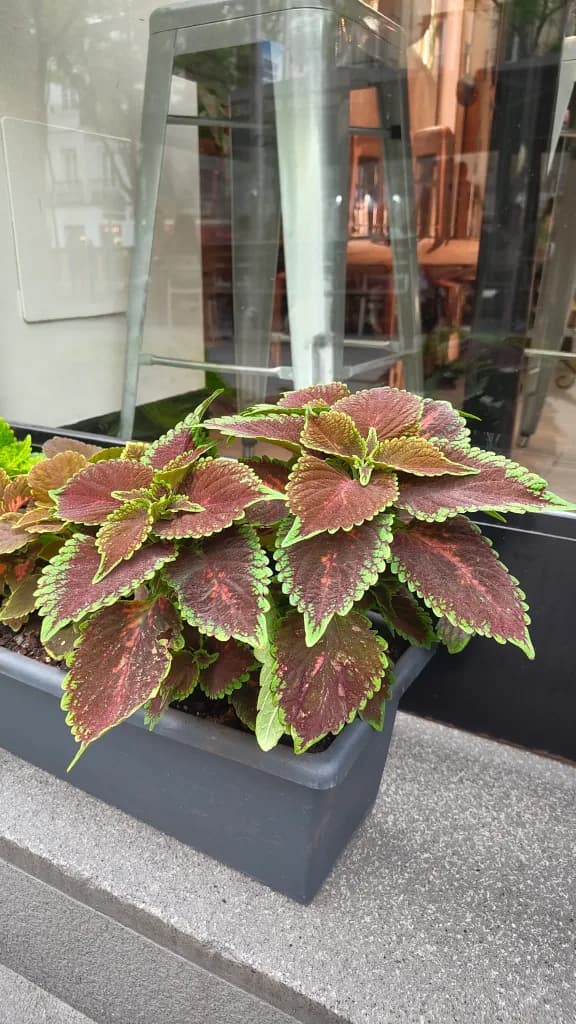
Coleus is a perennial herbaceous plant highly popular for its striking foliage color display. Its opposite, oval, and toothed leaves have a velvety texture. The most notable feature is the infinite variety of leaf colors and patterns, ranging from deep purples to electric greens.
Belonging to the Lamiaceae family, it is native to Southeast Asia to Australia. In temperate climates, it's grown as an indoor plant or an annual, as it cannot tolerate frost. In its natural habitat, it can grow quite large, but it is kept manageable in pots through regular pruning.
Its cultivation is rewarding for beginners as it clearly communicates its needs. Leaves wilt dramatically when thirsty and recover quickly. The small bluish flowers are usually removed to encourage the plant to focus energy on maintaining its vibrant foliage.
Did you know?Coleus is part of the mint family (Lamiaceae), which explains why its tender stems are distinctly four-sided and square to the touch.
Care
- Watering
- Frequent, keep soil moist but not waterlogged (2-3 times/week).
- Light
- Very bright indirect light; avoid strong direct sun.
- Temperature
- Between 18°C and 25°C. Sensitive to extreme cold and frost.
- Soil
- Fertile universal potting mix with good drainage (add perlite).
- Fertilizer
- Leaf plant fertilizer every 15 days in spring and summer.
- Pruning
- Pinch off emerging flower spikes and terminal bud tips regularly to encourage dense, bushy lateral branching. Trim back leggy stems with clean shears in early spring to rejuvenate the plant's shape.
- Propagation
- Propagate effortlessly by taking four-inch stem cuttings just below a leaf node. Place the cuttings in a glass of water or moist potting mix, where roots will readily sprout within one to two weeks.
Is Garden Coleus toxic to cats and dogs?
Yes. According to the ASPCA, it is toxic to cats and dogs.
- Cats
- Toxic
- Dogs
- Toxic
Usual signs: It can cause vomiting, diarrhea (occasionally bloody), lethargy, and loss of appetite.
If your pet has chewed it and shows symptoms, call your vet or the nearest emergency vet.
Source: ASPCA Animal Poison Control
Common problems
- Too little light
- Overwatering
- Underwatering
- Mealybugs and scale
- Cold damage
Frequently asked questions
Why are my coleus leaves losing their color?
Faded or washed-out leaves almost always indicate insufficient lighting. Move your plant to a spot with brighter indirect light to encourage intense, rich pigment production.
Should I let my coleus flower?
It is best to pinch off flower buds as soon as they appear. Allowing the plant to flower diverts energy away from foliage production and often causes stems to become sparse and woody.
Why is my coleus drooping suddenly?
Sudden drooping is typically a classic sign of underwatering, as coleus wilts dramatically when the soil dries out. Water thoroughly, and the stems should perk back up within a few hours.
Why are the lower leaves turning yellow and falling off?
Lower leaf drop usually points to overwatering, inadequate drainage, or cold drafts. Ensure the container has drainage holes and allow the top layer of soil to dry out between waterings.
Growing Garden Coleus at home?
Take a photo and we'll tell you how it's doing and what it needs.