
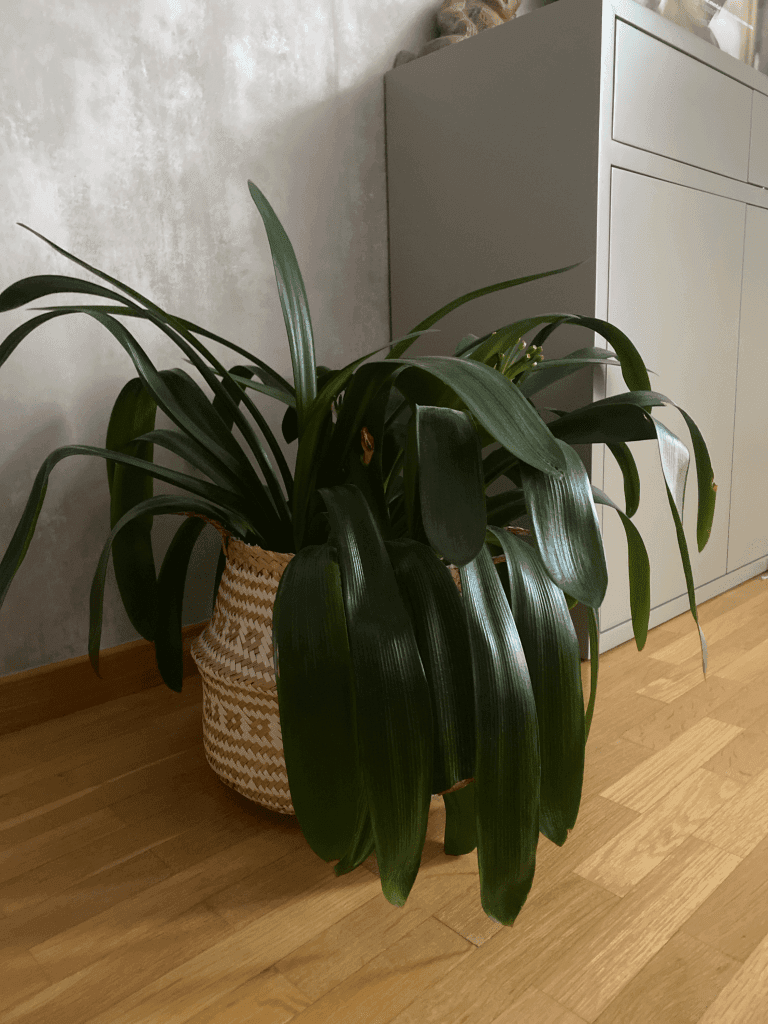
The Clivia is an extremely popular ornamental plant due to its perennial foliage and striking flowers. Its leaves are long, flat, and a deep dark green, arranged in a symmetrical fan shape emerging from a fleshy rhizome. It is particularly prized for its ability to flower in low-light conditions, offering clusters of trumpet-shaped flowers, generally vibrant orange with a yellow center, that arise from a sturdy central stem.
Botanically classified within the Amaryllidaceae family, this species is native to the wooded regions of South Africa. In the wild, it thrives in the understory, protected by tree shade, which explains its intolerance to intense direct sunlight and its preference for cool environments. It adapts perfectly to temperate indoor settings, where its growth is slow but steady, capable of reaching considerable dimensions and great longevity over the years.
Regarding its cultivation, it is a low-maintenance plant ideal for indoors. A key curiosity for its success is the requirement for a 'rest period' during winter with cool temperatures and very reduced watering to induce spring flowering. Although a plant of great architectural beauty, caution should be exercised as it contains lycorine, an alkaloid that is toxic if ingested, so it should be kept away from pets and children.
Did you know?Bush lilies bloom best when pot-bound and need a cool, dry winter resting period to trigger flower buds.
Care
- Watering
- Moderate, let the top 3 cm of soil dry out between waterings.
- Light
- Bright indirect light, avoid direct sun which burns its leaves.
- Temperature
- 15-25°C; requires winter rest at 10°C to stimulate flowering.
- Soil
- All-purpose with good drainage, rich in organic matter and perlite.
- Fertilizer
- Liquid fertilizer for flowering plants every 15 days in spring.
- Pruning
- Bush lilies require no pruning other than removing yellowed bottom leaves at the base. Cut spent flower stalks near the stem once blooming finishes so the plant conserves energy.
- Propagation
- Propagate by carefully separating offset pups from the parent plant during spring repotting. Ensure each division has developed its own robust set of roots before potting it individually.
Is Clivia toxic to cats and dogs?
Yes. According to the ASPCA, it is toxic to cats and dogs.
- Cats
- Toxic
- Dogs
- Toxic
Usual signs: Causes vomiting, salivation, and diarrhea, with large ingestions leading to convulsions, low blood pressure, tremors, and cardiac arrhythmias, the bulb being the most toxic part.
If your pet has chewed it and shows symptoms, call your vet or the nearest emergency vet.
Source: ASPCA Animal Poison Control
Common problems
- Root rot
- Mealybugs and scale
- Sunburn
- Overwatering
Frequently asked questions
Why is my bush lily not flowering?
The most common reason is the absence of a cool, dry winter rest period. Clivias kept in warm rooms with regular year-round watering produce lush leaves but fail to set flower buds.
Why are the leaves on my bush lily turning yellow?
Yellow leaves are usually caused by overwatering or poorly draining soil that suffocates the fleshy root system. Allow the potting mix to dry significantly between waterings and ensure excess water drains freely.
Why is the flower stalk opening down inside the leaves?
This phenomenon, known as a trapped scape, typically happens when the plant receives cold water or insufficient light while the stalk develops. Watering with lukewarm water and moving the plant to a brighter spot usually solves the issue.
How often should I repot my bush lily?
Repot only every three to four years because clivias thrive and bloom best when their roots are crowded. Move them up a pot size only when roots crack the container or push out above the soil.
From the same family
Growing Clivia at home?
Take a photo and we'll tell you how it's doing and what it needs.