
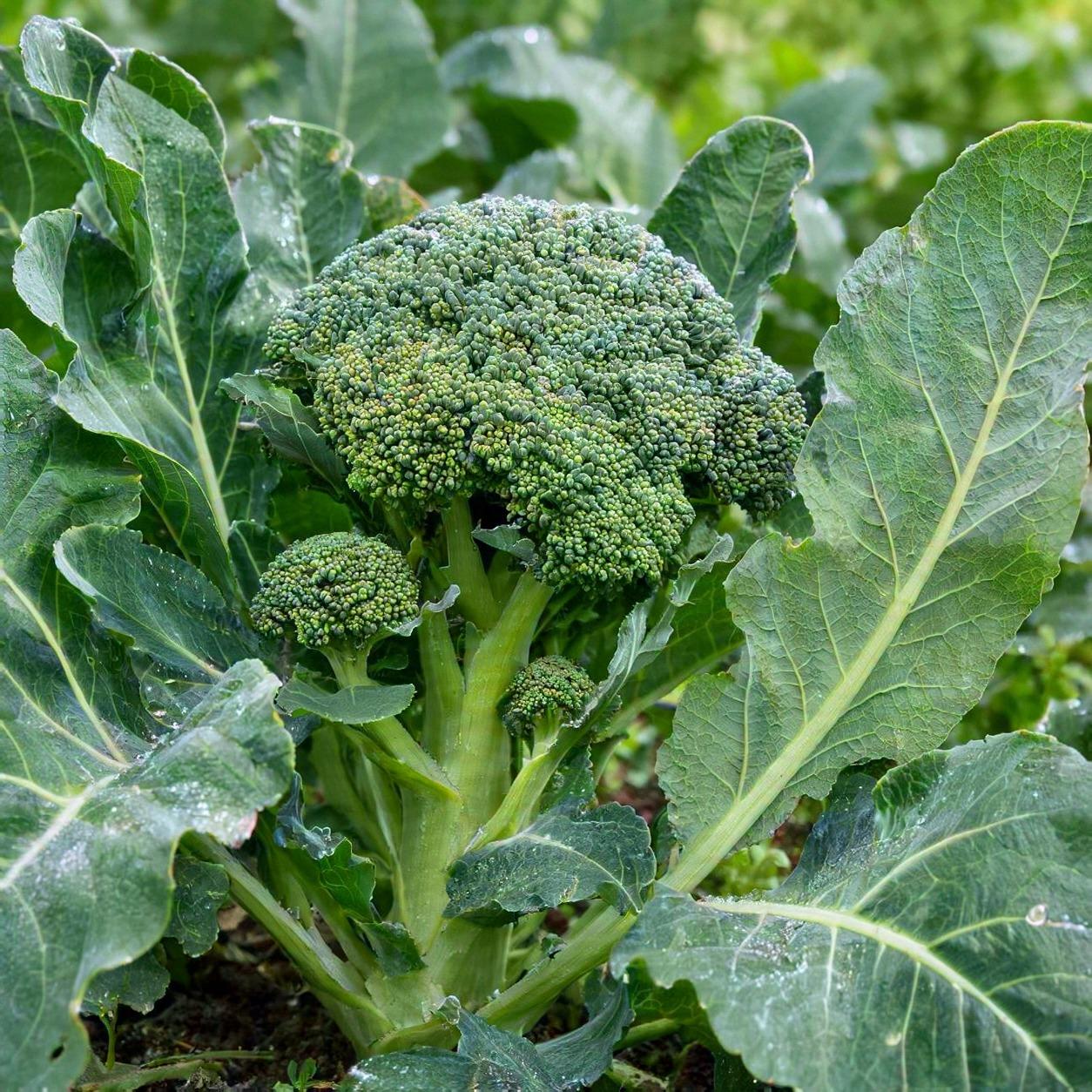
Broccoli (Brassica oleracea var. italica) is a cool-season vegetable grown for its compact green flower heads, with a mild flavor when picked at the right moment. It belongs to the Brassicaceae family and forms a sturdy stem with broad leaves crowned by a central head followed by smaller side shoots. It is a very productive crop for home gardens because one plant yields several harvests.
It derives from wild cabbages of the Mediterranean and was selected in Italy, from which it takes its name and its varietal status. Modern cultivars include early, mid-season and late types, plus purple and sprouting forms that extend the season. At home it is usually raised from nursery transplants, which gives uniform plants and better use of bed space.
The central head is cut when the buds are still tight and compact, before any yellow flower opens. After that cut, the plant branches and produces tender side shoots for weeks if watering and feeding continue. The main challenges are heat, which loosens heads, and caterpillars, so mesh covers and frequent checks are the best allies.
Did you know?The part we eat is an unopened flower cluster: if harvest is delayed, the head opens into small yellow flowers.
Care
- Watering
- Water deeply and regularly so the soil never dries out while heads are forming, usually two or three times a week. Mulch to hold moisture and keep roots cool. Avoid wetting the heads in the evening, which favors rot.
- Light
- It needs full sun, at least six hours a day, to form firm heads. In hot climates, light afternoon shade improves head quality.
- Temperature
- It grows best between 15 and 22 °C and tolerates light frost once established. Heat above 28 °C gives loose, small heads that flower quickly.
- Soil
- It wants deep, fertile, moisture-retentive but well-drained soil, with pH between 6.0 and 7.0. In pots, use containers of at least 20 liters with rich vegetable mix.
- Fertilizer
- Broccoli is a heavy feeder. Work generous mature compost into the bed and side-dress once when heads start to form, without excess nitrogen late in the cycle.
- Pruning
- No pruning is needed: cut the central head with part of the stem when buds are still tight. Leave the plant standing, since many varieties produce tender side shoots for weeks.
- Propagation
- Broccoli is grown from seed in nursery trays and then transplanted with 4 to 6 true leaves. Sow 1 cm deep and transplant 40 to 50 cm apart when seedlings are sturdy.
Is Broccoli toxic to cats and dogs?
The ASPCA doesn't list this species. If your pet has chewed it and seems unwell, call your vet.
Common problems
- Caterpillars
- Aphids
- Whitefly
- Early blight
Frequently asked questions
When is broccoli harvested?
Harvest when the central head is firm and buds are still tight, before any flower opens. Cut with 10 to 15 cm of stem, and side shoots will follow for weeks.
Why does my broccoli flower without forming a head?
It is usually heat above 28 °C, late transplanting, or lack of water during head formation. Plant in cool months, water steadily, and choose varieties suited to your season.
How often should I water broccoli?
Water deeply two or three times a week so the soil stays moist while heads form. Mulch to keep roots cool and never let the bed dry out completely.
Why do broccoli leaves have holes?
Caterpillars of cabbage butterflies are the most common cause, feeding day and night. Cover with insect mesh from transplanting and inspect the undersides of leaves weekly.
Can I grow broccoli in pots?
Yes, one plant per container of at least 20 liters with rich mix and steady watering. Pick compact or mini varieties for balconies and harvest side shoots often.
From the same family

Growing Broccoli at home?
Take a photo and we'll tell you how it's doing and what it needs.