
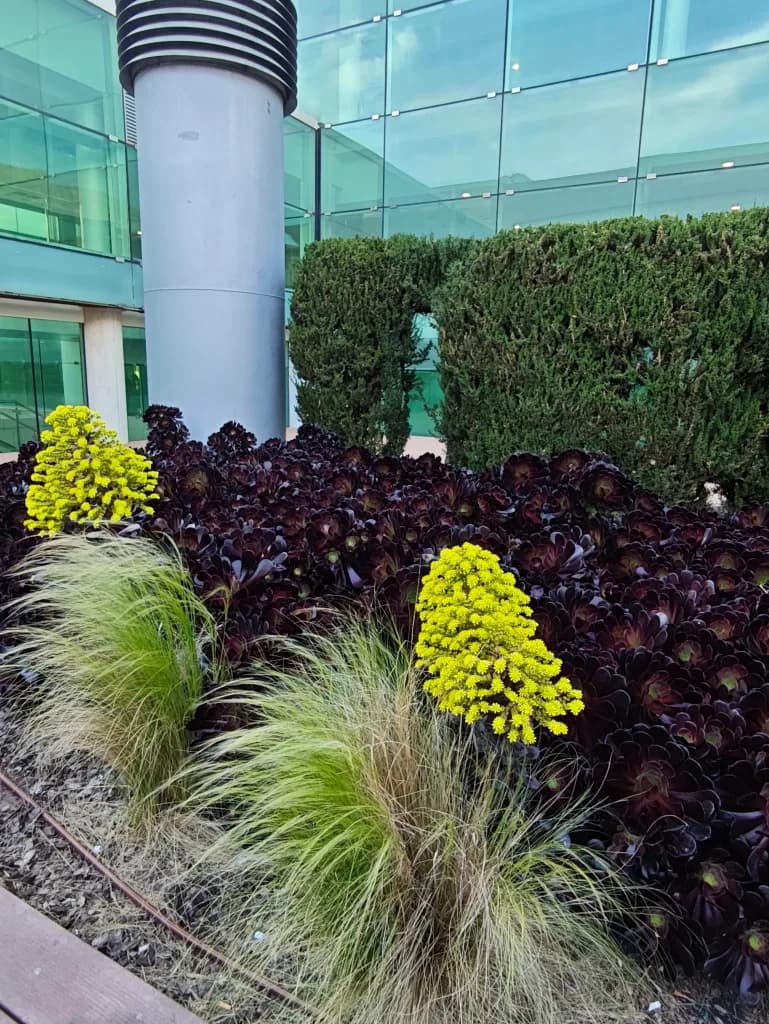
Aeonium arboreum 'Zwartkop', commonly known as Black Aeonium, is a succulent plant highly valued in landscaping for its dark purple, almost black, rosettes of leaves. These rosettes grow at the ends of woody, branched stems, creating a striking visual contrast, especially when combined with plants with light green foliage or fine grasses. It is a shrubby species with moderate growth that brings a unique architectural structure to modern gardens, large pots, and rock gardens.
It belongs to the Crassulaceae family and originates from the Canary Islands, though it has naturalized successfully in various Mediterranean climate areas worldwide. In its natural habitat, it thrives in rocky, sunny areas, perfectly adapting to prolonged dry periods thanks to water storage in its fleshy leaves. Its most distinctive feature is the change in color intensity depending on sun exposure: the more direct light it receives, the darker and deeper its foliage becomes.
During winter and early spring, the plant produces large conical inflorescences composed of small, bright yellow flowers that strongly contrast with the dark foliage. It is a very low-maintenance plant, ideal for beginners, provided excellent drainage is ensured to prevent root rot. Interestingly, the flowering branches usually die after the flower wilts, but the mother plant continues its development and expansion through numerous lateral shoots.
Did you know?Each individual rosette is monocarpic and dies after blooming, but the surrounding stems stay alive and continue branching.
Care
- Watering
- Scarce, only when the substrate is completely dry (every 15 days).
- Light
- Direct sun or very bright shade (minimum 6 hours daily).
- Temperature
- Ideal between 15-25°C. Protect from intense frosts below -2°C.
- Soil
- Succulent mix with excellent drainage and high porosity.
- Fertilizer
- Fertilizer for cacti and succulents once a month in spring.
- Pruning
- Prune back leggy or overgrown branches in early spring to encourage dense, bushy branching.
- Propagation
- Propagate easily by taking stem cuttings topped with a healthy rosette. Allow the cut ends to callus over for several days before potting them in dry, gritty substrate.
Is Black Aeonium toxic to cats and dogs?
The ASPCA doesn't list this species. If your pet has chewed it and seems unwell, call your vet.
Common problems
- Root rot
- Overwatering
- Mealybugs and scale
- Too little light
- Cold damage
Frequently asked questions
Why do the rosettes close up tightly in summer?
This is a natural adaptation to conserve water during high summer temperatures when the plant enters dormancy. As weather cools in autumn, the rosettes will naturally reopen and resume active growth.
Why are the lower leaves turning yellow and falling off?
Losing older lower leaves is part of the plant's normal growth cycle as stems become woodier. If leaves fall rapidly while feeling squishy or translucent, it is almost certainly a sign of overwatering.
Does Tree aeonium die after flowering?
Only the specific rosette that flowers will die back, as each rosette is monocarpic. The rest of the branching plant remains healthy and will continue to produce new offshoots.
How do you fix a leggy or top-heavy Tree aeonium?
You can easily behead the overgrown rosette leaving a few inches of stem attached. Let the cut callous for a few days before replanting it, and prune the bare mother stem to stimulate fresh side shoots.
Growing Black Aeonium at home?
Take a photo and we'll tell you how it's doing and what it needs.