
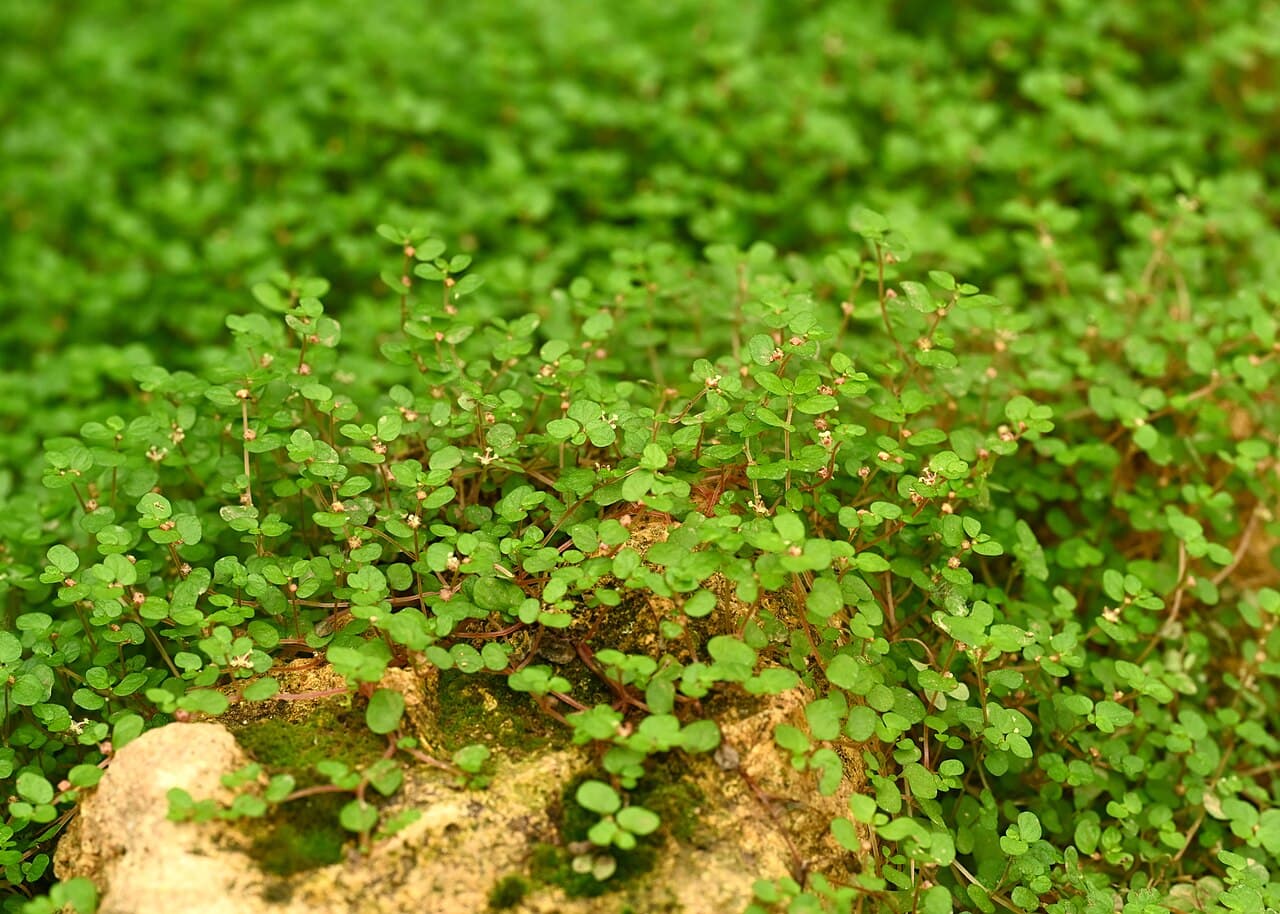
Baby's tears (Soleirolia soleirolii) is a delicate, creeping herbaceous perennial celebrated for its carpet-like growth habit and vibrant green appearance. Originating from shaded stream banks and rocky crevices, it produces hundreds of tiny, rounded leaves along slender, fragile stems that root readily wherever they touch moist soil, quickly forming a lush and dense living mat.
Thanks to its low-growing profile and trailing habit, it makes an exceptional choice for hanging baskets, desktop planters, and enclosed terrariums where ambient humidity stays elevated. Outdoors in mild climates, gardeners often use it as a rich groundcover for shaded borders or to soften stone pathways, creating a velvety cushion that mimics moss without requiring acidic woodland soils.
Keeping baby's tears thriving requires mindful attention to moisture, as its thin foliage collapses within hours if the potting mix completely dries out. It flourishes best under bright indirect light, consistent moisture, and good air movement, rewarding regular care with rapid spreading and an unbeatably fresh, emerald-green ground covering throughout the entire growing season.
Did you know?Despite looking like a delicate moss, baby's tears is actually in the nettle family, though it completely lacks stinging hairs.
Care
- Watering
- Water 2 to 3 times a week during spring and summer, cutting back slightly in winter while keeping the soil consistently damp. Bottom watering is ideal, as soaking the pot in a shallow saucer keeps the delicate foliage dry and rot-free.
- Light
- Thrives in bright, indirect light or luminous partial shade. Direct afternoon sun will scorch the fragile leaves and quickly dry out the root system.
- Temperature
- Best kept between 15 °C and 22 °C throughout the year. It can endure brief drops down to 5 °C, but prolonged freezing temperatures will kill the top growth.
- Soil
- Use a loose, peat- or coco-coir-based potting mix enriched with perlite that holds moisture while draining surplus water freely.
- Fertilizer
- Feed once a month in spring and summer with a balanced liquid houseplant fertilizer diluted to half strength.
- Pruning
- Trim back overgrown edges or leggy stems with clean shears to encourage dense, bushy growth.
- Propagation
- Propagate effortlessly by dividing the root clump during spring repotting. You can also lay stem trimmings directly onto damp soil, where they will take root in just a few days.
Is Baby's tears toxic to cats and dogs?
No. According to the ASPCA, it is not toxic to cats or dogs.
- Cats
- Non-toxic
- Dogs
- Non-toxic
Source: ASPCA Animal Poison Control
Common problems
- Underwatering
- Overwatering
- Dry air
- Root rot
- Botrytis (grey mould)
Frequently asked questions
Why is my baby's tears plant suddenly wilting?
This rapid drooping is almost always caused by underwatering, as the thin stems hold virtually no water reserves. Give the pot a thorough bottom soak immediately, and it will often bounce back within a few hours.
Why is the center of the plant turning brown or black?
This discoloration occurs when water gets trapped beneath the dense canopy, leading to fungal rot and poor airflow. Water exclusively from the bottom and relocate the pot to an area with gentle air circulation.
Can baby's tears grow in a closed terrarium?
Yes, it is one of the best plants for terrariums because it thrives on high ambient humidity and steady warmth. Just keep an eye on its fast growth rate and trim it regularly so it does not crowd out companion plants.
How do I rejuvenate an old, bare patch in the center?
Shear the damaged and leggy foliage back close to soil level to encourage fresh shoots from the crown. Provide bright indirect light and even moisture, and the mat will fill back in within a few weeks.
Growing Baby's tears at home?
Take a photo and we'll tell you how it's doing and what it needs.