
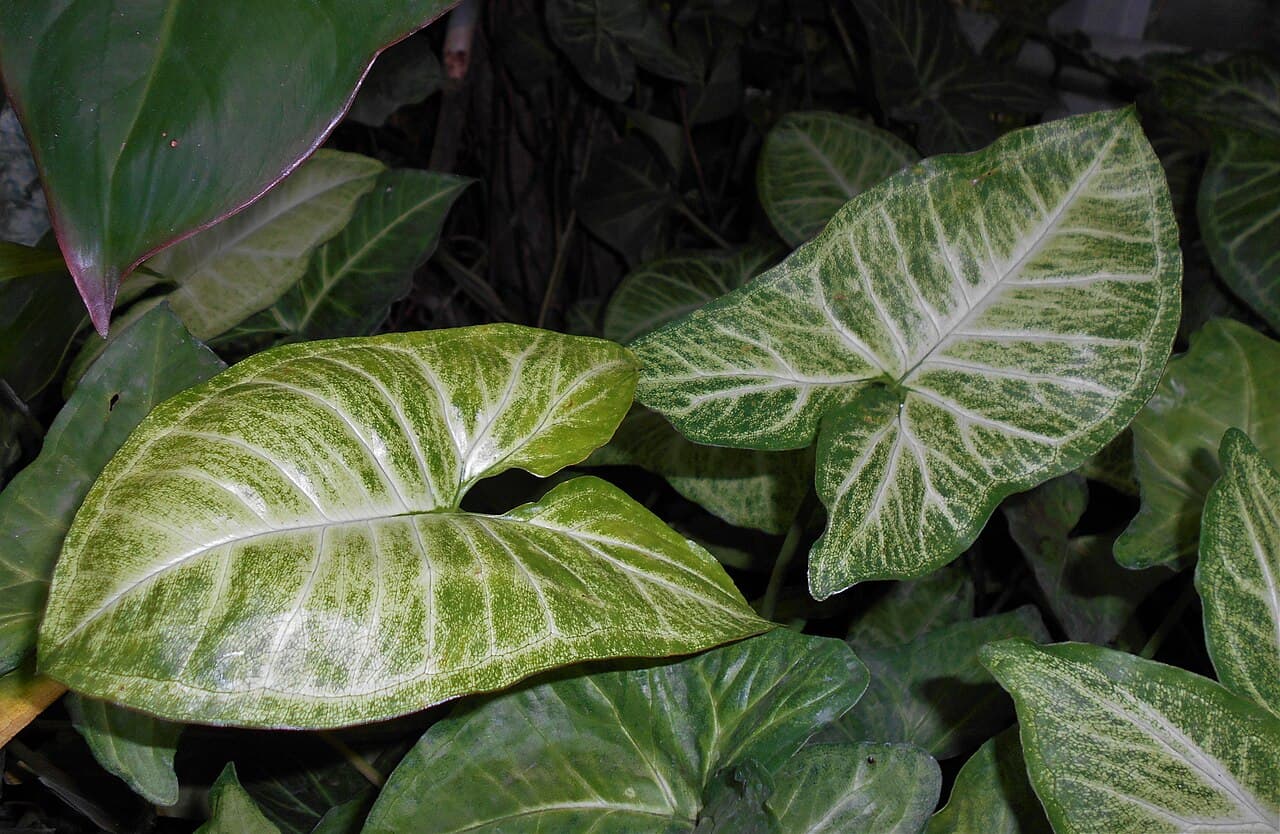
The arrowhead plant (Syngonium podophyllum) is a versatile evergreen vine native to tropical rainforests across Central and South America. In its juvenile stage, it produces distinct arrow- or heart-shaped foliage on slender stems. Depending on the cultivar, these leaves display rich green tones accented with soft cream, silver, or pastel pink variegation.
As an indoor plant, it offers remarkable flexibility in how it can be displayed. It thrives as a trailing plant cascading gracefully from hanging planters or bookshelf edges, but it can also be trained upward along a moss pole. When supported and allowed to climb, the plant matures significantly, producing larger leaves that eventually divide into multiple lobes.
Arrowhead plants are renowned among houseplants for their hardy nature and fast growth rate, making them ideal for both beginners and seasoned growers. They adapt comfortably to indoor conditions, tolerating occasional watering lapses better than many other tropical species. With bright, filtered light and moderate humidity, they maintain lush, healthy foliage throughout the entire year.
Did you know?As the plant matures and climbs, its foliage undergoes a dramatic transformation, changing from simple arrowhead leaves into divided leaves with three to five distinct leaflets.
Care
- Watering
- Water when the top two or three centimeters of soil feel dry to the touch. This generally means watering about once a week in spring and summer, and reducing to every ten to twelve days in winter. Always discard standing water from the drainage saucer to protect the roots.
- Light
- Place your plant in bright, indirect light to preserve the vibrant patterns and colors of the leaves. Avoid direct midday sun, which quickly scorches the delicate foliage, as well as dense shade that causes weak, leggy growth.
- Temperature
- Arrowhead plants thrive in temperatures between 18 °C and 26 °C throughout the year. Protect them from cold drafts and temperatures dropping below 12 °C, which can cause leaf drop and tissue damage.
- Soil
- Use an airy, well-draining potting mix containing peat moss or coco coir blended with perlite and bark. This structure prevents water retention and ensures healthy airflow around the root system.
- Fertilizer
- Feed with a balanced liquid houseplant fertilizer every three to four weeks during the active spring and summer growing period. Stop fertilizing in autumn and winter when plant growth naturally slows down.
- Pruning
- Trim back overly long or leggy vines in early spring to encourage bushier, more compact growth. Prune away yellowing or older leaves close to the base of their stems whenever needed.
- Propagation
- Propagate easily by taking stem cuttings just below a node that displays aerial root bumps. Cuttings root quickly whether placed in a jar of clean water or inserted directly into moist potting mix.
Is Arrowhead plant toxic to cats and dogs?
Yes. According to the ASPCA, it is toxic to cats and dogs.
- Cats
- Toxic
- Dogs
- Toxic
Usual signs: Oral irritation, pain and swelling of the mouth, tongue, and lips, excessive drooling, vomiting, and difficulty swallowing.
If your pet has chewed it and shows symptoms, call your vet or the nearest emergency vet.
Source: ASPCA Animal Poison Control
Common problems
- Root rot
- Overwatering
- Too little light
- Dry air
- Spider mites
Frequently asked questions
Why are my arrowhead plant's leaves turning yellow?
Yellow leaves are most commonly caused by overwatering or compacted soil that retains too much moisture. Allow the upper soil layer to dry out between waterings and make sure the pot drains freely.
How do I keep the pink or variegated colors bright?
Variegated and pink cultivars need abundant indirect light to maintain their distinctive coloration. In low light, the foliage often reverts to solid green as the plant produces more chlorophyll to compensate.
Should I let my plant climb or trail?
Both styles work well and depend entirely on your personal decorative preference. However, letting the plant climb a moist moss pole encourages it to produce progressively larger and more mature split leaves.
Why are the leaf tips turning brown and crispy?
Crispy tips usually indicate dry ambient air or exposure to direct drafts from heating vents and air conditioners. Increase humidity levels by clustering plants together or placing the pot over a pebble tray filled with water.
Growing Arrowhead plant at home?
Take a photo and we'll tell you how it's doing and what it needs.