
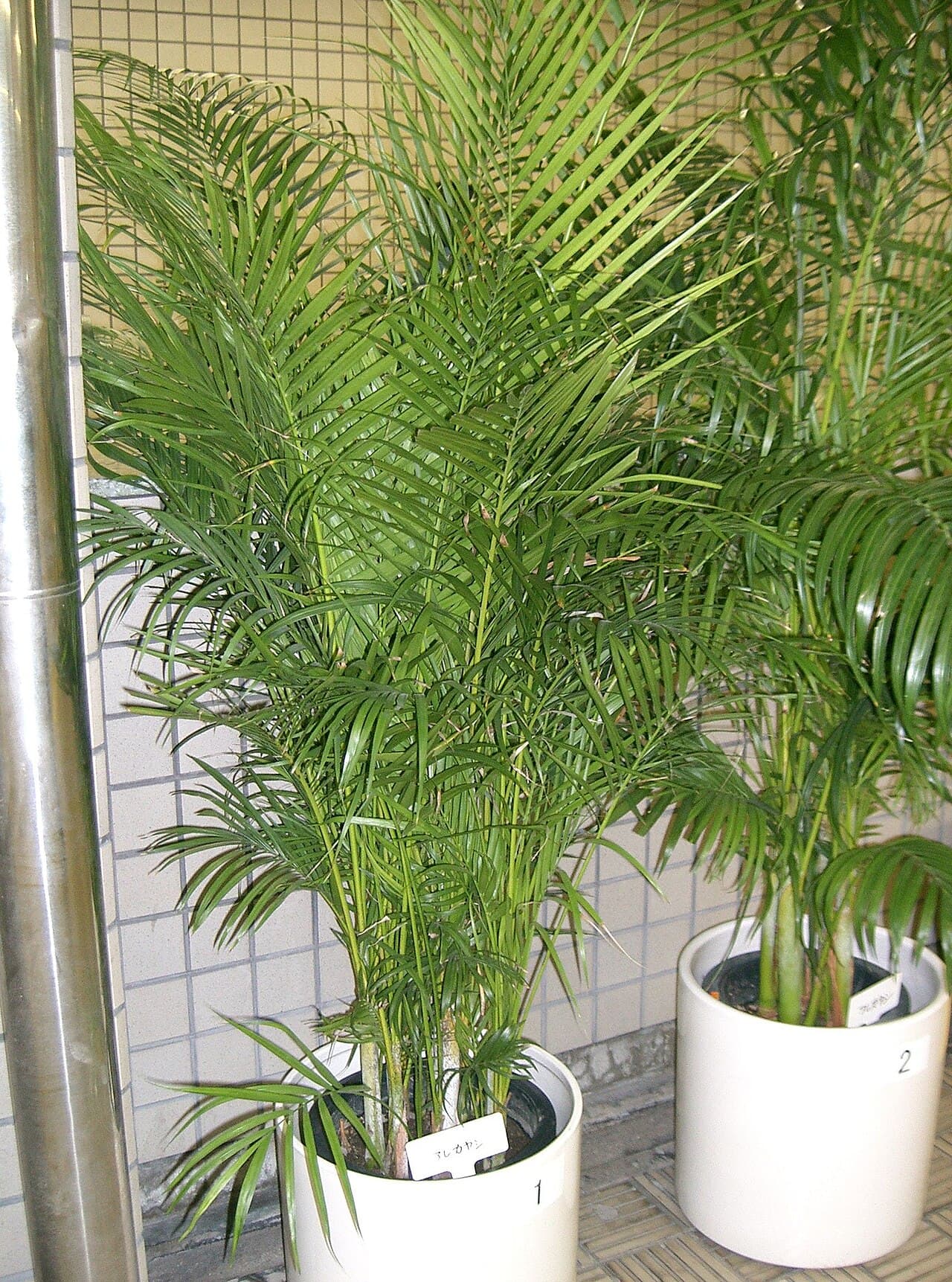
The Areca palm (Dypsis lutescens), commonly known also as the butterfly palm, golden cane palm, or yellow palm, is one of the most widely cultivated indoor and patio palms globally. Native to the humid, tropical regions of Madagascar, it grows in attractive clustering clumps of slender, multi-stemmed canes that resemble bamboo, topped by a luxuriant canopy of feathery fronds.
Each arching frond features dozens of bright green leaflets arranged along yellowish petioles that give the plant its characteristic golden hue. Indoors, it typically matures at a manageable height of five to seven feet, whereas specimens planted in frost-free outdoor landscapes can eventually reach up to twenty feet tall, creating lush privacy screens.
While graceful and adaptable, the Areca palm requires careful attention to indoor microclimates to thrive. It performs best in bright, filtered sunlight with consistent soil moisture and moderate to high humidity. Protecting the plant from dry air, harsh direct sun, and waterlogged soil will keep its vibrant foliage healthy and prevent unsightly browning on the leaf tips.
Did you know?Despite being considered an endangered species in its native wild habitats in Madagascar, it has become one of the most commercially reproduced indoor plants on Earth.
Care
- Watering
- Water when the top inch or two of soil feels dry, typically once a week in summer and every ten to fourteen days during winter. Always use pots with drainage holes and empty the drainage tray to prevent root rot.
- Light
- Provide plenty of bright, indirect sunlight throughout the day. Avoid harsh midday direct sun, which scorches the leaflets and turns the foliage dull yellow.
- Temperature
- It thrives best in warm conditions between 18 °C and 25 °C. Keep it away from cold drafts and never expose it to prolonged temperatures below 10 °C.
- Soil
- Plant in a rich, peat- or coco-based potting mix amended with perlite to ensure rapid drainage while retaining even moisture.
- Fertilizer
- Feed with a balanced liquid houseplant or palm fertilizer diluted to half strength once a month throughout spring and summer.
- Pruning
- Only trim away older, completely brown outer fronds at the base using sterile shears, leaving healthy green stems intact.
- Propagation
- Propagate by carefully dividing crowded root clumps during spring repotting, making sure each section has healthy roots. Propagation from seeds is also possible, though germination can take several months.
Is Areca palm toxic to cats and dogs?
No. According to the ASPCA, it is not toxic to cats or dogs.
- Cats
- Non-toxic
- Dogs
- Non-toxic
Source: ASPCA Animal Poison Control
Common problems
- Dry air
- Spider mites
- Overwatering
- Root rot
- Sunburn
Frequently asked questions
Why are the tips of the fronds turning brown?
Brown tips are usually caused by low ambient humidity, dry indoor air from heaters, or excess minerals and fluoride in tap water. Boost humidity with a humidifier and consider watering with distilled or rainwater.
Why are the leaves turning yellow?
Yellowing fronds generally point to either overwatering with soggy soil or prolonged exposure to scorching direct sunlight. Verify that your pot drains well and move the plant to a spot with bright, indirect light.
How often should I repot my Areca palm?
Repot every two to three years during spring, choosing a container that is only one size larger. Areca palms grow best when their root system remains slightly snug in the pot.
Does an Areca palm require misting?
Misting helps temporarily increase moisture around the fronds, especially in air-conditioned or heated rooms. Keeping humidity above 50% helps deter spider mites and prevents brittle leaf tips.
Growing Areca palm at home?
Take a photo and we'll tell you how it's doing and what it needs.