
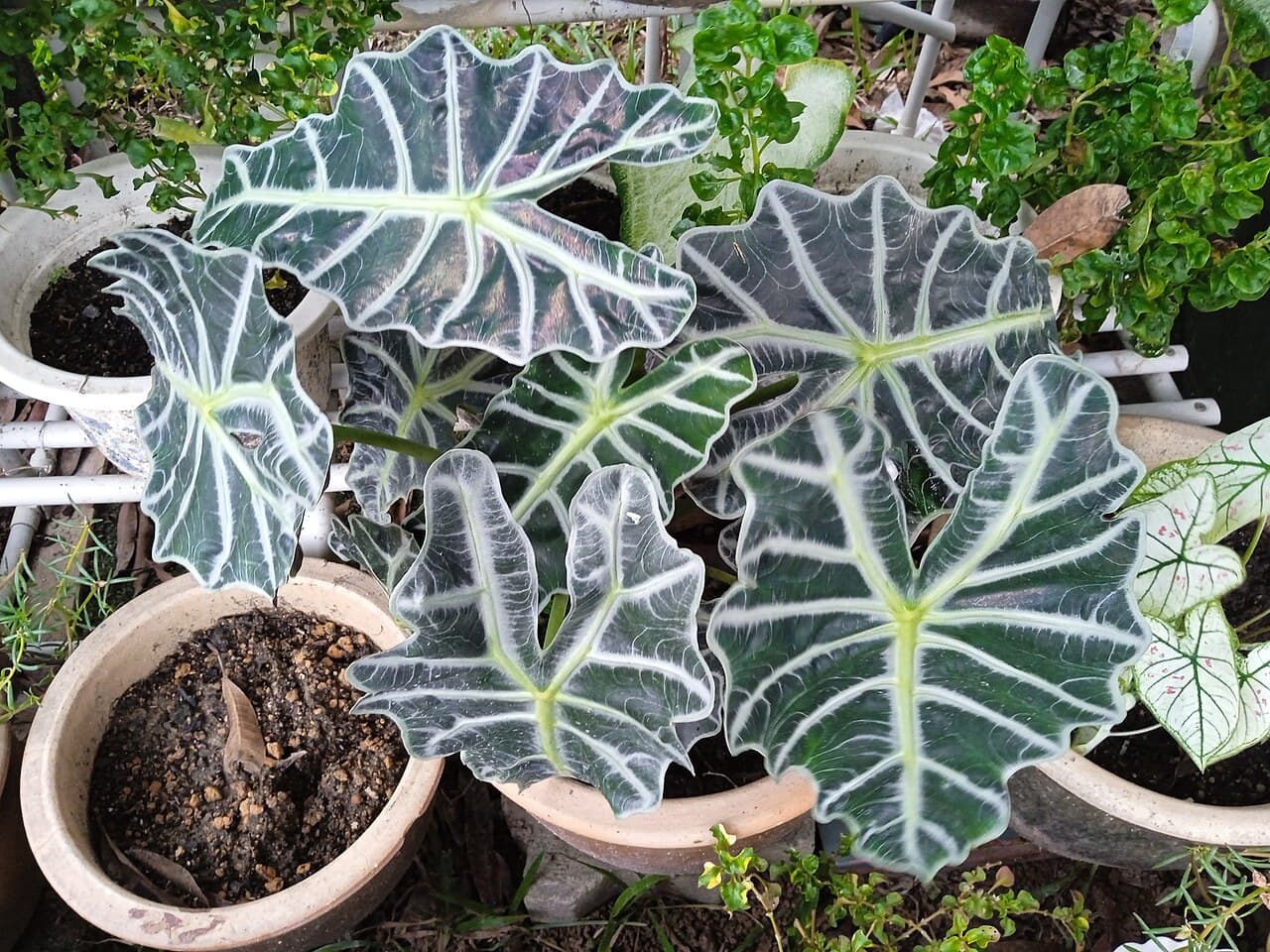
The African mask plant, also widely known as Alocasia amazonica or Alocasia 'Polly', is a striking tropical foliage plant celebrated for its dramatic, arrow-shaped leaves. Its deep green, almost black foliage features a glossy, leather-like texture highlighted by prominent silvery-white veins and wavy, scalloped margins. Growing from underground rhizomes, it forms an architectural, upright silhouette that stands out as a focal point in any interior space.
Although it looks bold and resilient, this tropical plant requires consistent conditions to thrive indoors. It is sensitive to dry air, sudden temperature drops, and overwatering, which are common challenges during winter or in air-conditioned spaces. In low-light or cooler months, the plant may naturally shed foliage and enter a period of dormancy, only to emerge with fresh, vigorous growth once warmer weather returns.
Cultivating the African mask plant comes down to recreating the warm, dappled environment of a tropical forest floor. By providing bright indirect light, moderate soil moisture, and high ambient humidity, you can keep this striking houseplant healthy and structurally stunning for years.
Did you know?Despite its botanical name, it is not native to the Amazon rainforest; it was bred by an American nurseryman in Miami named after his business, Amazon Nursery.
Care
- Watering
- Water when the top couple of inches of potting mix feel dry to the touch, which typically means once a week in summer and every ten to fourteen days in winter. Always test the soil moisture first and ensure the container has functional drainage holes to prevent standing water.
- Light
- Provide bright, indirect sunlight throughout the day to sustain healthy leaf development. Shield the foliage from harsh direct afternoon sun, which will quickly scorch and discolor the leaves.
- Temperature
- Keep the plant in an ambient temperature range between 18°C and 26°C. Avoid exposing it to cold drafts or temperatures below 15°C, which can trigger premature winter dormancy.
- Soil
- Use an airy, well-draining potting blend containing peat moss or coco coir mixed with perlite and pine bark. This chunky structure prevents root compaction and allows excess water to escape freely.
- Fertilizer
- Feed once a month throughout spring and summer with a balanced liquid houseplant fertilizer diluted to half strength. Discontinue fertilizing entirely during autumn and winter when growth naturally slows down.
- Pruning
- Trim away discolored, yellowing, or damaged leaves at the base of the petiole using sharp, sterilized shears. Routine pruning is not necessary as the plant naturally grows upwards from its central rhizome.
- Propagation
- Propagate by carefully dividing mature rhizomes or separating individual corms during spring repotting. Make sure each divided section has established roots before planting it into its own potting mix.
Is African mask plant toxic to cats and dogs?
Yes. According to the ASPCA, it is toxic to cats and dogs.
- Cats
- Toxic
- Dogs
- Toxic
Usual signs: Oral irritation, pain and swelling of mouth, tongue and lips, excessive drooling, vomiting, and difficulty swallowing.
If your pet has chewed it and shows symptoms, call your vet or the nearest emergency vet.
Source: ASPCA Animal Poison Control
Common problems
- Root rot
- Spider mites
- Dry air
- Overwatering
- Cold damage
Frequently asked questions
Why are the leaves on my African mask plant turning yellow?
Yellowing leaves are most often caused by overwatering or soil that stays saturated for too long. Low humidity, exposure to cold drafts, or natural shedding of the lowest, oldest leaf can also cause yellowing.
What should I do if my plant loses all its leaves during winter?
Do not discard the pot, as the underground rhizome remains viable even when all foliage drops during seasonal dormancy. Keep the soil barely moist, place the pot in a warm spot, and expect new shoots to emerge in spring.
How can I increase humidity around the foliage?
Set the pot on a shallow tray filled with pebbles and water, making sure the pot base sits above the water line, or run a cool-mist humidifier nearby. Grouping tropical houseplants together also naturally raises relative humidity.
Why is water dripping from the leaf tips?
This dripping is a normal physiological process known as guttation, where the plant releases excess water absorbed by its roots. It simply indicates that the root system is active and the potting mix has ample moisture.
Growing African mask plant at home?
Take a photo and we'll tell you how it's doing and what it needs.