
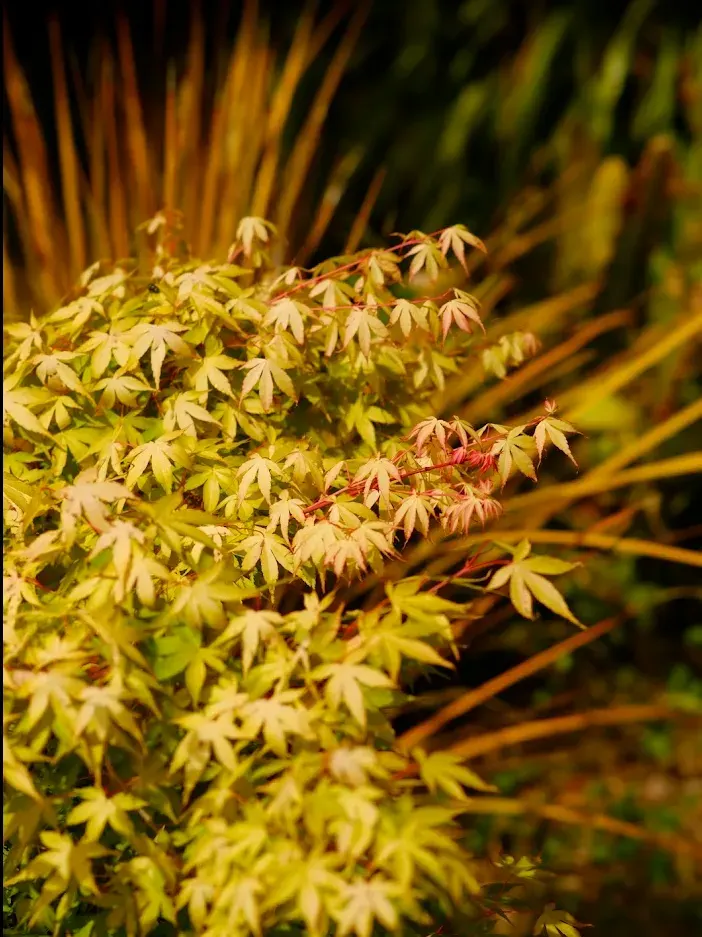
The Japanese Maple is a deciduous shrub or small tree highly valued for its elegant foliage and spectacular seasonal color changes. Its palmate leaves, with deeply divided lobes, can display shades ranging from light green and yellow to intense reds or purples, depending on the variety and time of year. It is a central element in the aesthetic of Zen gardens and Oriental landscapes due to its graceful form and slow growth, adding a light and sophisticated texture to any outdoor space.
Botanically known as Acer palmatum, it belongs to the Sapindaceae family and originates from the temperate regions of Japan, Korea, and China. In its natural habitat, it typically grows under the canopy of larger trees in moist, shaded forests where the soil is cool and rich. It prefers slightly acidic, well-drained soils with a high content of organic matter, being particularly sensitive to water salinity and excessive root waterlogging, which can lead to root suffocation.
It is one of the most popular species for bonsai art and ornamental gardening due to its versatility and the beauty of its branching structure. There are hundreds of cultivars with diverse leaf shapes and growth habits, from weeping forms to upright specimens. For successful cultivation, it is crucial to protect it from dry winds and direct midday sun, which can quickly scorch its delicate leaves. Interestingly, although it is a maple, it is not used for syrup production, focusing exclusively on its aesthetic and landscaping value.
Did you know?In Japan, the tradition of 'momijigari' involves traveling to gardens and mountains specifically to view and celebrate the autumn colors of maples.
Care
- Watering
- Keep soil moist, not waterlogged. 3 times per week.
- Light
- Filtered light or partial shade. Avoid intense direct sun.
- Temperature
- Ideal between 15-25°C. Tolerates frost, suffers from dry heat.
- Soil
- Acidic (pH 5.5-6.5), well-drained, and rich in organic matter.
- Fertilizer
- Fertilizer for acid-loving plants in spring and summer every 15 days.
- Pruning
- Prune exclusively during full winter dormancy to prevent heavy sap bleeding from cut branches. Limit cuts to removing dead, diseased, or crossing stems to maintain its natural architectural form.
- Propagation
- Commonly propagated through cold-stratified seeds in winter or by grafting specific cultivars onto seedling rootstocks. Semi-hardwood cuttings taken in early summer can root, though they yield moderate success rates.
Is Japanese Maple toxic to cats and dogs?
The ASPCA doesn't list this species. If your pet has chewed it and seems unwell, call your vet.
Common problems
- Sunburn
- Dry air
- Iron chlorosis
- Powdery mildew
- Root rot
Frequently asked questions
Why are the tips of the leaves turning dry and crispy?
Leaf scorch is typically caused by harsh afternoon sunlight, dry winds, or underwatering during high temperatures. Move container plants to a dappled morning-light spot and maintain consistent soil moisture.
Why did my red-leaved maple turn green in summer?
Many red varieties produce green chlorophyll in response to intense summer heat or insufficient ambient light. Providing gentle morning sun and keeping the tree cool helps maintain the intended foliage colors.
Can I grow a Japanese maple indoors?
No, this is an outdoor temperate tree that requires natural seasonal changes and winter chilling to enter dormancy. Kept indoors year-round, it will quickly decline due to stagnant air and lack of a winter rest.
What kind of water is best for this tree?
Rainwater or filtered tap water is ideal, as maples dislike hard, alkaline water with high calcium levels. Prolonged use of hard tap water raises the soil pH and leads to leaf chlorosis.
From the same family
Growing Japanese Maple at home?
Take a photo and we'll tell you how it's doing and what it needs.