
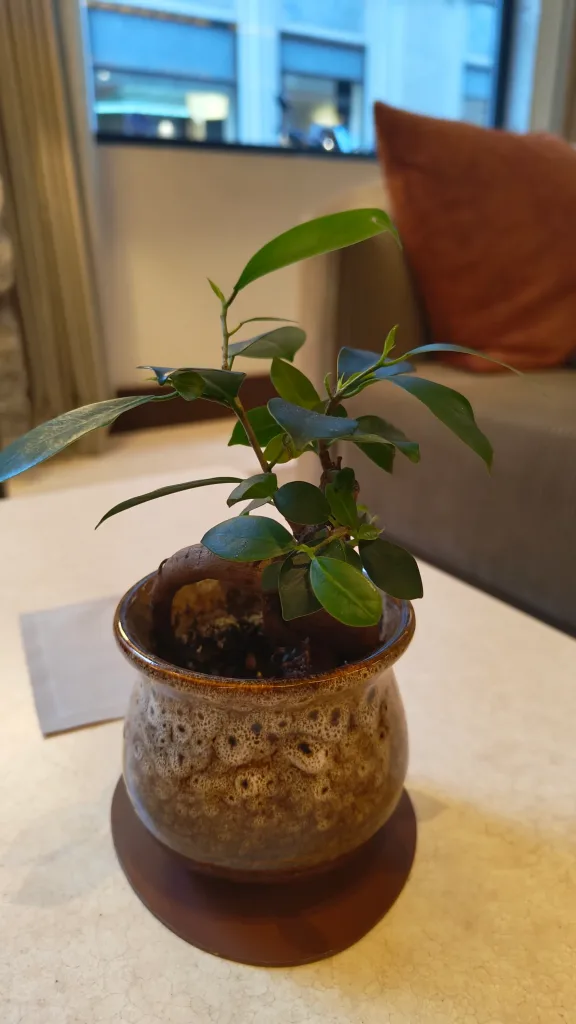
The Ficus microcarpa, commonly known as Ficus Ginseng, is a popular ornamental tree often cultivated in the bonsai style. It is easily recognized by its thick, bulbous aerial roots that resemble ginseng roots, supporting a canopy of small, oval, dark green glossy leaves. This plant is a favorite among indoor gardening enthusiasts due to its striking architectural form and its remarkable resilience in various indoor environments.
Belonging to the Moraceae family, this species is native to a broad region spanning from Southeast Asia to northern Australia. In its natural habitat, it can grow into a massive evergreen tree with a wide-spreading canopy and numerous aerial roots. However, in domestic settings, it is dwarfed and trained into miniature forms, thriving in warm, humid tropical or subtropical climates where it often grows as an epiphyte or lithophyte.
Ficus Ginseng is considered an excellent choice for beginners because it is more forgiving than other bonsai species. It thrives in bright, indirect light and requires consistent moisture without becoming waterlogged. Beyond its aesthetic appeal, it is known for its air-purifying qualities, though caution is advised as its milky sap can be irritating to skin and toxic to pets if ingested. Regular pruning helps maintain its miniature stature and encourages lush foliage.
Did you know?The swollen bulbous base is not an actual trunk, but a cluster of aerial root systems cultivated to give the young plant the appearance of an ancient bonsai.
Care
- Watering
- Water when top 2cm feel dry, roughly once a week.
- Light
- Bright indirect sunlight; avoid direct midday sun.
- Temperature
- Maintain between 18°C and 24°C; protect from drafts.
- Soil
- Well-draining potting mix, ideally bonsai soil with perlite.
- Fertilizer
- Liquid fertilizer every 15 days in spring/summer, monthly in winter.
- Pruning
- Trim back unruly shoots in late winter or early spring to preserve a tight, compact canopy. Pinching out growing tips during spring encourages denser leaf clusters.
- Propagation
- Easily propagated through semi-hardwood stem cuttings rooted in water or moist potting mix during late spring. Air layering on thicker branches is another dependable method to start new plants.
Is Ficus ginseng toxic to cats and dogs?
Yes. According to the ASPCA, it is toxic to cats and dogs.
- Cats
- Toxic
- Dogs
- Toxic
If your pet has chewed it and shows symptoms, call your vet or the nearest emergency vet.
Source: ASPCA Animal Poison Control
Common problems
- Transplant shock
- Overwatering
- Too little light
- Spider mites
- Mealybugs and scale
Gallery
Frequently asked questions
Why is my Ficus ginseng dropping its leaves?
Leaf shedding is almost always caused by relocation shock, cold drafts, or insufficient light. Set the tree in a bright, stable spot without moving it around, and healthy new leaves will soon emerge.
Can Ficus ginseng live outdoors?
Yes, provided your climate is completely frost-free and the plant receives filtered shade. In colder climates, keep it outside only during warm summer months and bring it inside before night temperatures hit 12 °C.
How do I spot overwatering?
Overwatering causes leaves to turn yellow and drop off softly while the soil stays continuously damp or develops a sour odor. Allow the soil to dry out thoroughly and verify that the pot drains freely.
How often should I repot my tree?
Repot every two to three years in early spring once roots fill the entire container. If you want to keep its current bonsai proportions, trim the outer roots lightly and refresh the soil in the original pot.
Growing Ficus ginseng at home?
Take a photo and we'll tell you how it's doing and what it needs.